


Etex Plasterboard Manufacturing Plant – Bristol
The Result
Powertherm’s skilled experts proudly delivered a comprehensive range of industrial services within the aggregates manufacturing industry at a brand-new plasterboard manufacturing plant in the Southwest of England.
From advanced technical insulation solutions covering 9,312m² and protective cladding totalling 7,946m² to electrical trace heating for temperature maintenance requirements, flexible insulation covers/ jackets, and 130+ tonnes of scaffolding material to provide the associated access support.
A team of over 30 (peak) qualified professionals ensured high quality, reliability, and safe working conditions throughout, delivering the standout project on time.

The Challenge
Our client was constructing a state-of-the-art sustainable plasterboard manufacturing plant near the Port of Bristol — the end users largest production investment to date. The production process consists of two main areas, the Calcination Plant and the Dryer Ducting system.
To ensure safe and efficient operations, they turned to Powertherm for expert multidisciplined industrial services, including specialised solutions tailored to their unique requirements. Our technical insulation solutions improve thermal efficiency and asset protection, while innovative custom flexible covers enable easy maintenance. Scaffolding and MEWPs ensure safe and efficient access, and our trace heating systems prevent operational disruptions by maintaining optimal process temperatures.
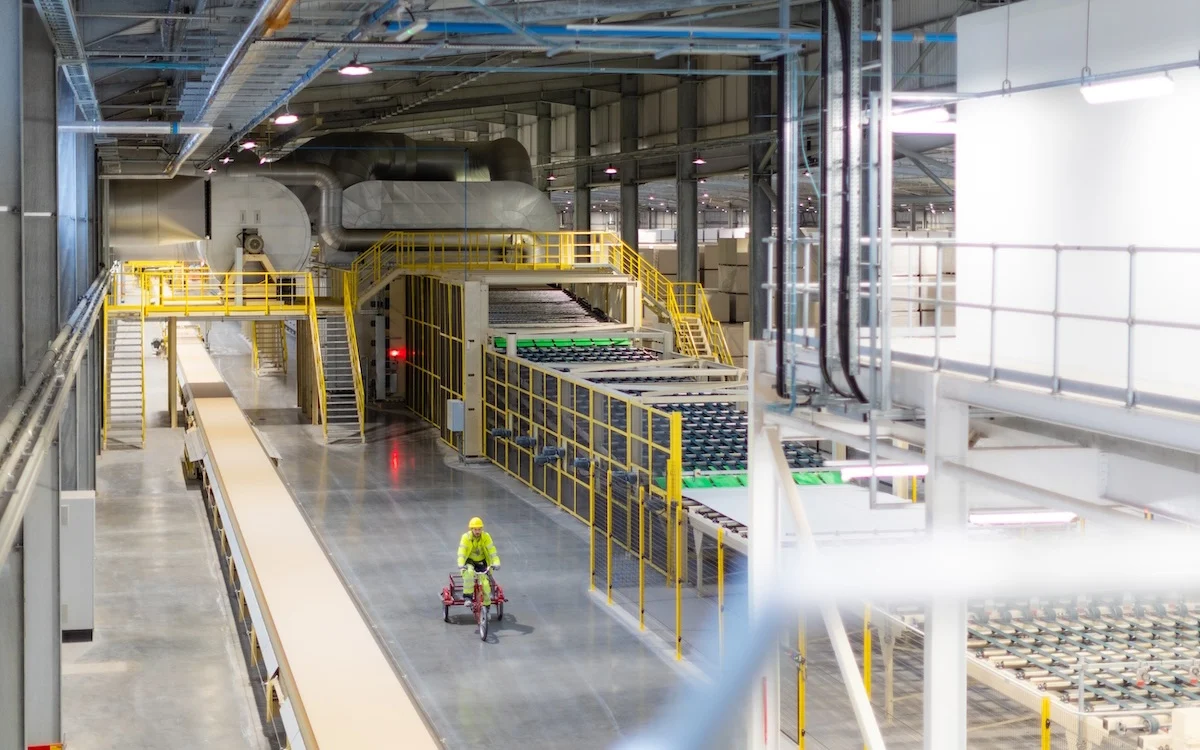
(Picture Credit: Etex)
Project / Site Details
Location: Bristol, UK
Industry: Manufacturing (Aggregates)
Output: Plasterboard products
Contract Type: New Construction
Services:
- Technical insulation including flexible insulation jackets
- Electrical trace heating
- Scaffolding access
Workforce: 30 (peak)
- Thermal Insulation Engineers
- Scaffolding Operatives
- Trace Heating Engineers
- Project Management
End User: Etex
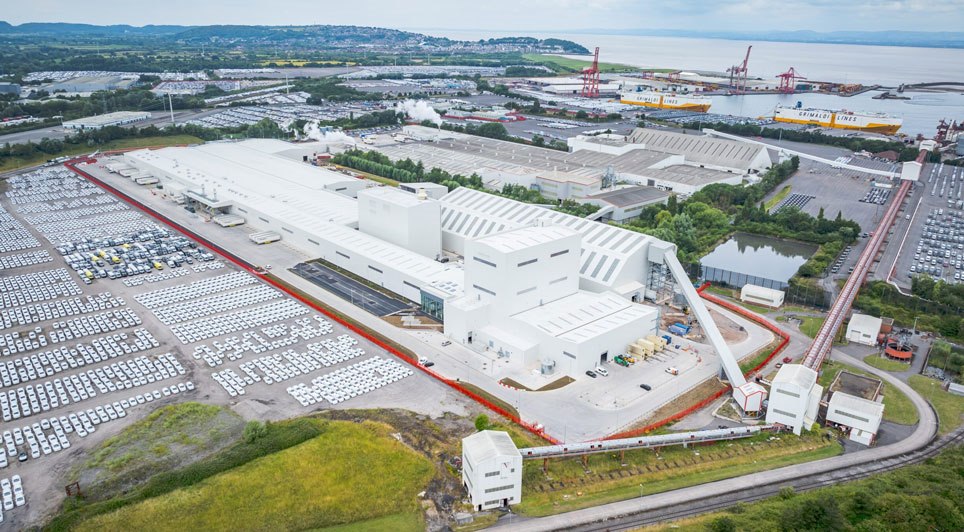
(Picture Credit: Etex)
What We Delivered
Our teams seamlessly got to work, providing thermal technical insulation, flexible insulation covers, scaffolding and mobile access, and trace heating solutions.
Scaffolding Access Solutions
The project started with Powertherm’s Scaffold Operatives safely erecting several scaffold structures – in accordance with TG20:21 and SG4:22 – to provide safe access to areas of the plant for our trace heating and insulation teams to undergo their scope of works.
Throughout the project scaffold gangs erected, modified, and dismantled various scaffolds, amounting to 130+ tonnes of material, to facilitate access solutions across site.
The scaffold associated with the Filter Unit 1 was strategically placed on the rear wall and to both sides of the filter, leaving the front open for unhindered access by mobile elevating work platforms (MEWPs). Access was limited to the front side of the filter, so our teams had to come up with an innovative solution to ensure safe working and enable technical insulation work to be carried out before the front side of the filter became inaccessible due to the external building cladding being installed.
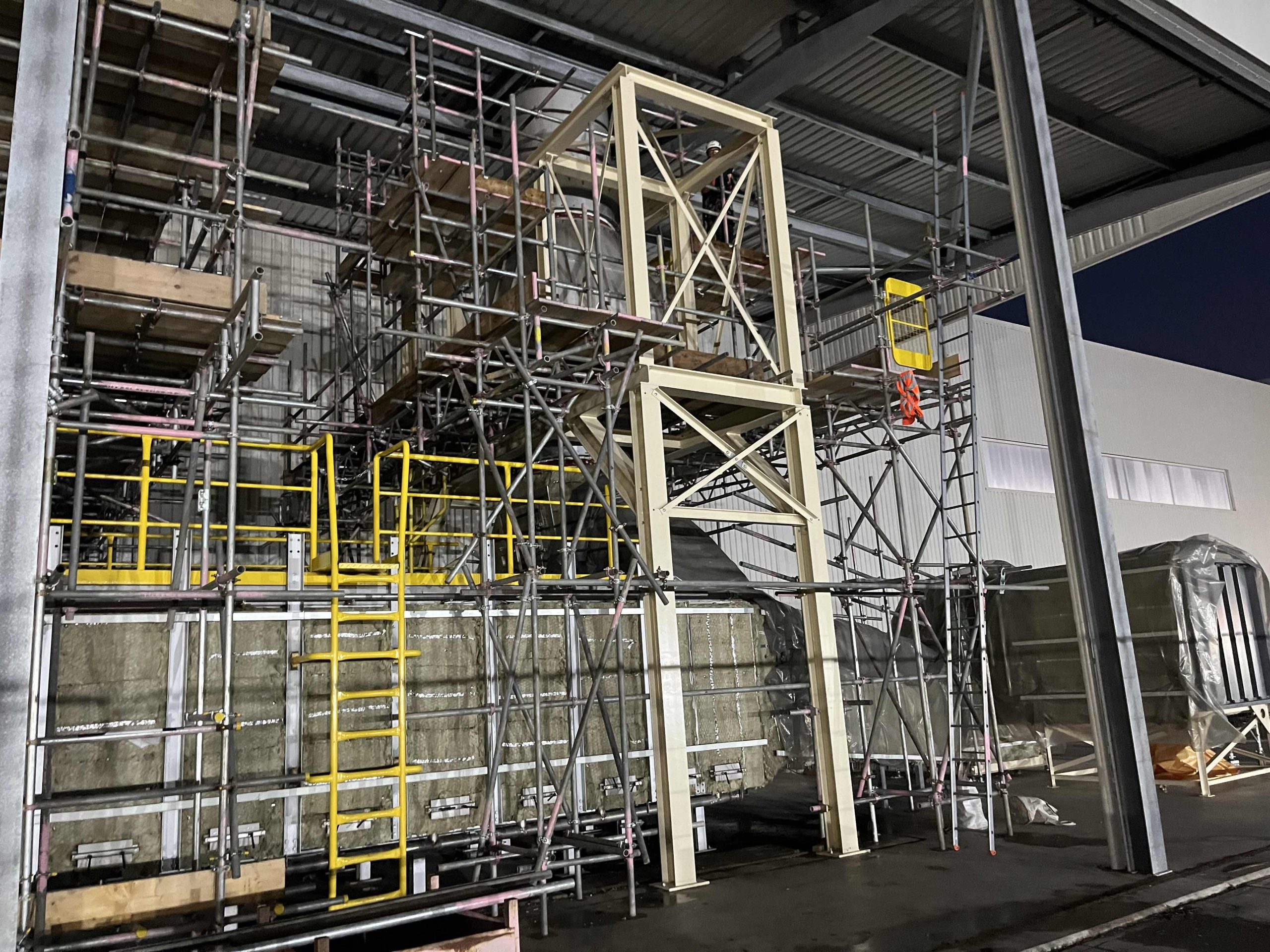
A birdcage scaffold with ladder access was erected from ground level to the top working platform at lift level 3 to provide safe access to the Dryer Ducting system. The structure had to be precisely designed and constructed to fit around the various duct systems. Alternating-direction wind bracing was installed on every upright row to ensure stability. Fully boarded platforms were constructed at lift levels 2 and 3, complete with board-bearing transoms, double guardrails, and toe boards, offering safe and secure working areas for operatives during insulation and cladding works.
In order to gain safe working access to the Air Duct Heat Recovery system, an independent scaffold was punched off existing structural beams due to restricted access from ground level.
To maintain access continuity from the Cool Air Vent while avoiding interference with the chimney structure, an independent scaffold was configured with a beamed bridge, allowing safe passage and working platform continuity around the obstruction.
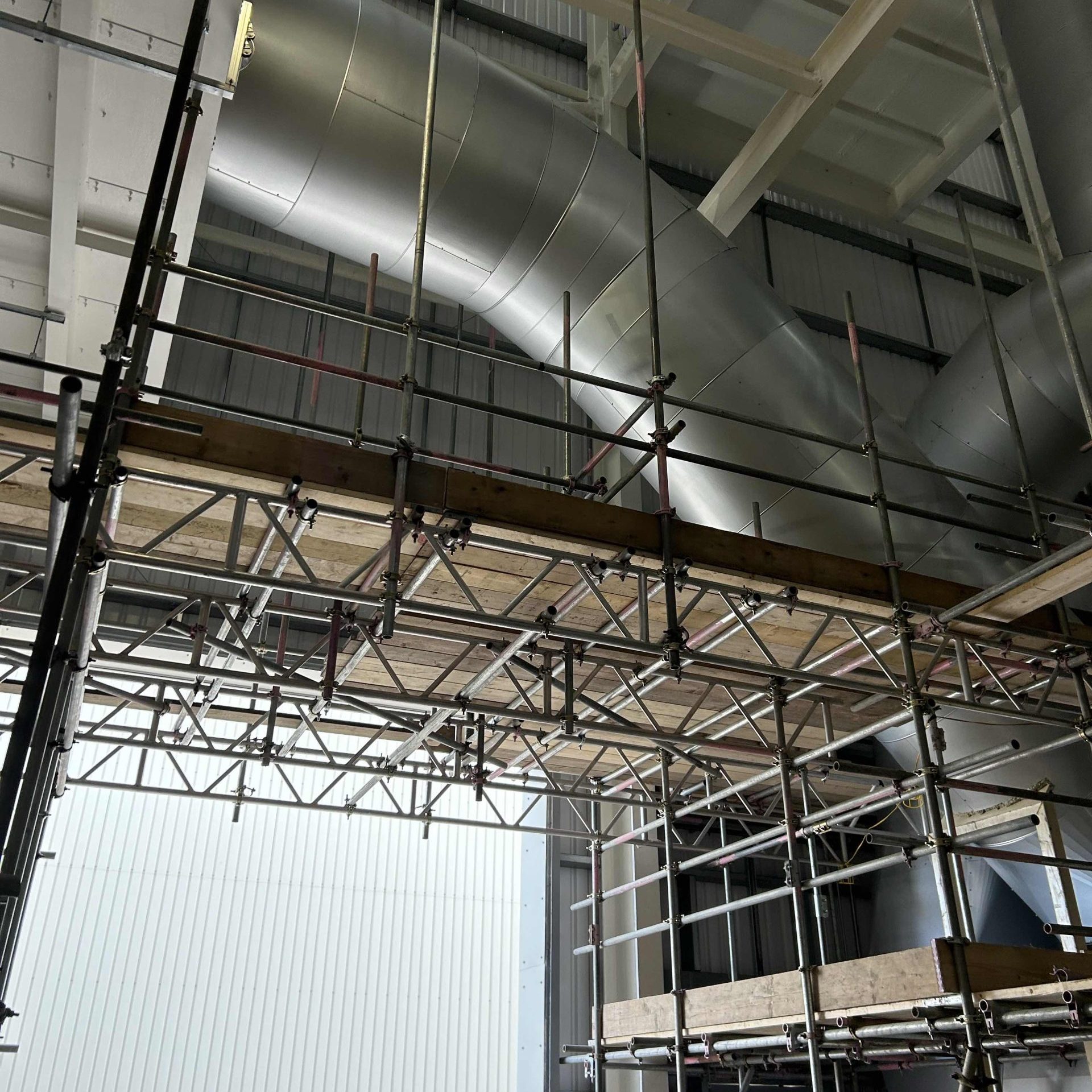
A birdcage scaffold supported by beams was implemented beneath the Raw Gas Line to ensure safe access for insulation activities to continue, while adapting to the evolving layout of the mechanical infrastructure.
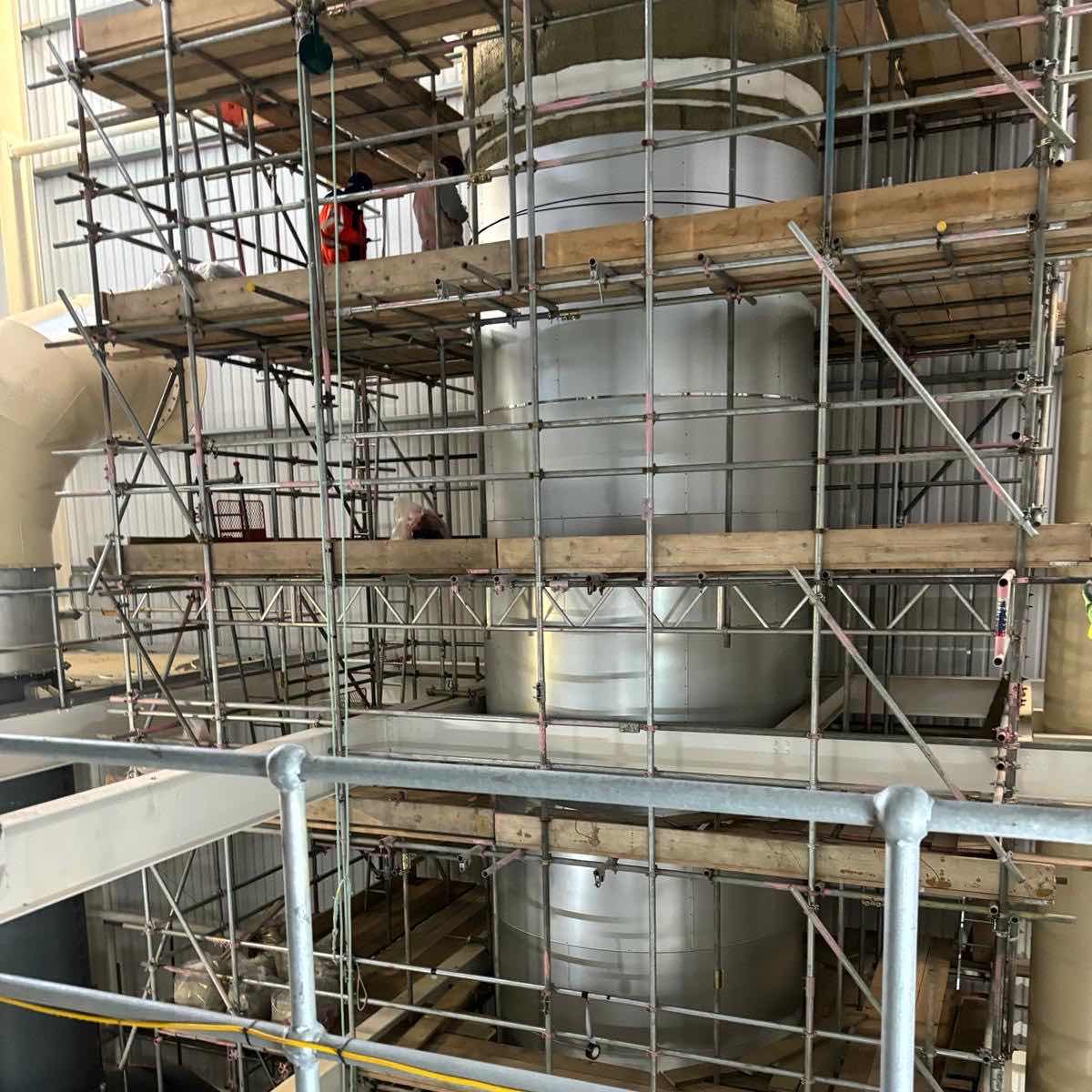
Access to the stack was achieved using a birdcage scaffolding with beam support, providing a strong and stable structure that allowed our operatives 360-degree access around the stack. The scaffold was constructed in progressive layers, enabling safe and efficient access to each lift as the work advanced. Once a section of insulation and cladding was installed, the next level of birdcage scaffold was erected, allowing operatives to continue upward while maintaining safe and secure footing for multiple workers throughout the process.
Trace Heating
Our Electrical Trace Heating Engineers expertly installed mineral insulated (MI) heating cables to the Filter Hoppers, ensuring reliable temperature maintenance and optimal performance.
The MI cables were securely fixed to wire mesh, offering several advantages. Firstly, the mesh provides a stable and robust surface, ensuring the MI cables are firmly anchored. This prevents movement or displacement during operation or maintenance, even under demanding conditions. Additionally, the mesh’s flexibility allows it to conform to irregular or tapered surfaces, which are common in hopper designs, ensuring a precise and secure fit.
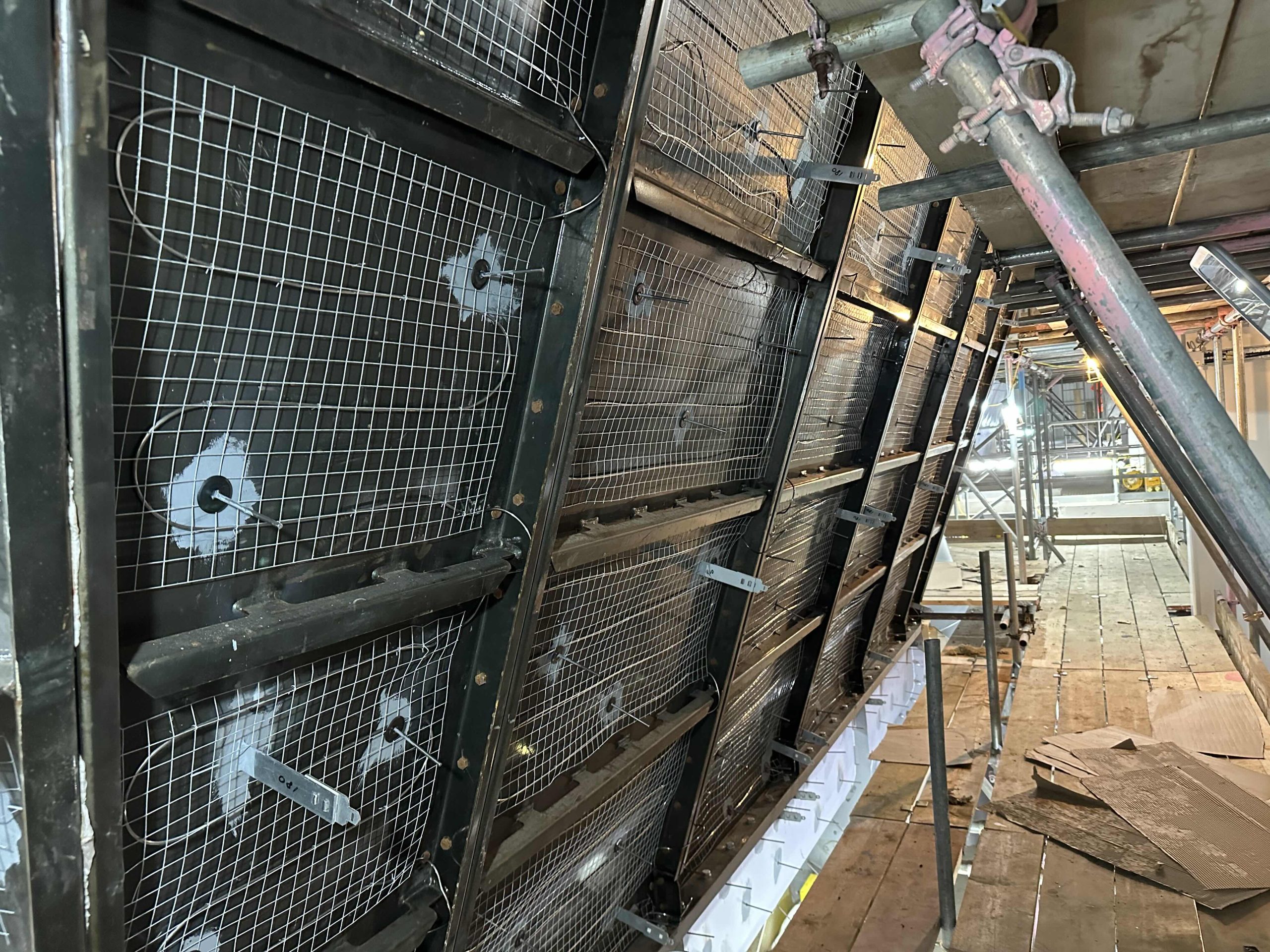
Another key benefit of using mesh is its role in improving heat distribution. By attaching the MI cables to the mesh, heat is evenly spread across the hopper’s surface. The mesh acts as a framework to maintain consistent cable spacing, ensuring uniform thermal performance throughout.
Once the MI cables were installed, the trace heating system was fully integrated with the Filter Hoppers. This system ensures the hopper walls are kept at an optimal temperature (above it’s dew point) to prevent ash from cooling and hardening, which could otherwise disrupt operations.
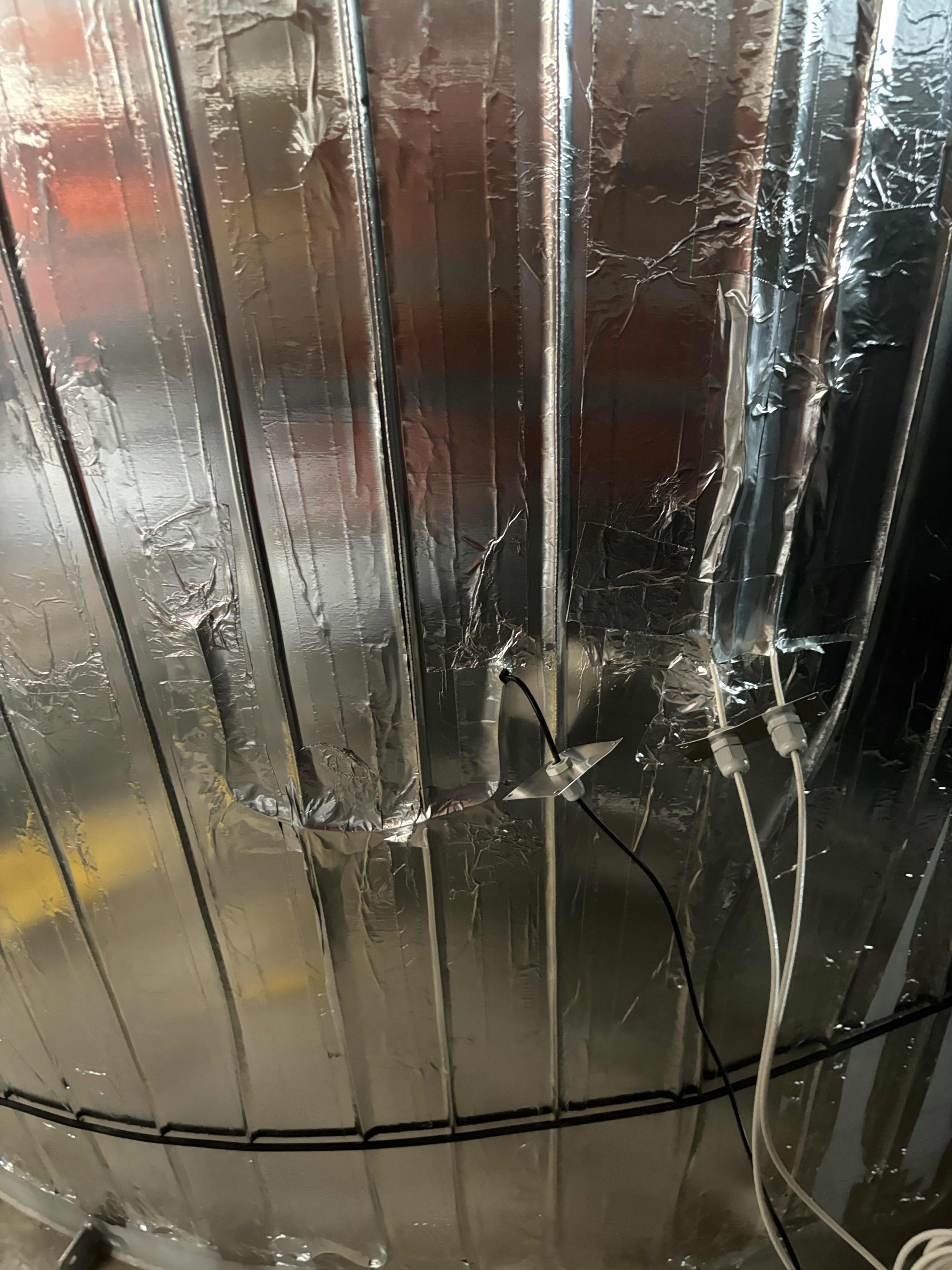
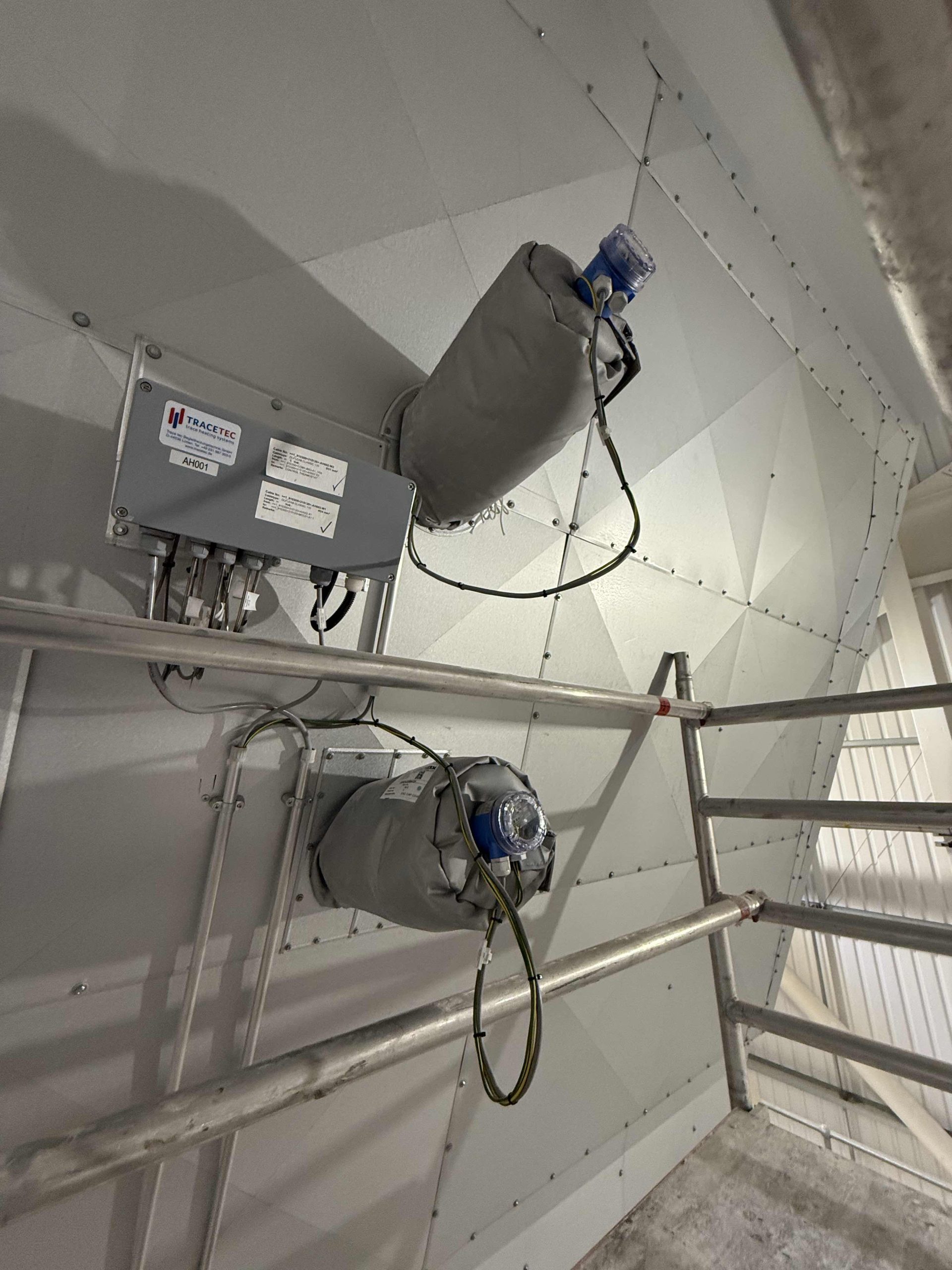
In addition to the Hoppers, our ATEX certified trace heating installers also applied electrical heat tracing systems to a storage silo and its associated process pipework at the plasterboard manufacturing plant. The heat tracer was applied in accordance with (BS EN 62395-2:2013 and 60079-30-2:2017) to guarantee the heat from the cables provided the accurate temperature maintenance required to ensure the integrity of the product within and to keep it in a workable state.
Technical Insulation
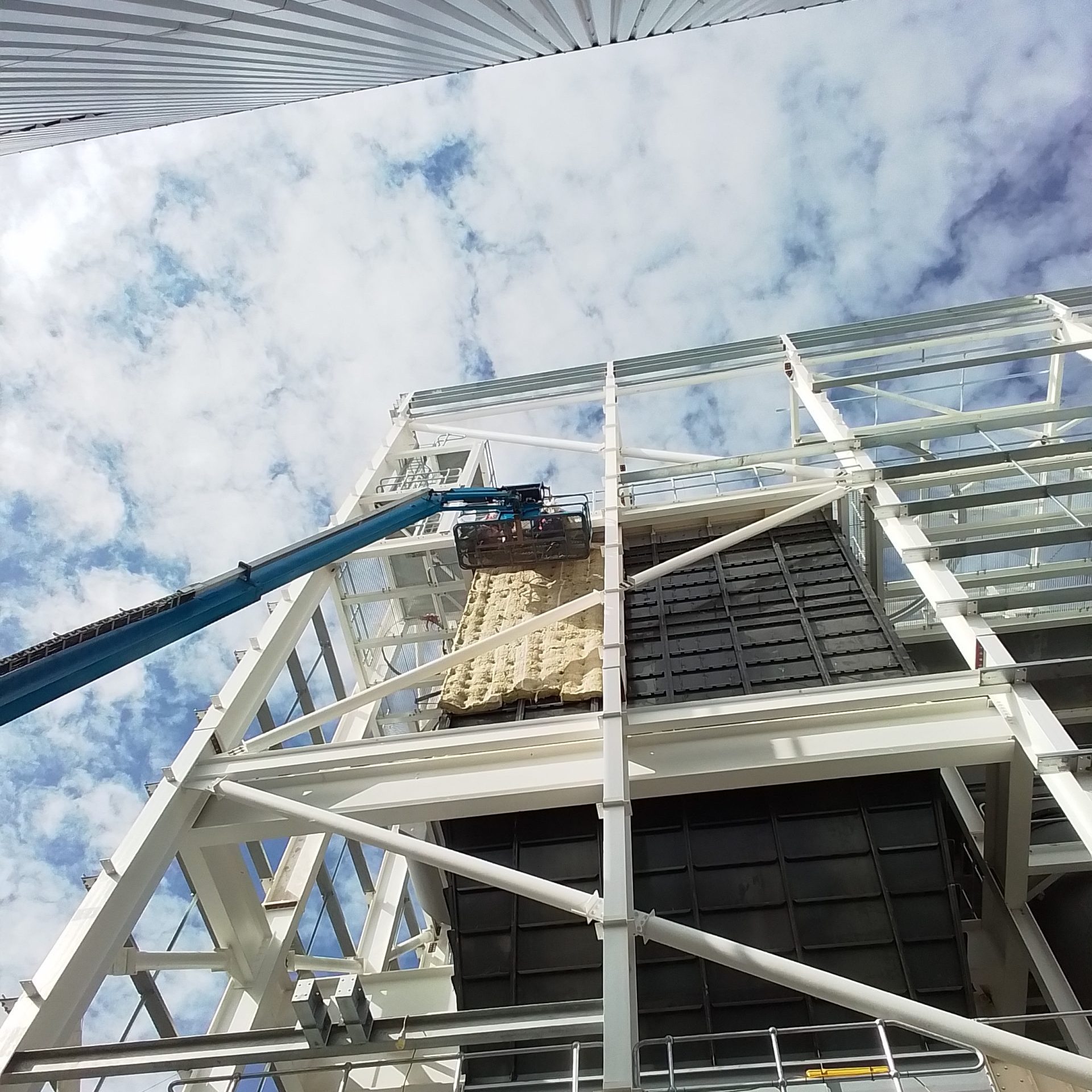
Powertherm successfully supplied and installed over 9,000m² of mineral wool and just short of 8,000m² of sheet metal cladding fabrications to various industrial equipment across the plasterboard manufacturing plant ensuring optimal thermal efficiency, safe touch temperatures and asset protection.
Mineral wool wired matt was meticulously installed on most pieces of equipment, with mineral wool slab – with additional acoustic control properties – installed on fans.
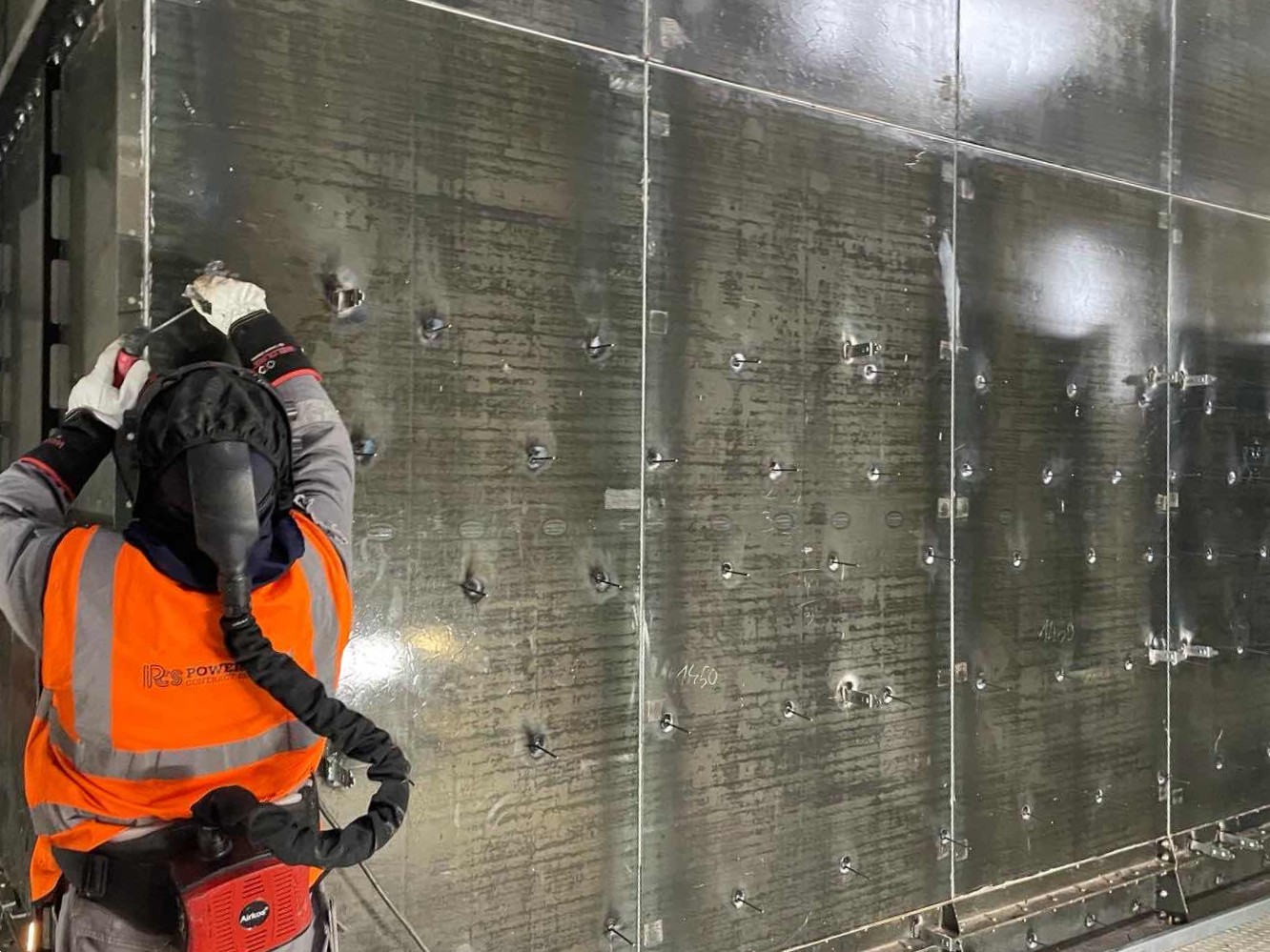
In-house technical welders installed welded insulation substructure systems, such as the DUK Rail system (flat surfaces), spacer rings (round ducts) and steel insulation pins. All welds were painted with protective coatings to provide the necessary protection of the steel surface after welding.
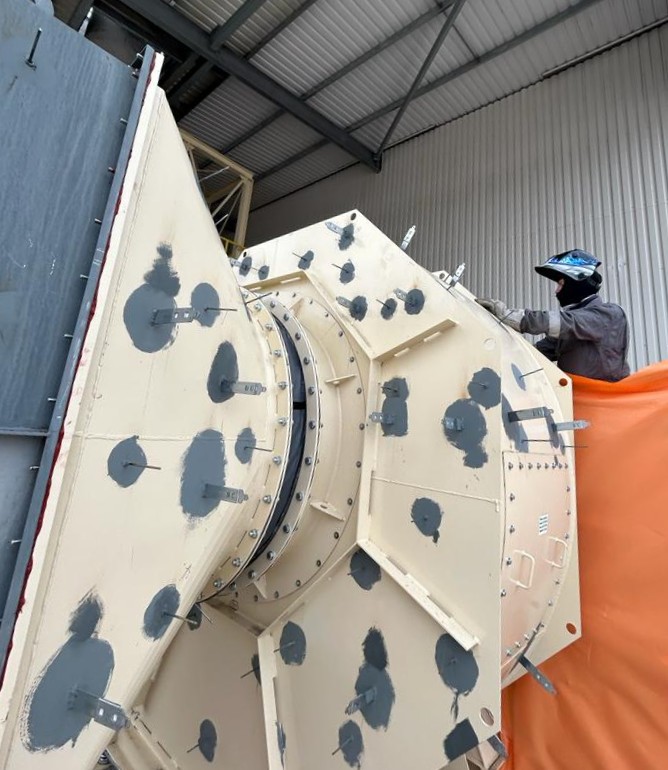
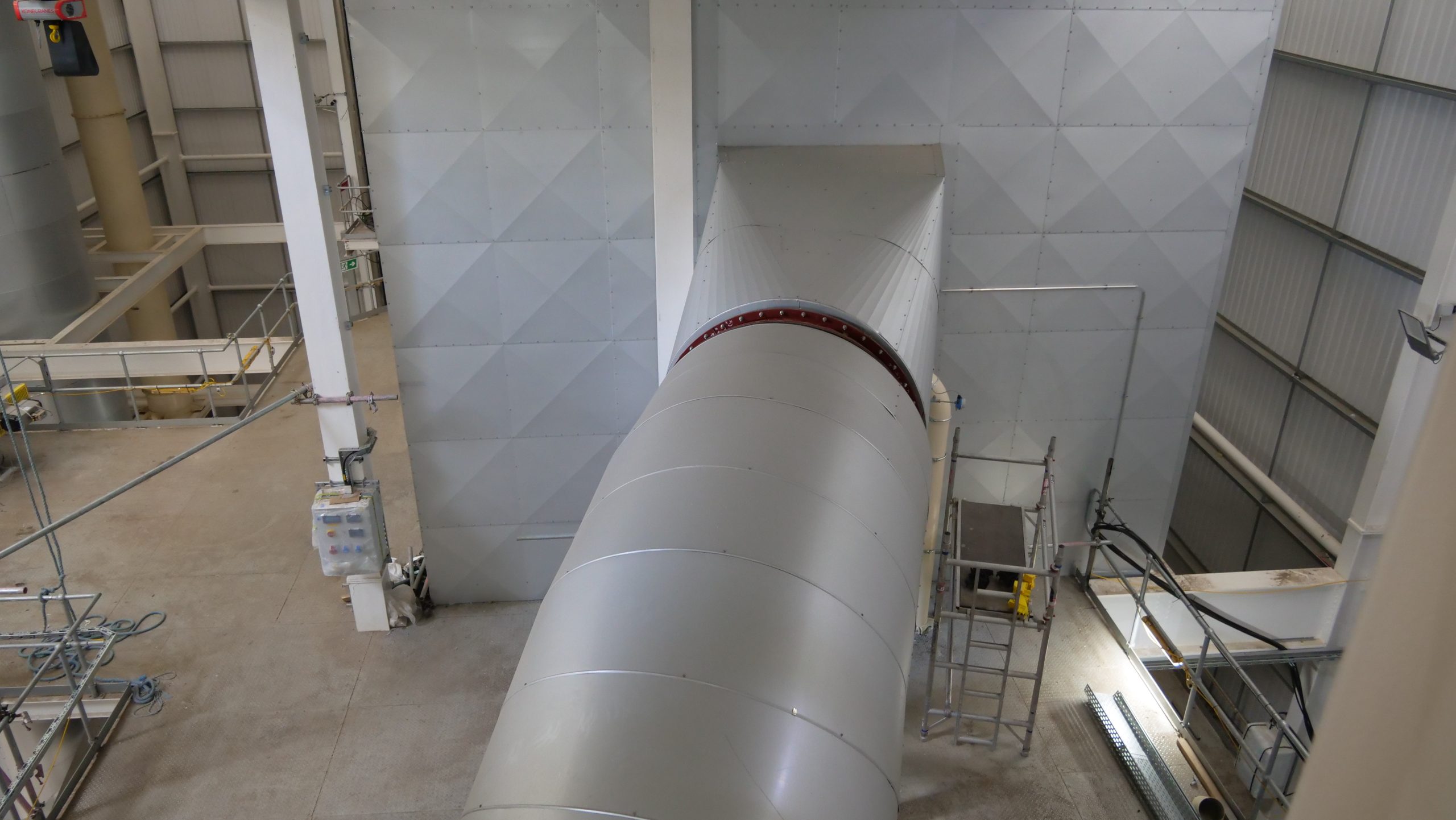
All sheet metal fabrications were manufactured within Powertherm’s state-of-the-art fabrication facility, utilising advanced manufacturing capabilities through the latest machinery and highly experienced craftmanship. Prefabricated protective cladding provided the perfect protection for the technical insulation material and underlying equipment from external conditions, our teams expertly installed both perforated and flat Aluzinc cladding solutions.
Calcination Plant
Within the Calcination Plant, our skilled Thermal Insulation Operatives applied 3,022m² of mineral wool insulation material and various insulation substructure systems to several items of critical process equipment:

The DUK Sub-construction System was installed on all flat services including the Two-Way Distributor, Filters, Heat Exchanger and Conveyor. The DUK system is a substructure system which is welded to the asset using spacers, with rails attached using coupling units. The insulation material can be pierced through the spacers, holding it in place and the outer cladding is then fixed to the rails. Overall, the system provides a more robust insulation system which can withstand industrial processes and environments, ensuring its integrity throughout it’s expected lifespan.
Support rings were installed on curved/ cylindrical surfaces to provide a secure anchor point for the external sheet metal cladding and to help prevent insulation materials from slipping or moving. Rings were installed on equipment such as the Raw Gas Line, Cool Air Filter and Exhaust Chimney which are all curved structures making support rings the most efficient substructure solution.
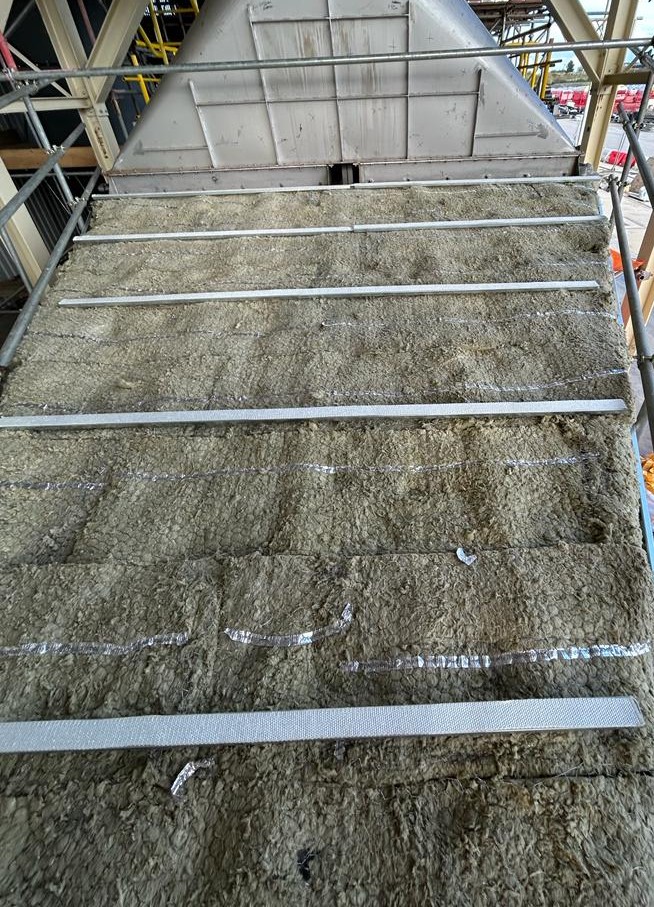
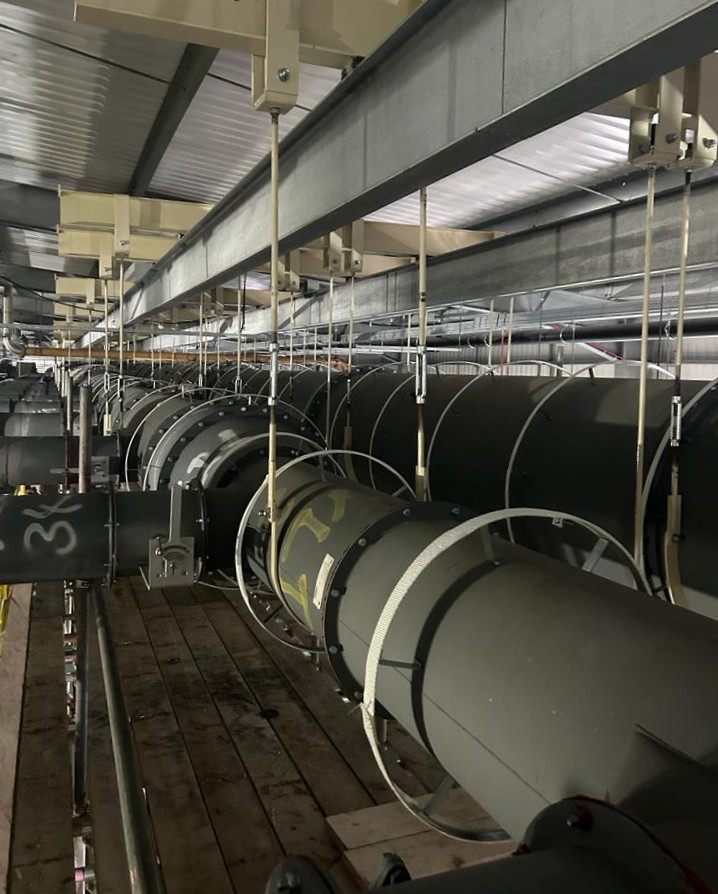
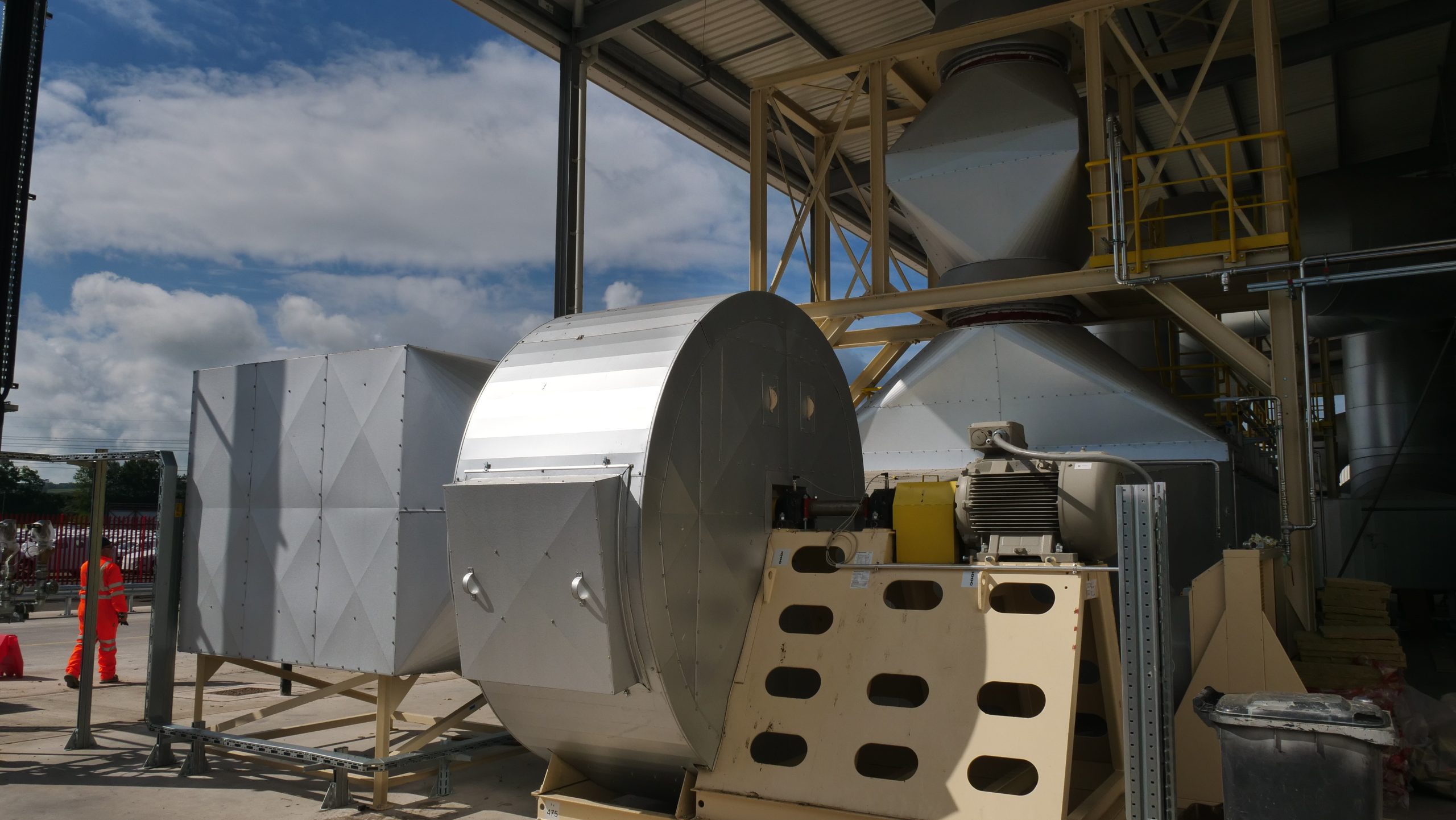
Industrial fans are fitted with acoustic insulation to reduce noise and vibration levels during operation. This is essential, as fans typically generate significant noise pollution. By using this specialised insulation specification, the overall decibel output is effectively reduced, creating a quieter and therefore safer working environment for site teams. Various industrial fans at the plant such as the Cooling Air Valve, Exhaust and Hot Gas Generator fans all had RW5 100kg/m3 Mineral Wool Slab installed to the casing to provide enhanced acoustic performance.
To protect the insulation from environmental factors like potential damage, all insulated assets were clad with durable 0.9mm Aluzinc prefabricated sheet metal cladding fabrications, totalling 3,325m².
Dryer Duct System
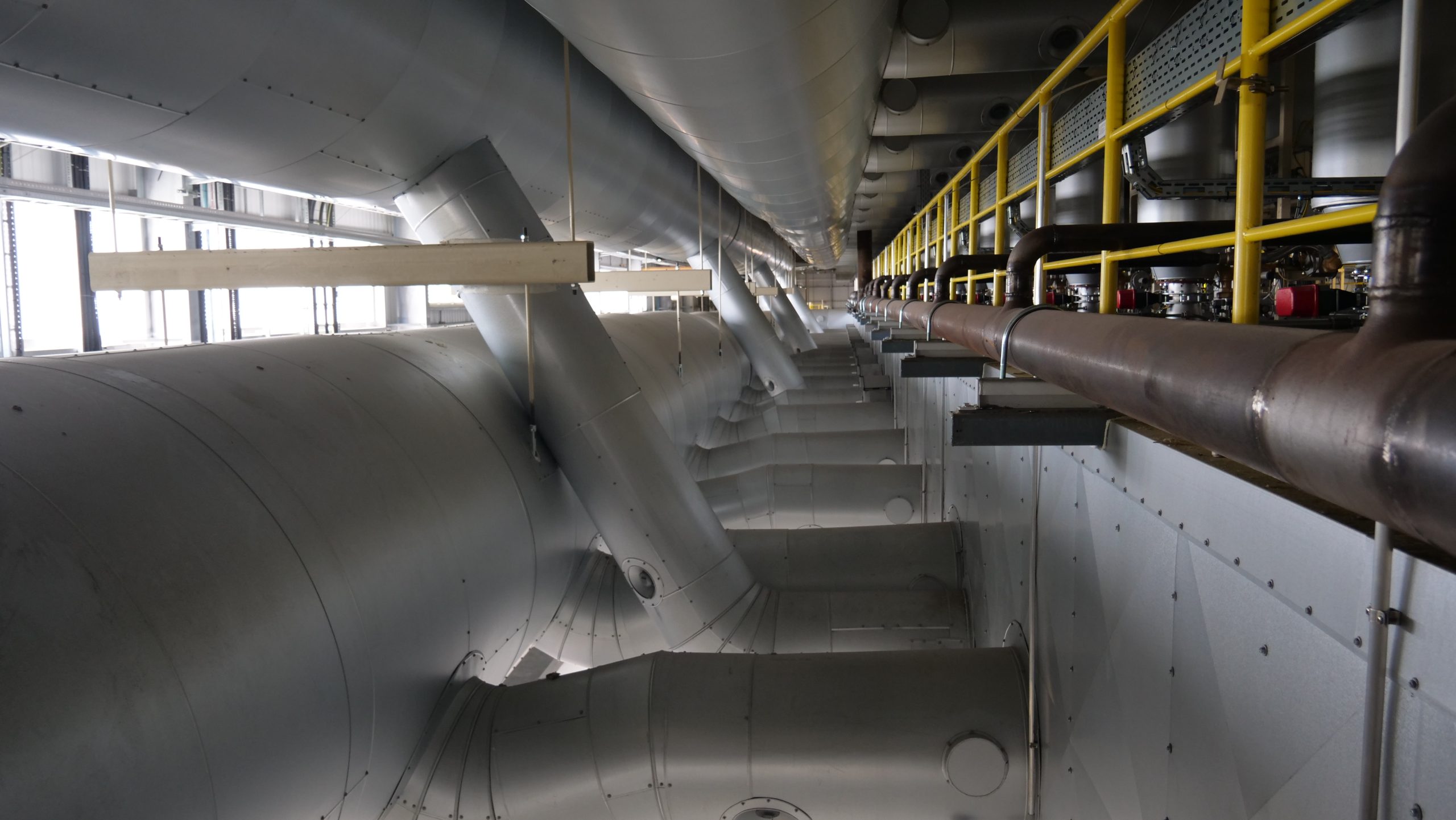
Our insulators ensured 6,290m² of technical insulation (various layers shown below) and 4,621m² of protective cladding was precisely installed across various dryer duct systems at the plasterboard manufacturing plant:

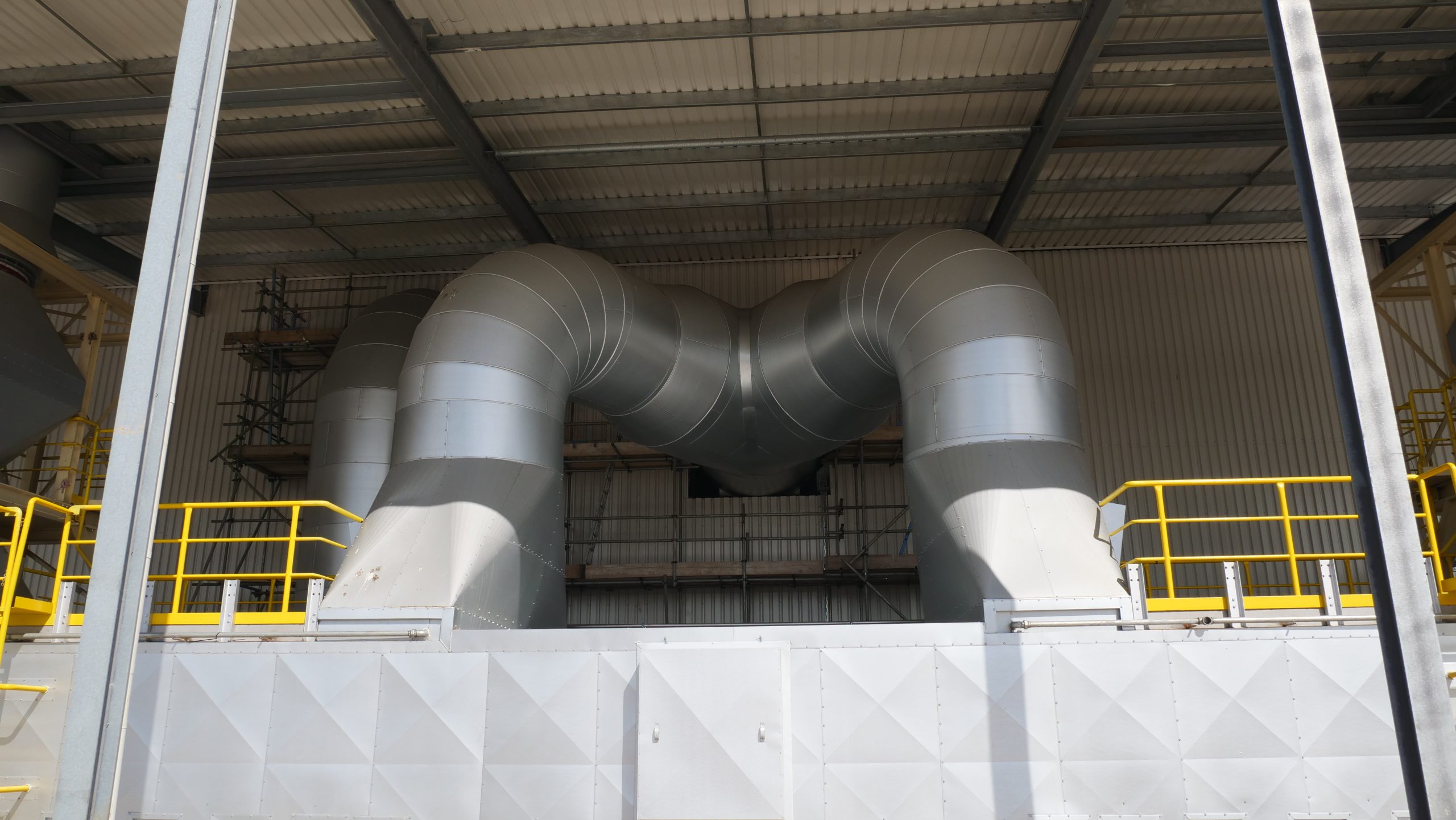
The thickness of the technical insulation layer is different depending on the operating temperature of the under lying asset and the required thermal performance of the system. The higher the operating temperature, the thicker the insulation to conserve heat and stop energy waste. In addition, installing the correct thickness of insulation helps protect personnel from dangerously high temperatures by bringing touch temperatures down to levels deemed safe and in line with health and safety standards.
The required insulation thicknesses within the Dryer Duct systems of the plant ranged from 80mm to 140mm due to different operating temperatures of each piece of equipment. Higher temperature equipment such as the Dryer, Exhaust Ducts and the Recirculation Ducts required a double layered insulation installation to meet the necessary thermal performance requirements. Whereas the Enema and Exhaust Stack only required a single layer, 80mm thick, mineral wool insulation.
Flexible Insulation Jackets
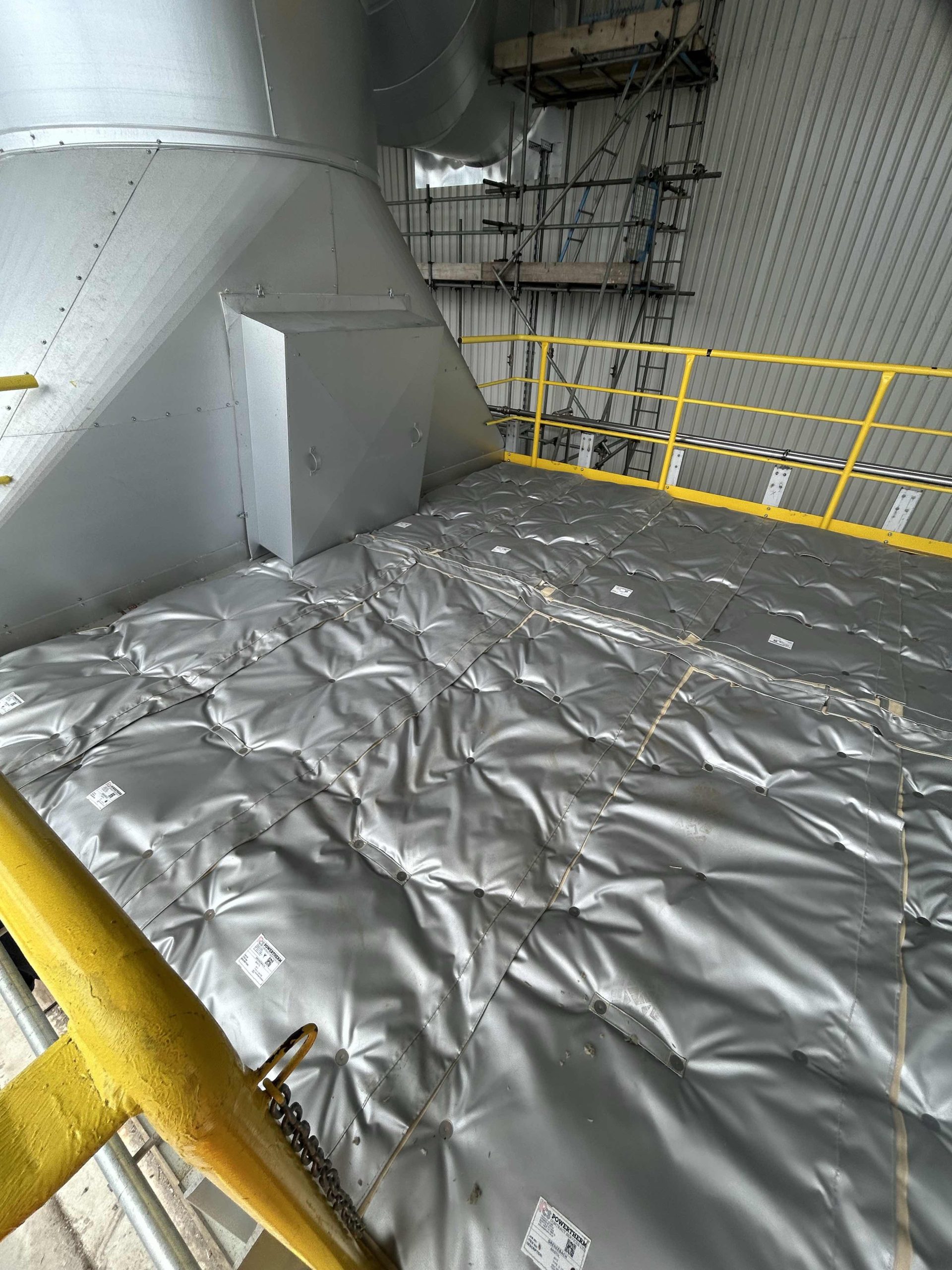
Our in-house Flexible Insulation Division manufactured and installed custom insulation jackets/ covers for valves, flanges, instruments, tank roofs and notably the doors of the heat exchanger at the plasterboard manufacturing plant.
The heat exchanger doors were meticulously designed and manufactured in-house, and constructed from:
- Inner Layer: High-temperature glass cloth with boxed edges.
- Insulation Core: 100mm mineral wool LD mat.
- Outer Layer: Grey silicone for enhanced durability and moisture resistance.
The covers were secured with Velcro fastenings, allowing for quick and easy removal, and reinstallation following inspection and maintenance requirements.
Special thanks to every involved in this standout project, thank you!