


Frost Protection
Safeguarding Assets through Frost Protection Trace Heating Systems
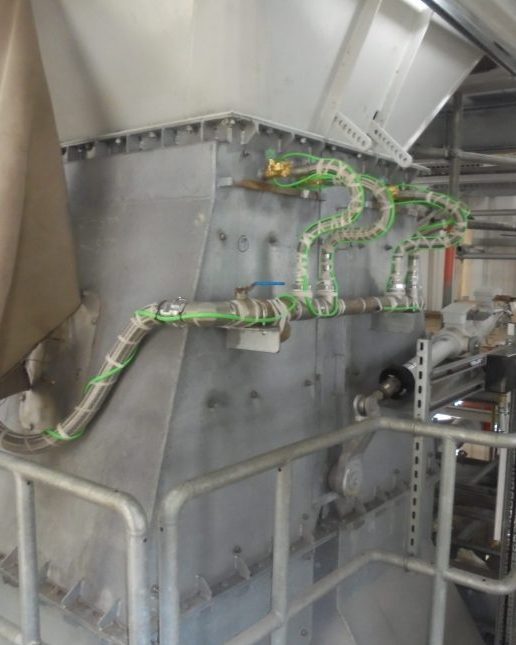
Installing trace heating for frost protection can be the difference between protecting the life of assets and costly damage or, worse, complete and costly failure. Frost protection systems can also reduce the risk of injury to both personnel and the wider general public.
We have applied our solutions to the following:
- Water supplies: including chilled water supply (CWS), fire water circuits
- Process equipment
- Storage equipment: including vessels, tanks, and silos
- Instrumentation: including pumps and valves
- External decontamination showers
- Process piping: for condensation / frost prevention
- Footpaths and walkways.
The implementation of trace heating for frost protection stands as a strategic investment with far-reaching implications. Beyond safeguarding assets and mitigating potential damages, these systems play a crucial role in enhancing overall safety by minimizing the risk of injuries to both personnel and the wider public.
How does trace heating prevent pipe freezing in cold climates?
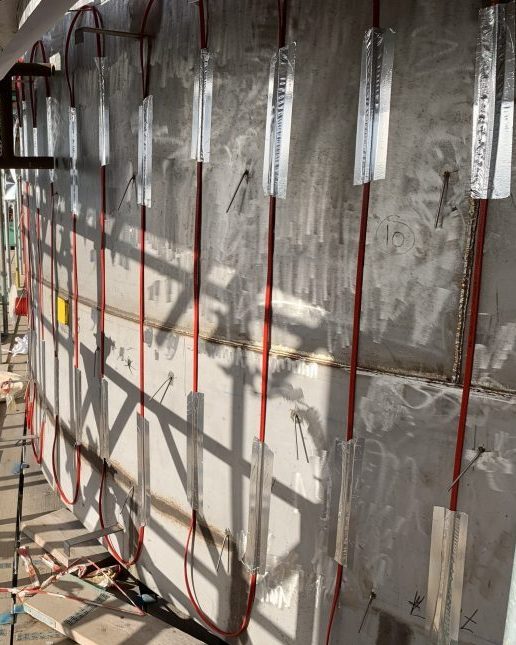
Trace heating prevents pipe freezing by applying a continuous, controlled heat source directly to the external surface of a pipe, compensating for heat lost to the surrounding environment and ensuring the fluid inside remains above its freezing point.
The trace heating system works by running an electric heating element along the length of the pipe. The system then uses thermostats to monitor the ambient temperature or surface temperature of the pipe. If the temperature drops to a specified level (often 5°C) the heating cable energises, providing heat to the pipe surface.
The cable and pipe are then covered with thermal insulation, which reduces heat loss to the atmosphere and improves system efficiency.
Self-regulating cables are particularly well-suited to frost protection applications because their electrical resistance automatically increases as the pipe temperature rises, reducing power output and preventing overheating.
A well-designed trace heating system accounts for pipe diameter, fluid type, minimum ambient temperature, insulation specification, and required maintenance temperature.
Powertherm provides full trace heating design, supply, installation, and commissioning services across a wide range of industries, including winterisation programmes for planned shutdowns and ongoing frost protection for operational assets.