


Skelton Grange EfW
The Result
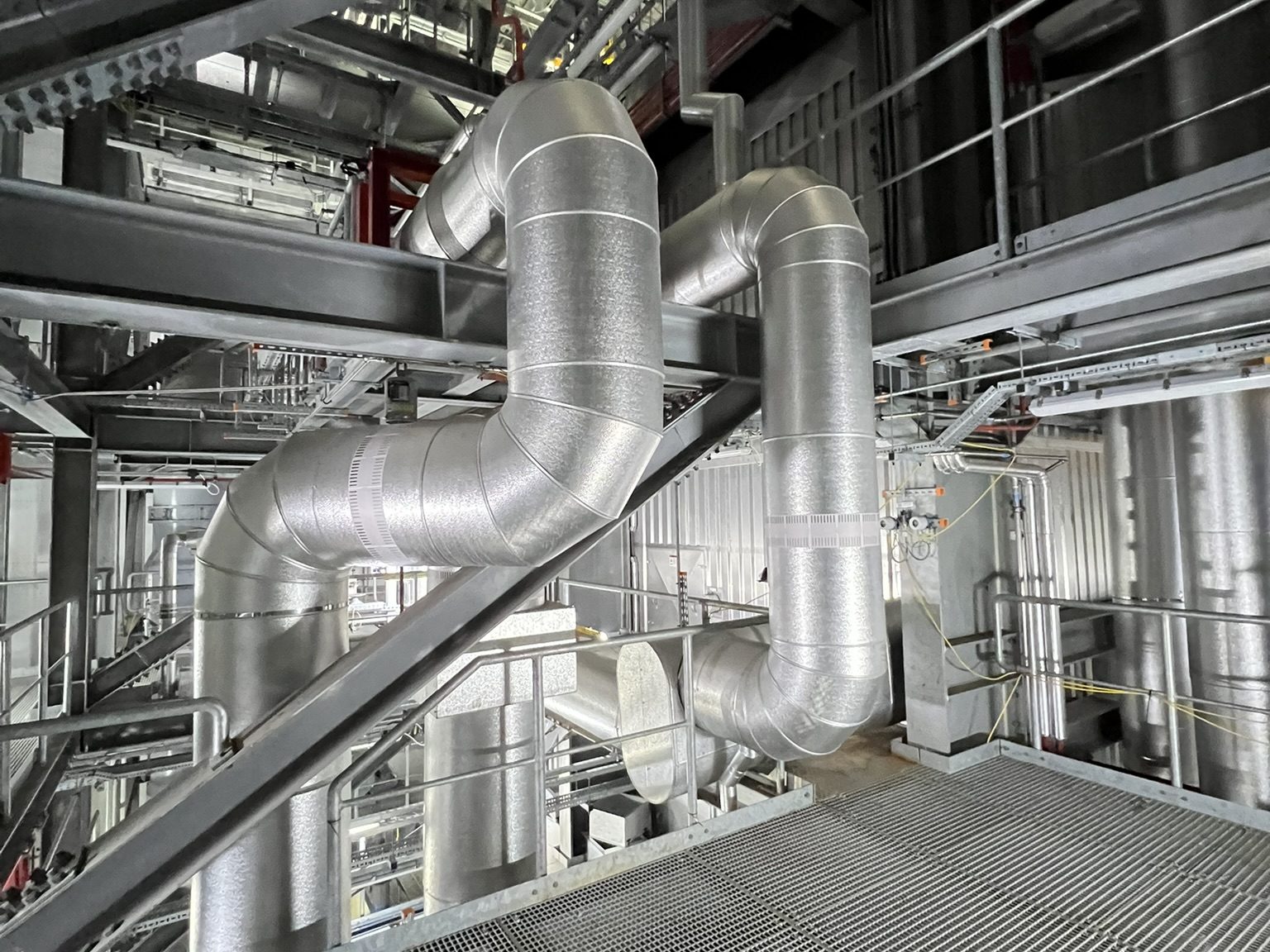
Including technical insulation system design, Powertherm successfully completed the supply and installation of more than 26,000m² of industrial insulation and cladding to various systems on Skelton Grange, an energy-from-waste (efw) facility based in Yorkshire, in the UK. The efw power plant can provide power for 100,000 homes from 410,000 tonnes of residual waste each year, diverting it from landfill.
A combination of our on-site installation and project management teams along with our in-house insulation system design and manufacturing capabilities allowed for precise, cost-effective, on-time delivery of our work scope. Our experienced team, with a peak workforce of 45, ensured full compliance with applicable standards and safety legislation with 0 RIDDOR reportable H&S accidents on-site.

The Challenge
Our client Hitachi Zosen Inova (now known as Kanadevia Inova) was building a brand-new energy-from-waste plant capable of generating 49MW of electrical energy per annum. The processes involved in creating this energy requires equipment to operate at extremely high temperatures, which is why they needed Powertherm’s industrial insulation expertise to keep processes running efficiently, conserve energy and provide a safe work environment.
The scope of works required detailed industrial technical insulation and sheet metal cladding for the boiler systems, FGT, water steam cycle, balance of plant and associated ducting and pipework for lines 1 and 2.
Applying the correct insulation thicknesses to achieve safe surface temperature limits (below 50°C) and a maximum heat loss of 160 W/m², all within strict timelines, posed technical and skill challenges.
To ensure these objectives were achieved, our insulation system design team were called upon to deliver expert analysis of the Boiler and FGT systems, providing technical drawings, including walkable areas, welds and load bearings, accompanied with supporting calculations (thermal, static, acoustics where applicable) and material specifications using our design engineers deep understanding of insulation systems and working in accordance with relevant standards like BS 5970.
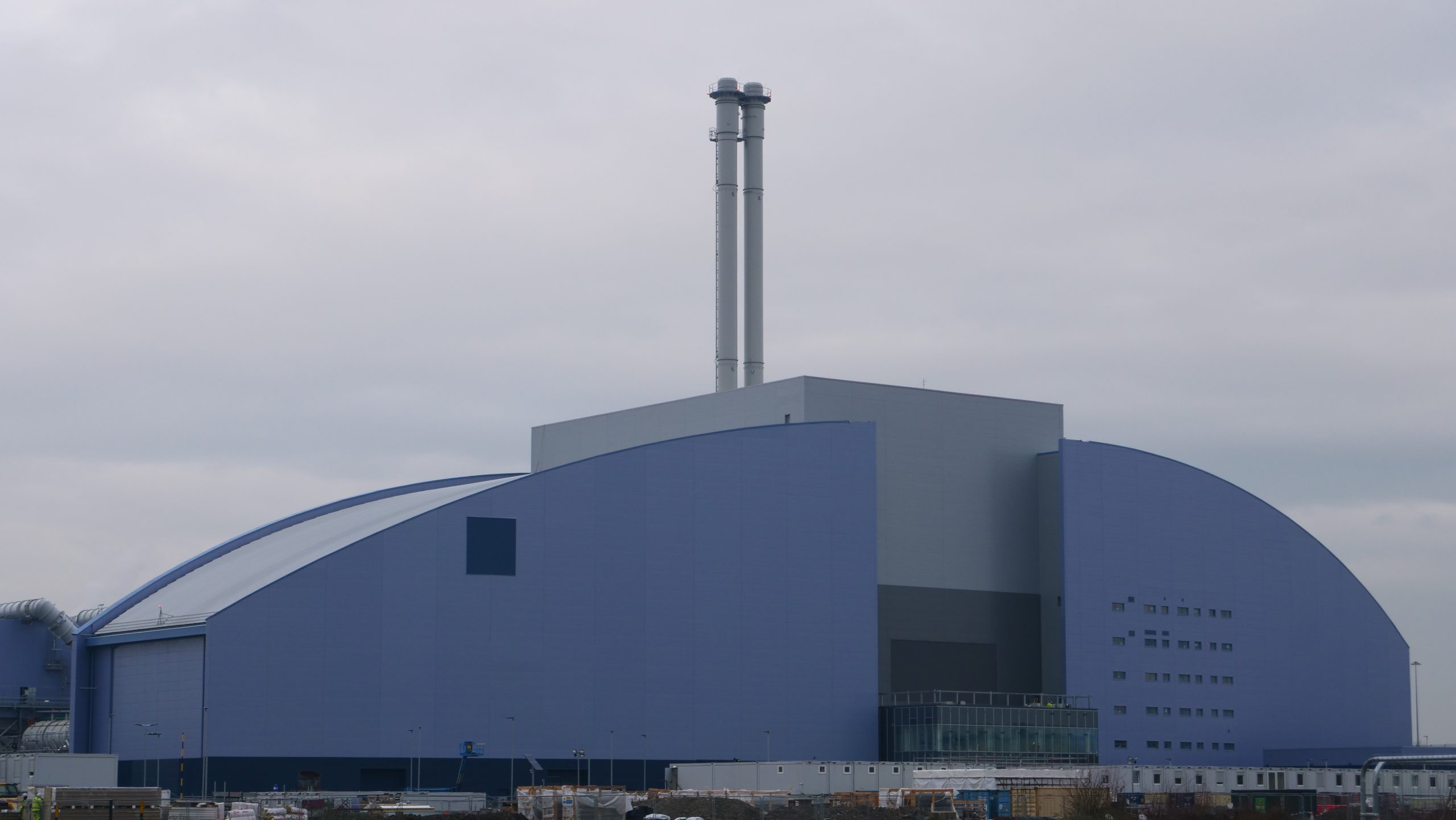
Project / Site Details
- Client: Hitachi Zosen Inova (HZI)
- Site: Skelton Grange EfW
- Location: Leeds, Yorkshire, UK
- Plant Type: Energy-from-Waste (EfW)
- Fuel: Residual waste
- Processing capacity: 410,000 tonnes of residual waste each year
- Output: 49MWe (gross – per annum)
- End User: Enfinium
Scope Of Services
- Industrial Insulation
- Sheet Metal Cladding
- Flexible Insulation Jackets
What We Delivered
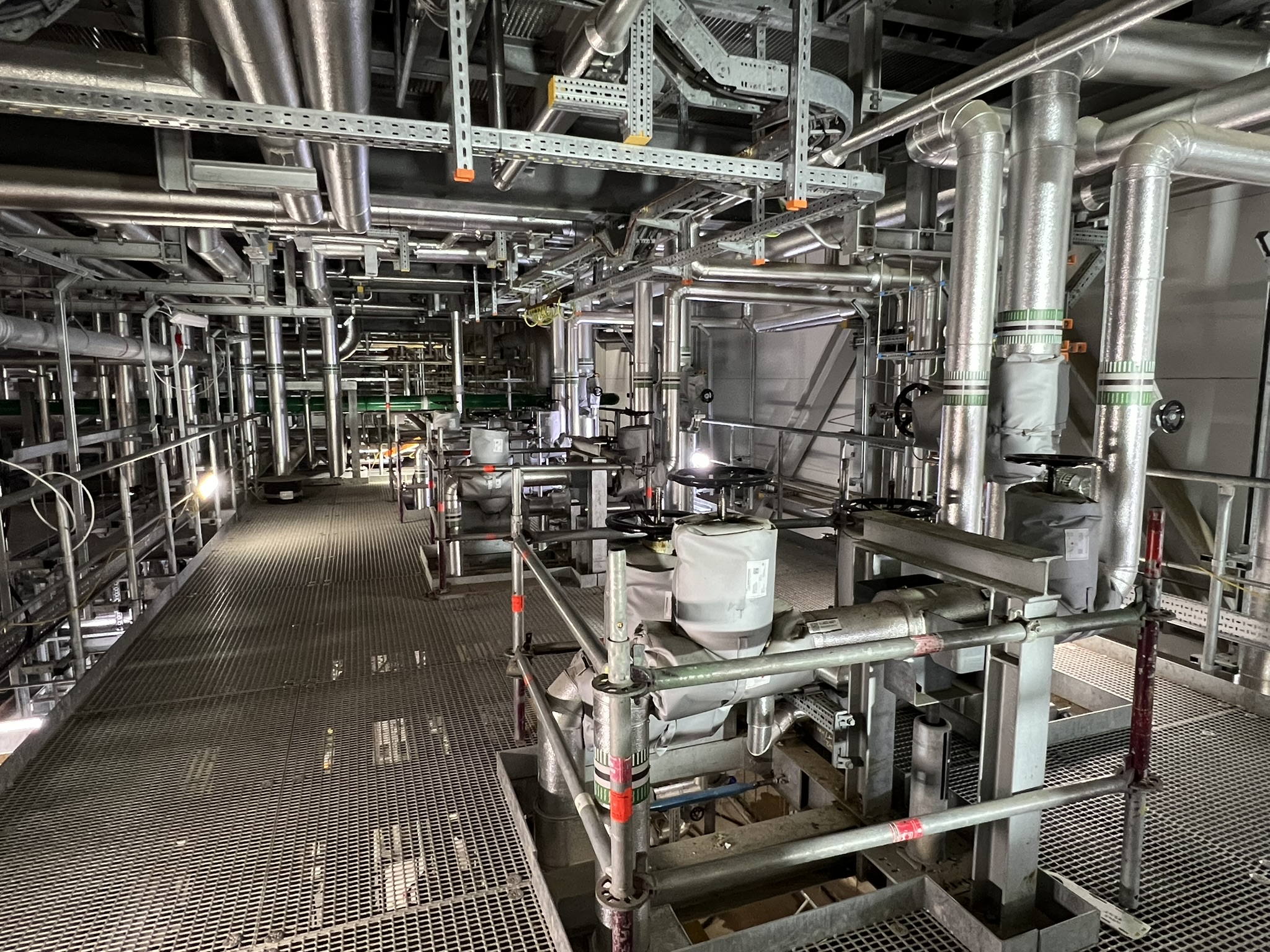
Over 26,000m² of technical insulation and associated protective sheet metal cladding was applied to all process systems and pipework by our Insulation teams at the Skelton Grange plant:
- Boiler / Common Steam Piping
- Flue Gas Treatment
- Water Steam Cycle
- Solid Handling
- Balance of Plant
Our in-house technical insulation system design team also played a pivotal role in this project; designing the insulation system for the Boiler / Common Steam Piping and Flue Gas Treatment systems.
Boiler / Common Steam Piping (CSP)
Powertherm delivered the technical insulation system designs and installation for the Boiler / Common Steam Piping (CSP) systems, providing a comprehensive solution that combined thermal performance, personnel protection, structural integrity, and long-term durability. Our in-house design team developed insulation specifications for key boiler components including the boiler casing, superheater sections, air systems, and grate hopper systems, ensuring compliance with BS 5970 – Code of Practice for Thermal Insulation of Pipework and Equipment.
The design process considered operating temperatures, equipment geometry, access requirements, and surrounding environmental factors, with the objective of minimising heat loss while maintaining safe external surface temperatures and protecting equipment from operational and external factors. Steam systems within CSP areas can operate at temperatures of over 500°C, requiring high-performance insulation systems capable of maintaining long-term thermal stability in demanding operating conditions.
For high-temperature boiler system components such as the superheaters and walls of the vertical passes, Powertherm’s insulation system design team specified multi-layer mineral wool insulation systems with thicknesses ranging between 100mm and 240mm, depending on operating temperature. These thicknesses were calculated in accordance with BS 5970 heat loss criteria, ensuring that external cladding surface temperatures remained within safe limits for personnel protection while maintaining optimal plant efficiency.
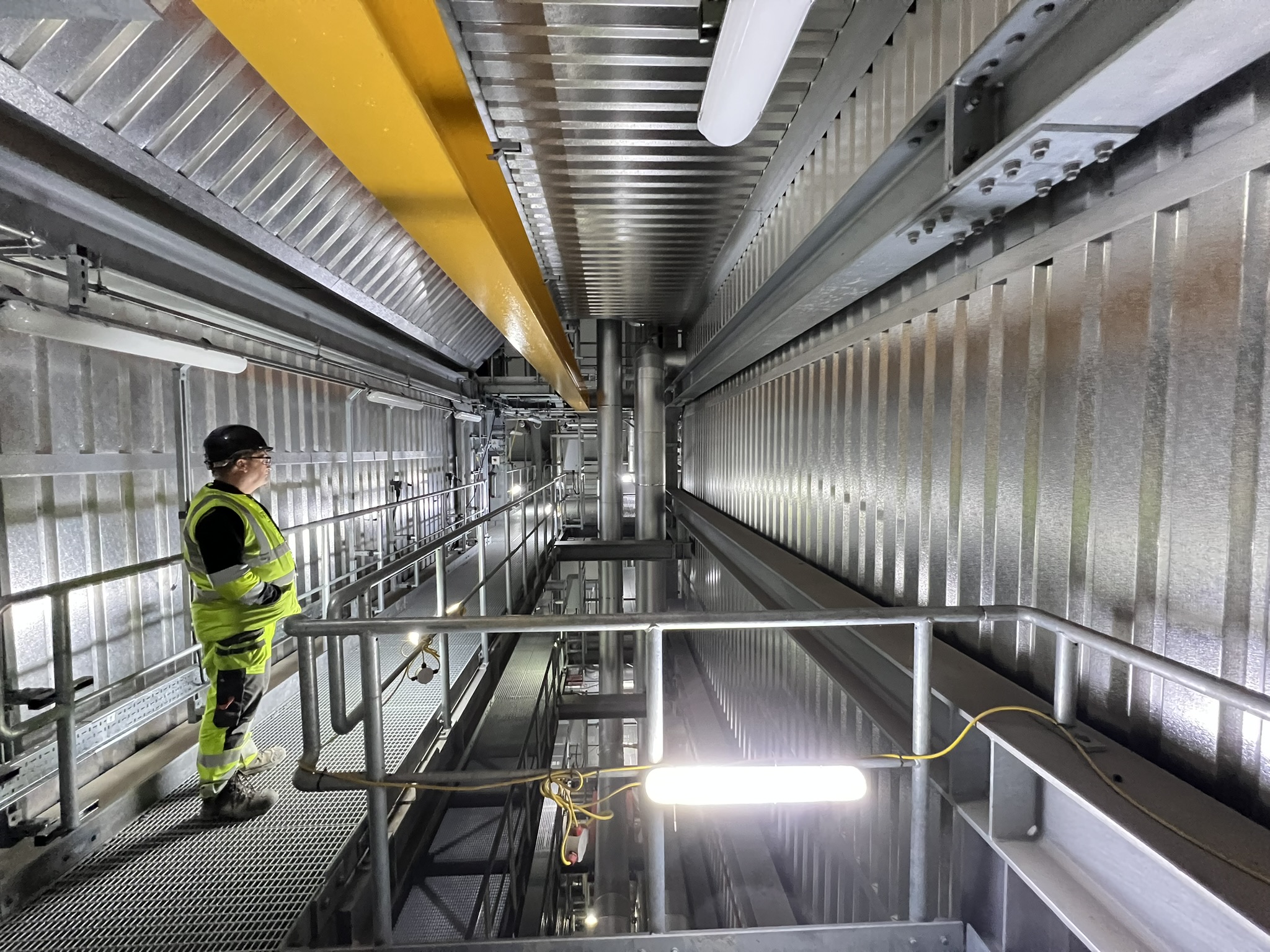
A combination of welded insulation pins, stainless steel bands, and mesh reinforcement was incorporated to secure the insulation and maintain its integrity under high thermal loads. For larger surfaces and complex geometries, engineered substructure systems including support rings and DUK Rail Systems were introduced to provide a rigid support framework. These systems prevent insulation sagging over time and maintain the required stand-off distance between the underlying asset and outer cladding, ensuring a consistent thermal barrier across large surface areas through the installation of the correct insulation thickness.
The boiler casing and large equipment surfaces required particularly robust substructures due to their scale and operating temperatures. In these areas, welded support arrangements were designed to accommodate thermal expansion and contraction while ensuring the insulation remained securely fixed during plant operation.
For the grate hopper assemblies, which operate near high-temperature combustion zones where internal temperatures can surpass 500°C, enhanced insulation thicknesses and reinforced fixing methods were incorporated. These systems were designed not only to control heat loss but also to ensure safe access conditions for plant operators working near the equipment.
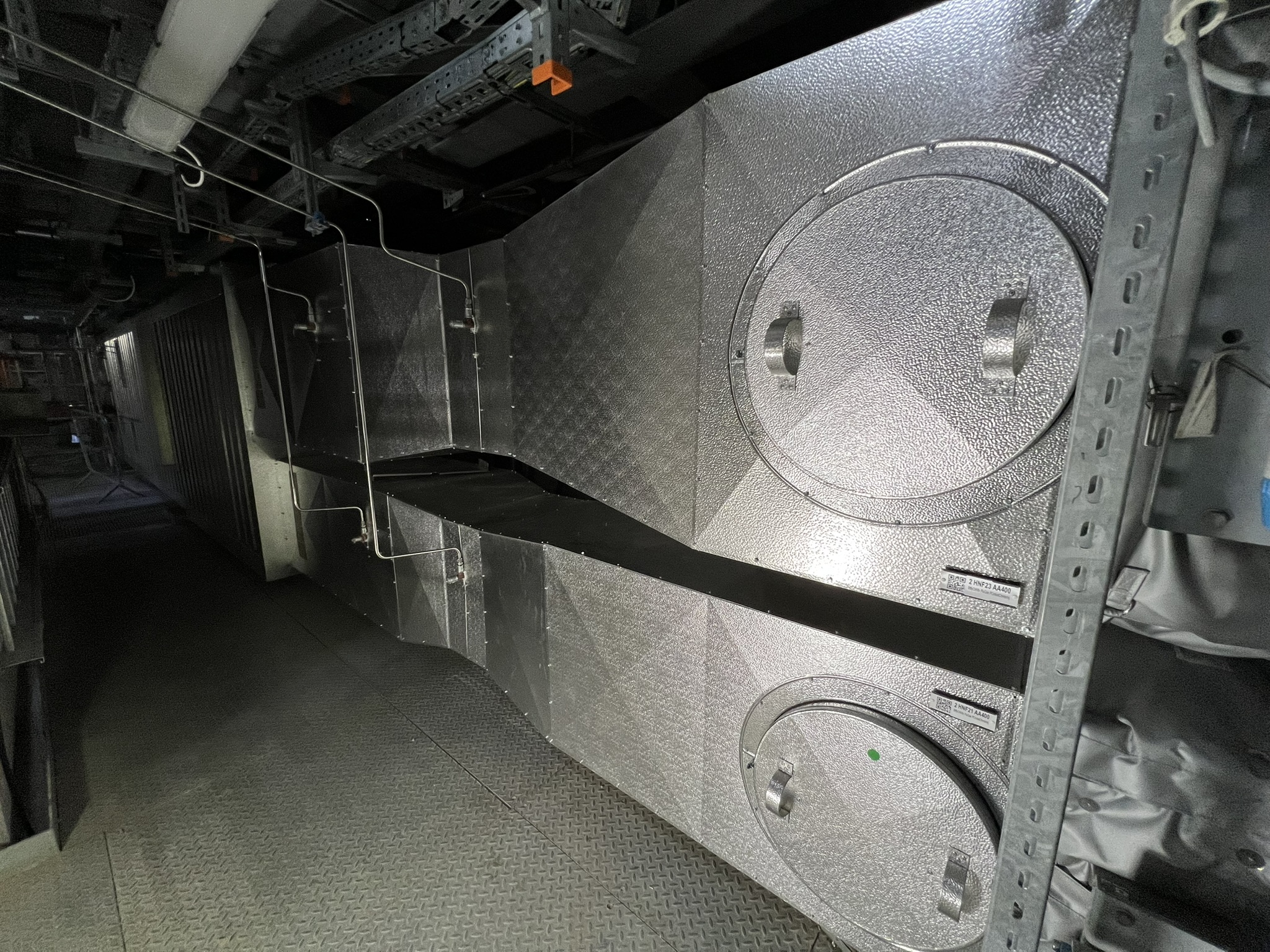
Cladding specifications were carefully selected to suit the operating environment and access requirements across the boiler area. Profiled, stucco embossed aluminium cladding was widely used to provide corrosion resistance, environmental protection, and a durable external finish, while in areas requiring walkable access or maintenance platforms Powertherm specified and installed 4.5mm aluminium checker-plate systems.
In particular, the roof of the boiler was finished with premanufactured aluminium checker plate, with associated handrails, to create a robust, walkable surface that enables safe access. The nonslip profile provides reliable grip in elevated areas that may be exposed to moisture or dust, improving safety for operational personnel while protecting the insulation system beneath from mechanical damage. This roofing solution was engineered and supported in accordance with BS 5970, ensuring correct load distribution, accommodation of thermal movement, and full integration with the surrounding insulation and substructure design.
Across the wider CSP area, our insulation team delivered 9,284m² of mineral wool insulation, tailored to the performance requirements of each piece of equipment:
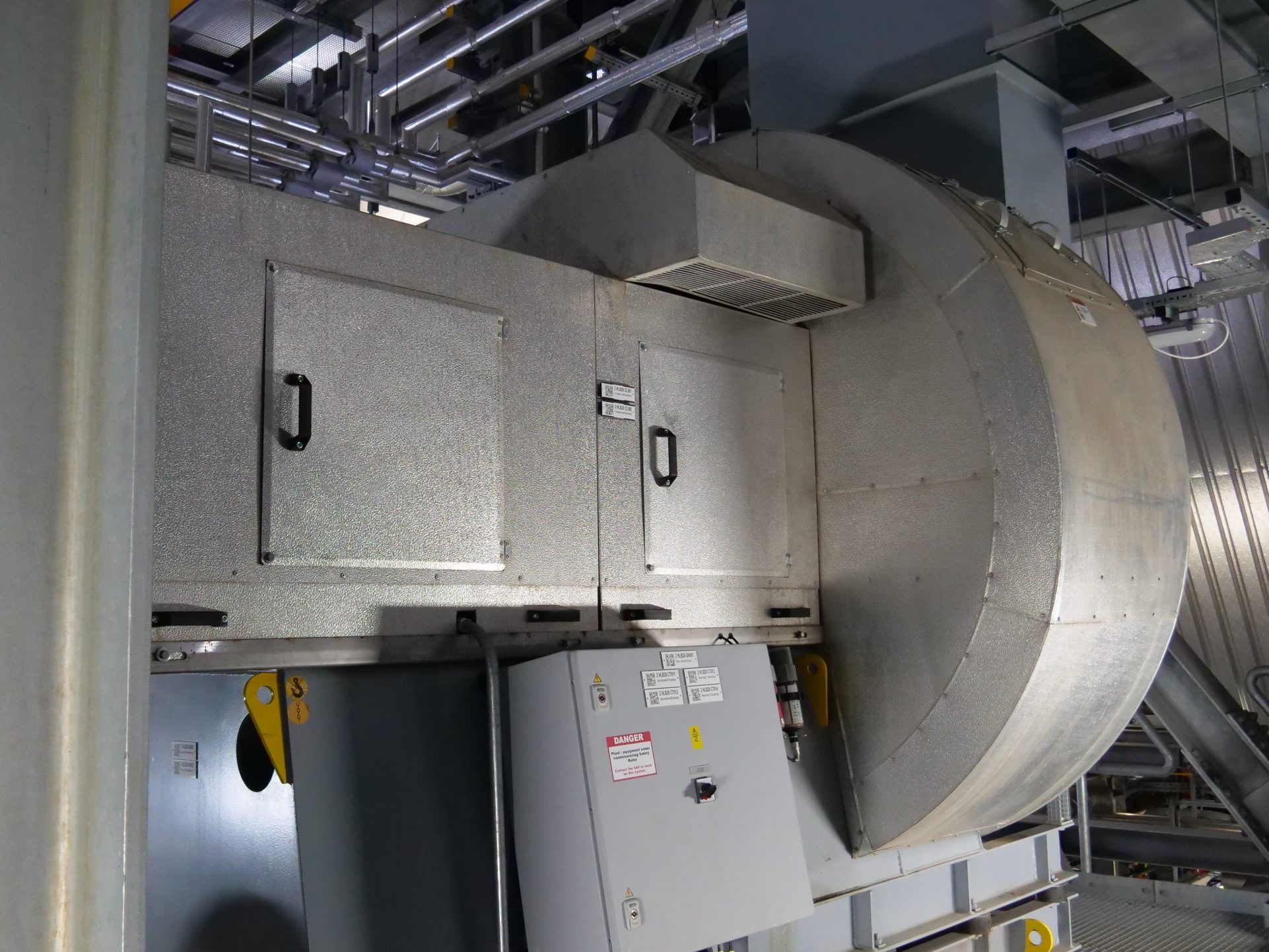
- Primary Air System (acoustic insulation applied to the primary air fan)
- Secondary Air System (acoustic insulation applied to associated fans)
- Boiler
- Grate
- Boiler Blow Down Tank
- Silencers (acoustic insulation applied)
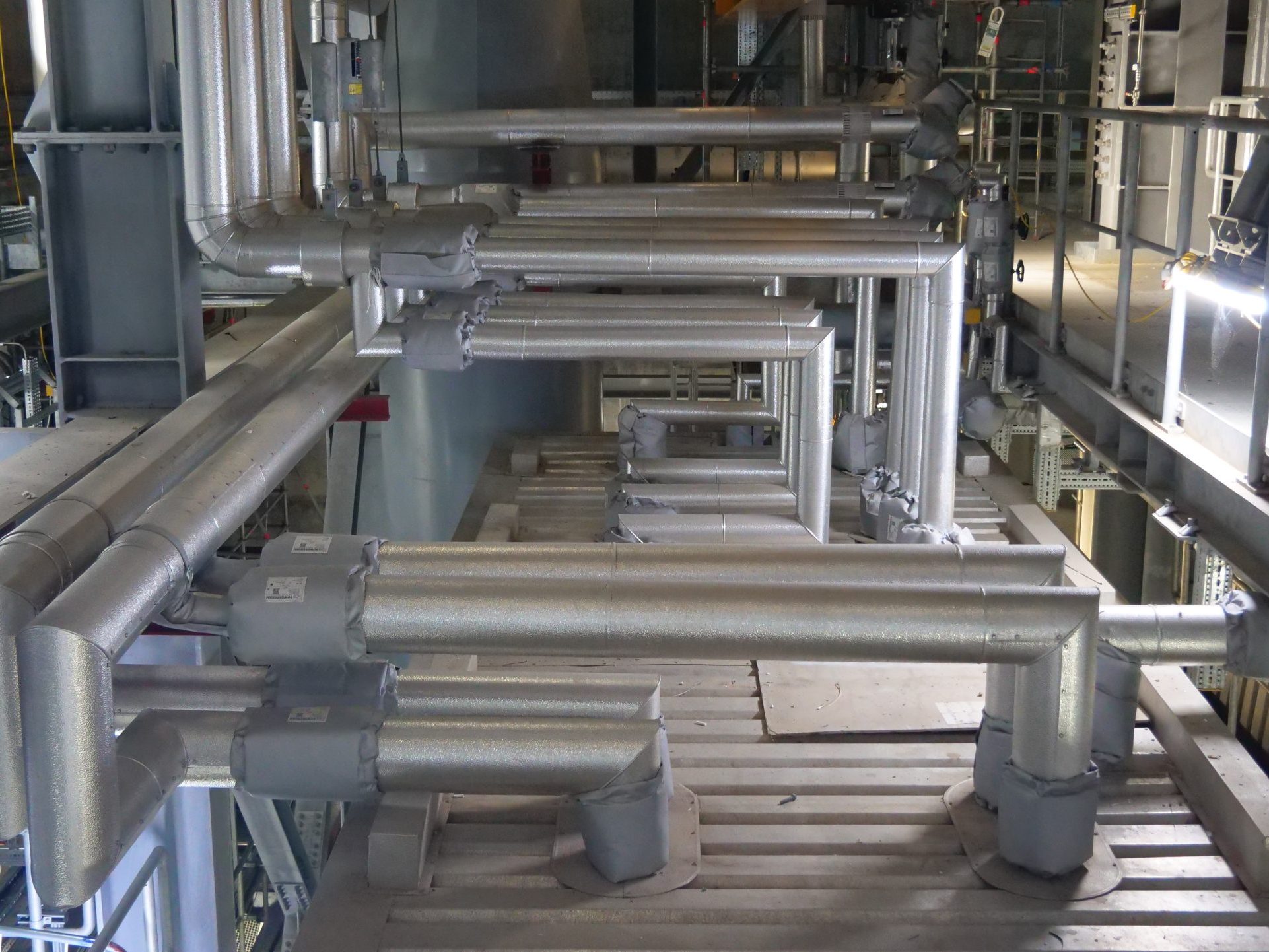
In addition, to insulating the various items of equipment within the CSP, Powertherm’s insulation team also installed mineral wool pipe section insulation and protective aluminium cladding to all associated piping, totalling 3906m².
By combining detailed thermal and static calculations, insulation specification, engineered substructures, and robust cladding systems, Powertherm’s insulation system design team delivered a CSP insulation solution that maximised plant efficiency, ensured personnel safety, and provided long-term reliability in line with the stringent requirements of modern energy-from-waste facilities. The integration of design and installation expertise allowed Powertherm to deliver a fully coordinated solution across the boiler and steam systems, supporting the overall performance of the Skelton Grange EfW plant.
Flue Gas Treatment Equipment
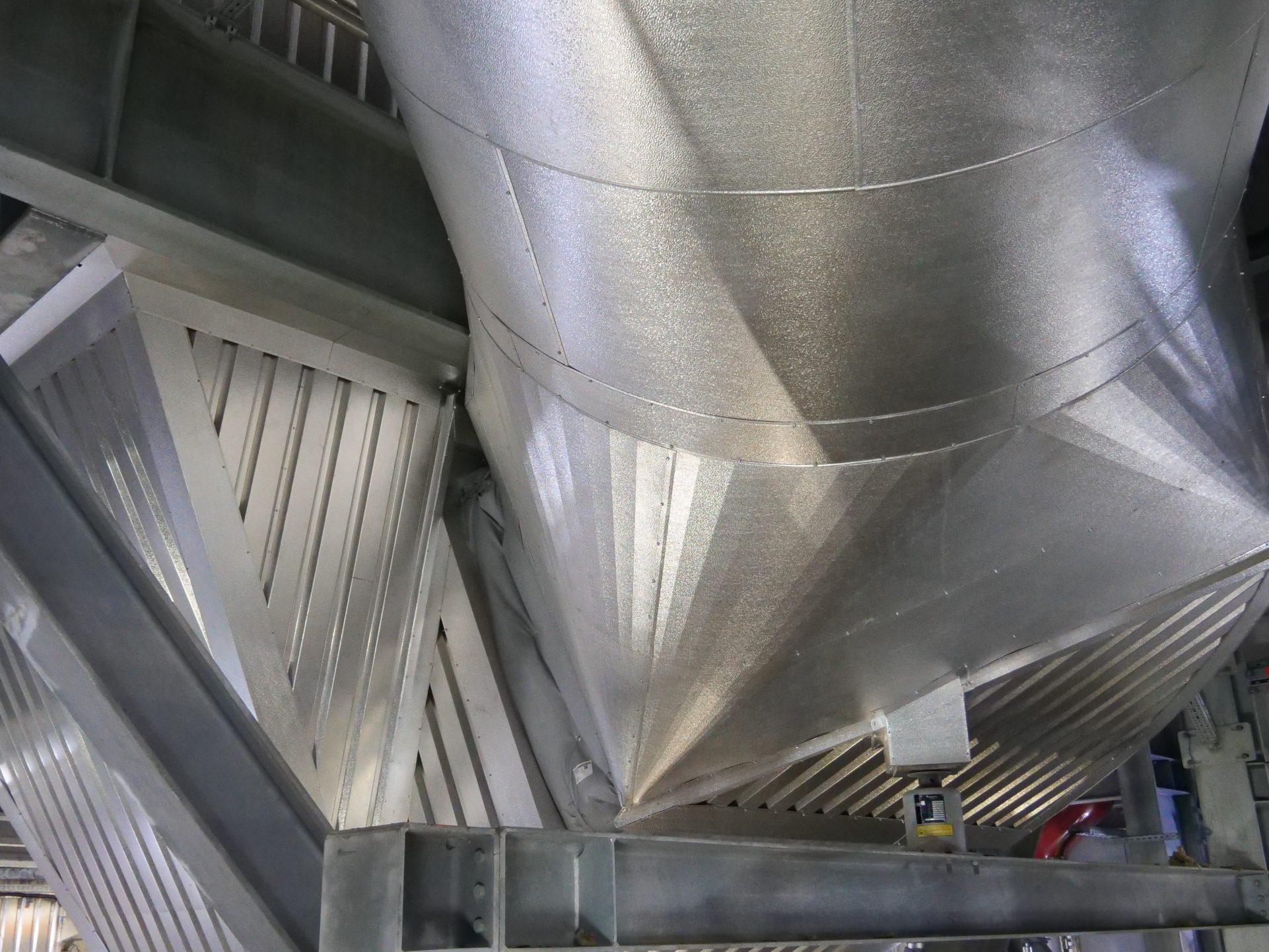
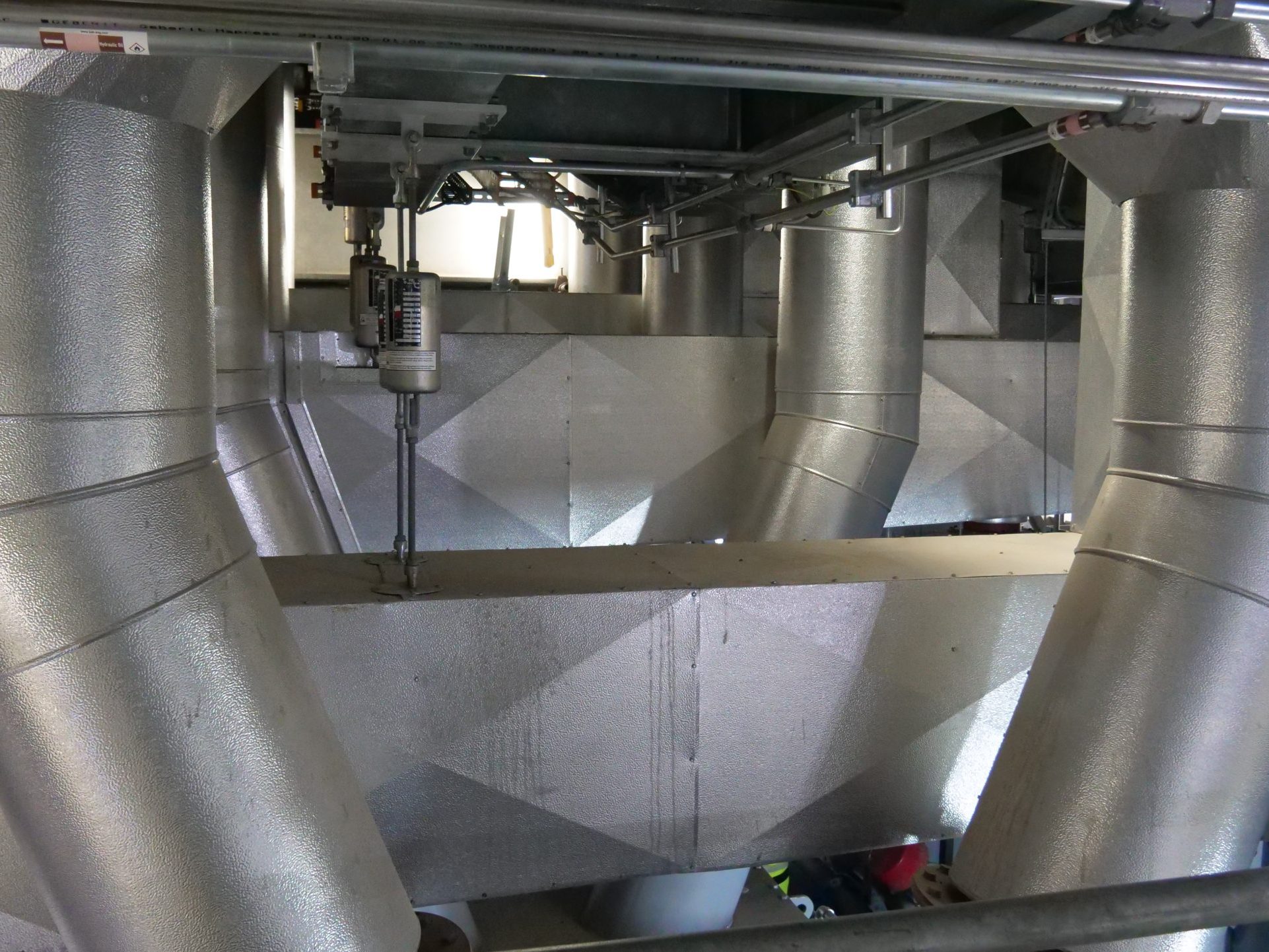
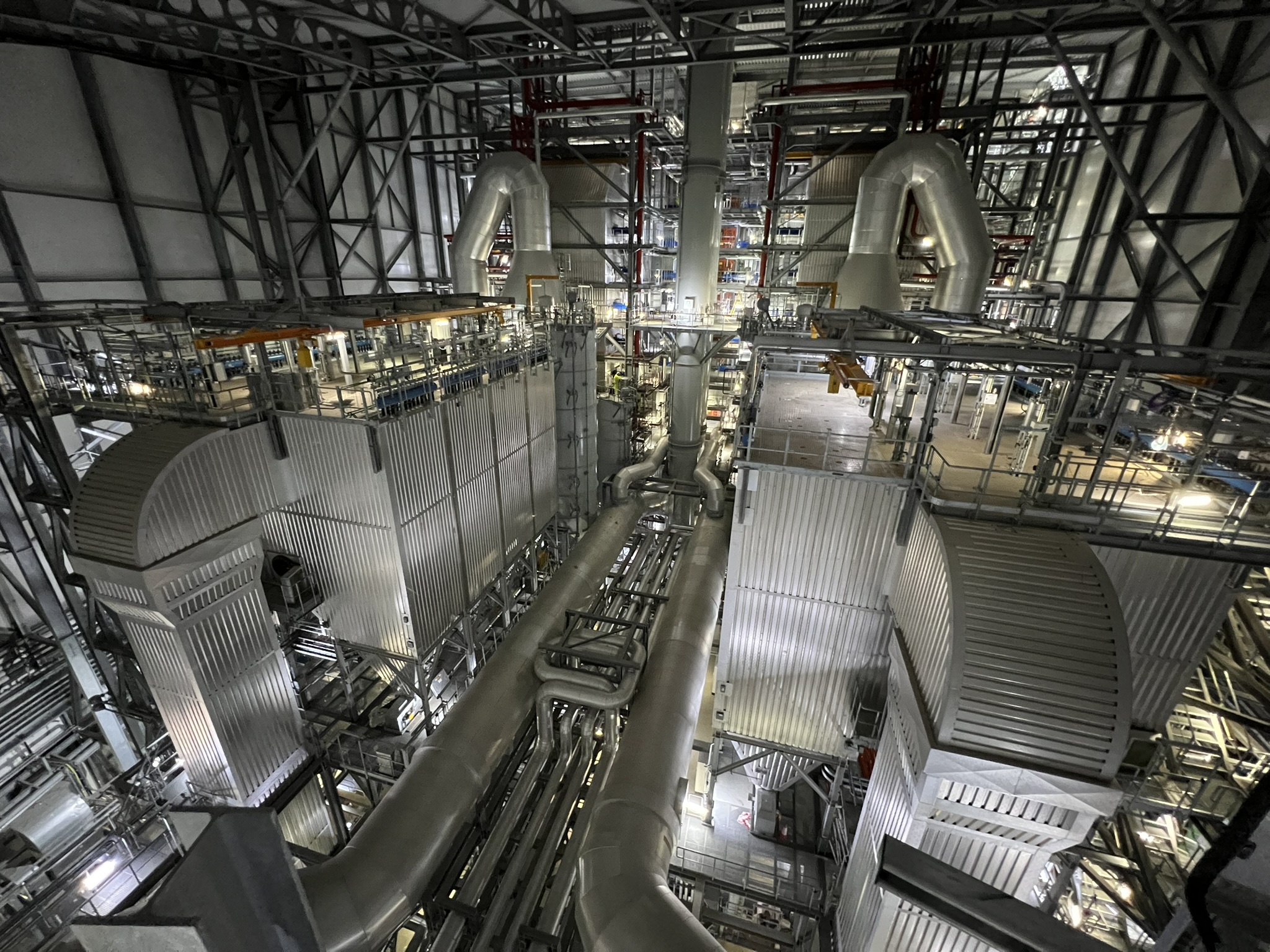
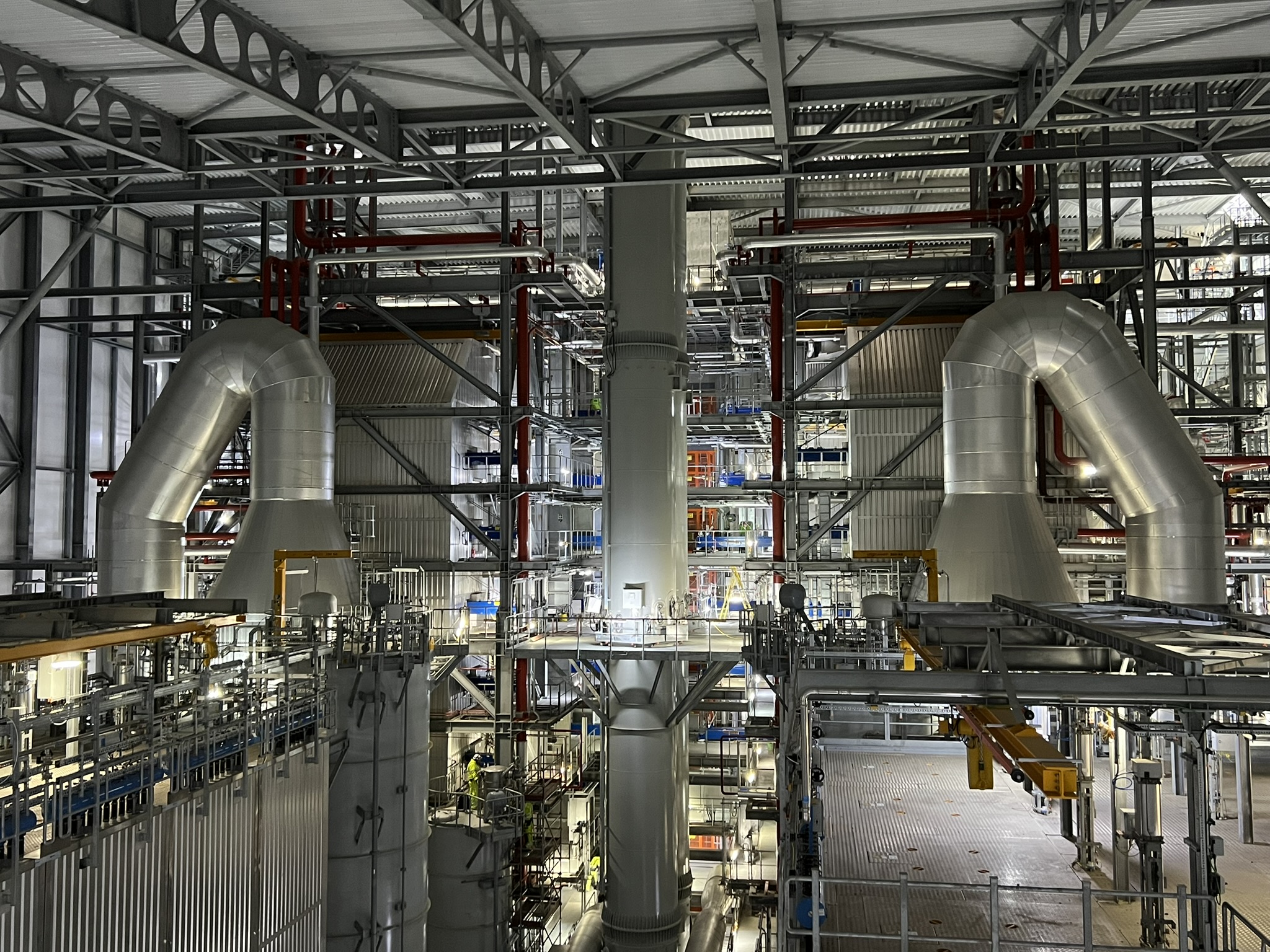
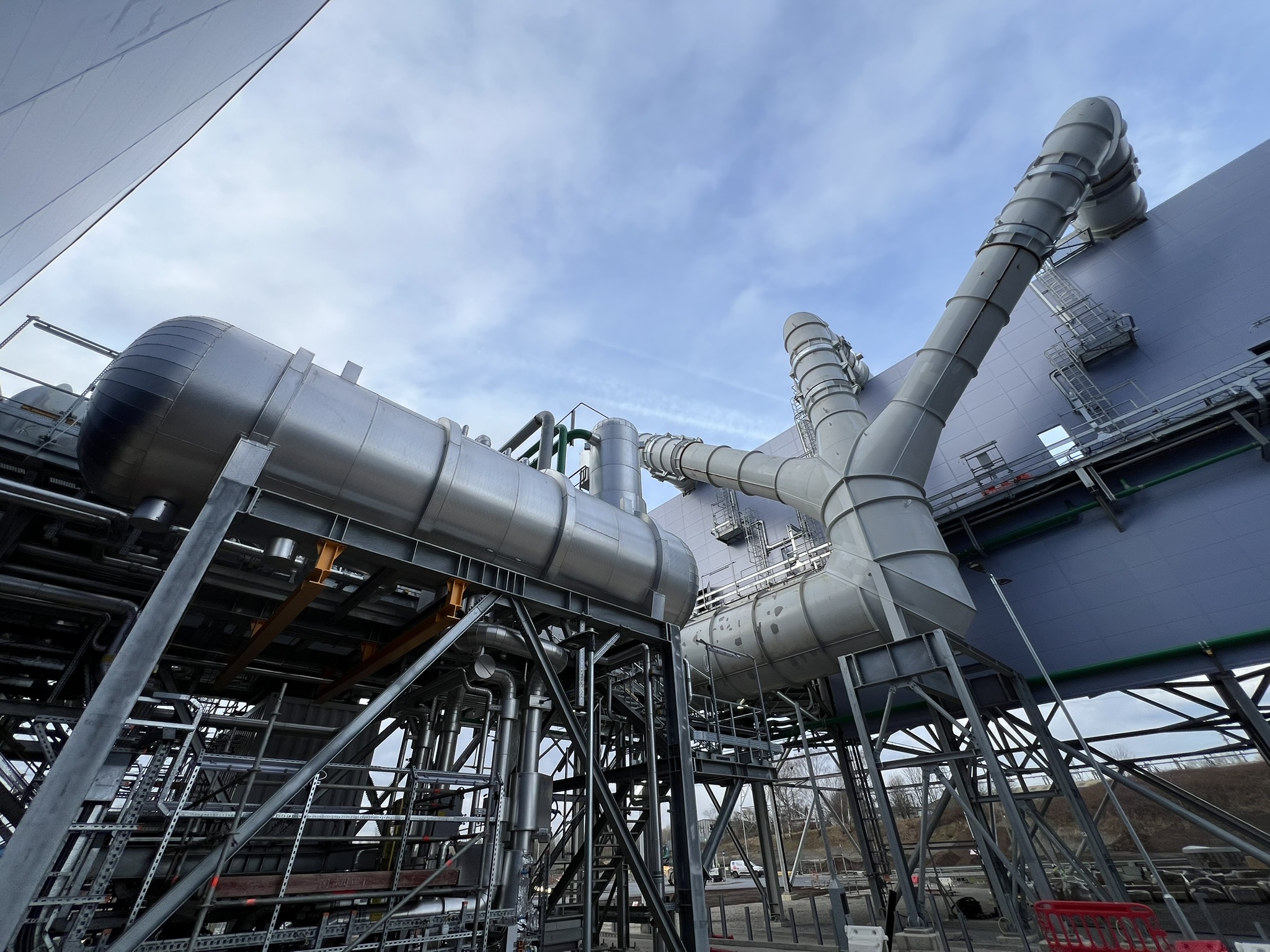
The Flue Gas Treatment (FGT) scope at the Skelton Grange facility required our insulation system design and installation capabilities of the insulation systems across key plant equipment and associated ductwork. The insulation system design considered equipment geometry, operating temperatures, structural support requirements, and long-term durability, ensuring systems would maintain performance while allowing for thermal expansion, vibration control, and maintenance access.
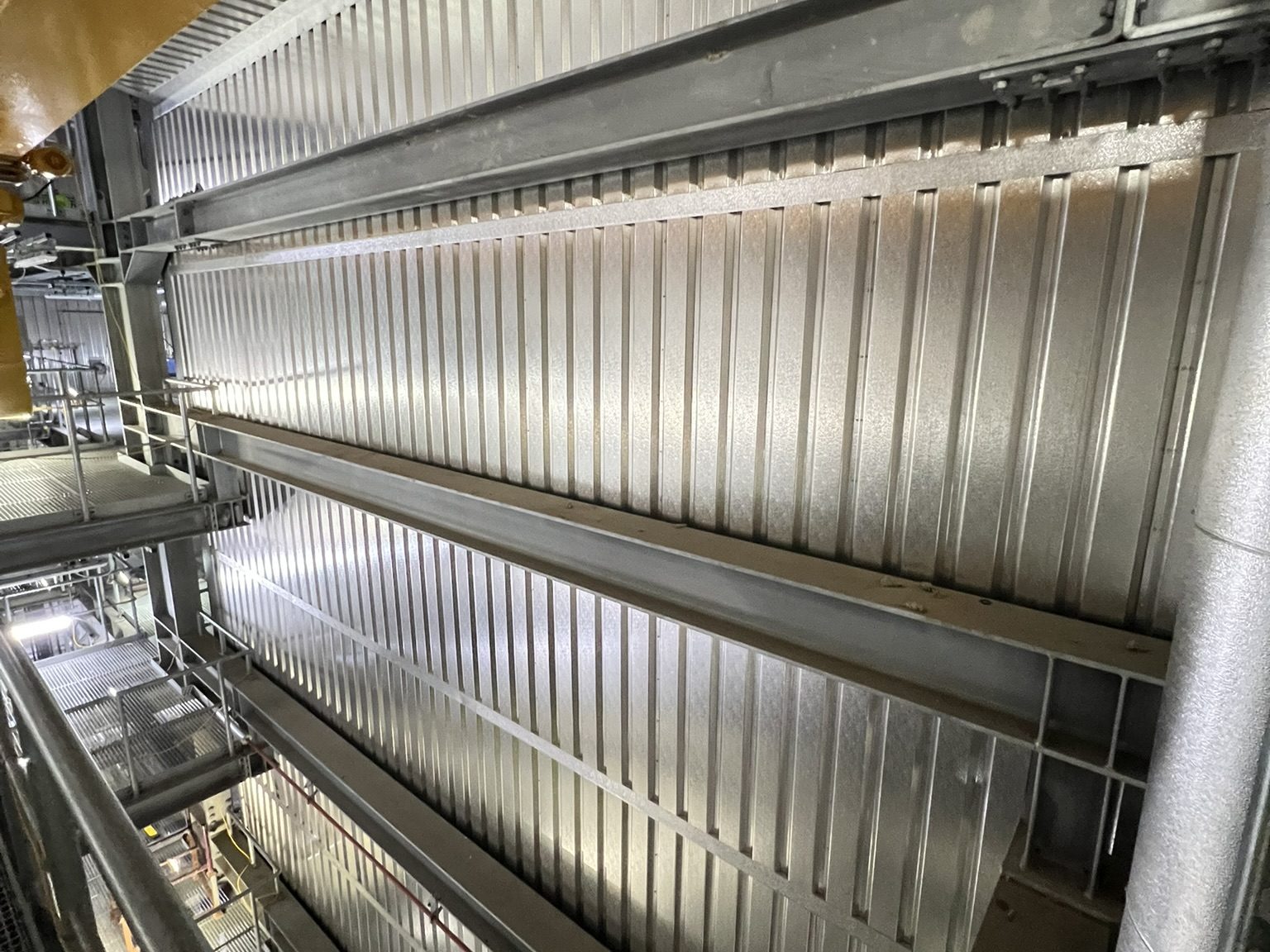
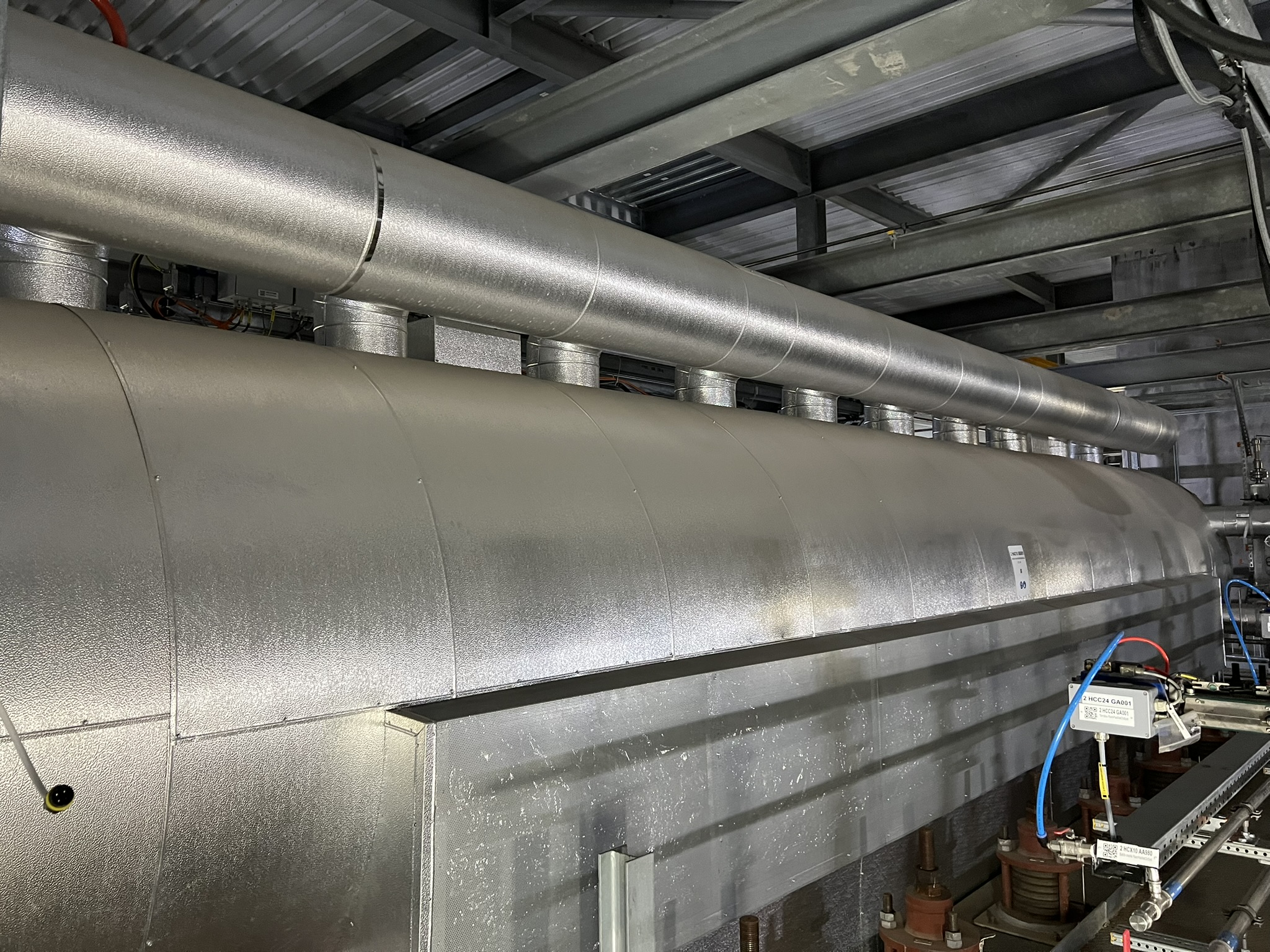
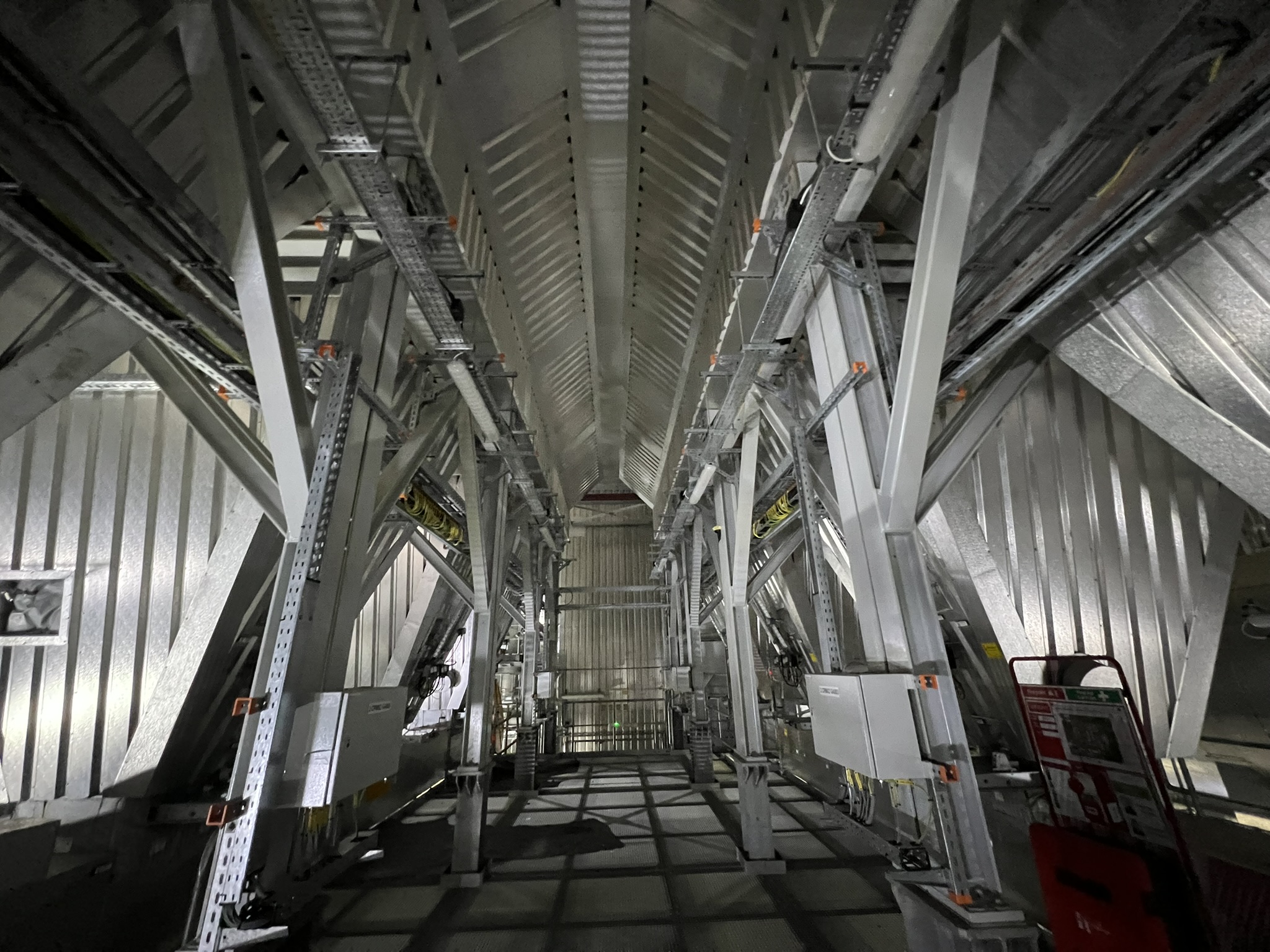
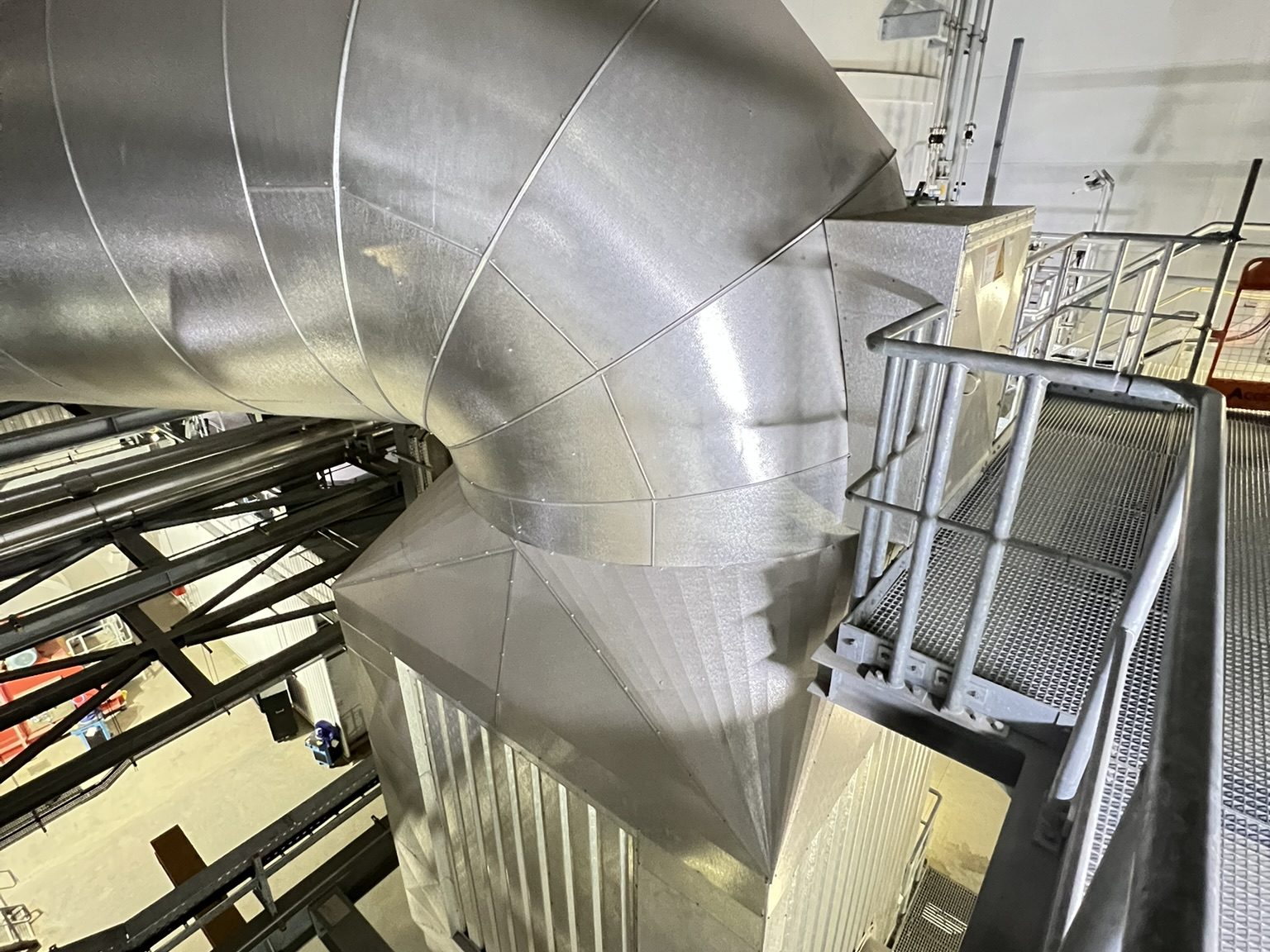
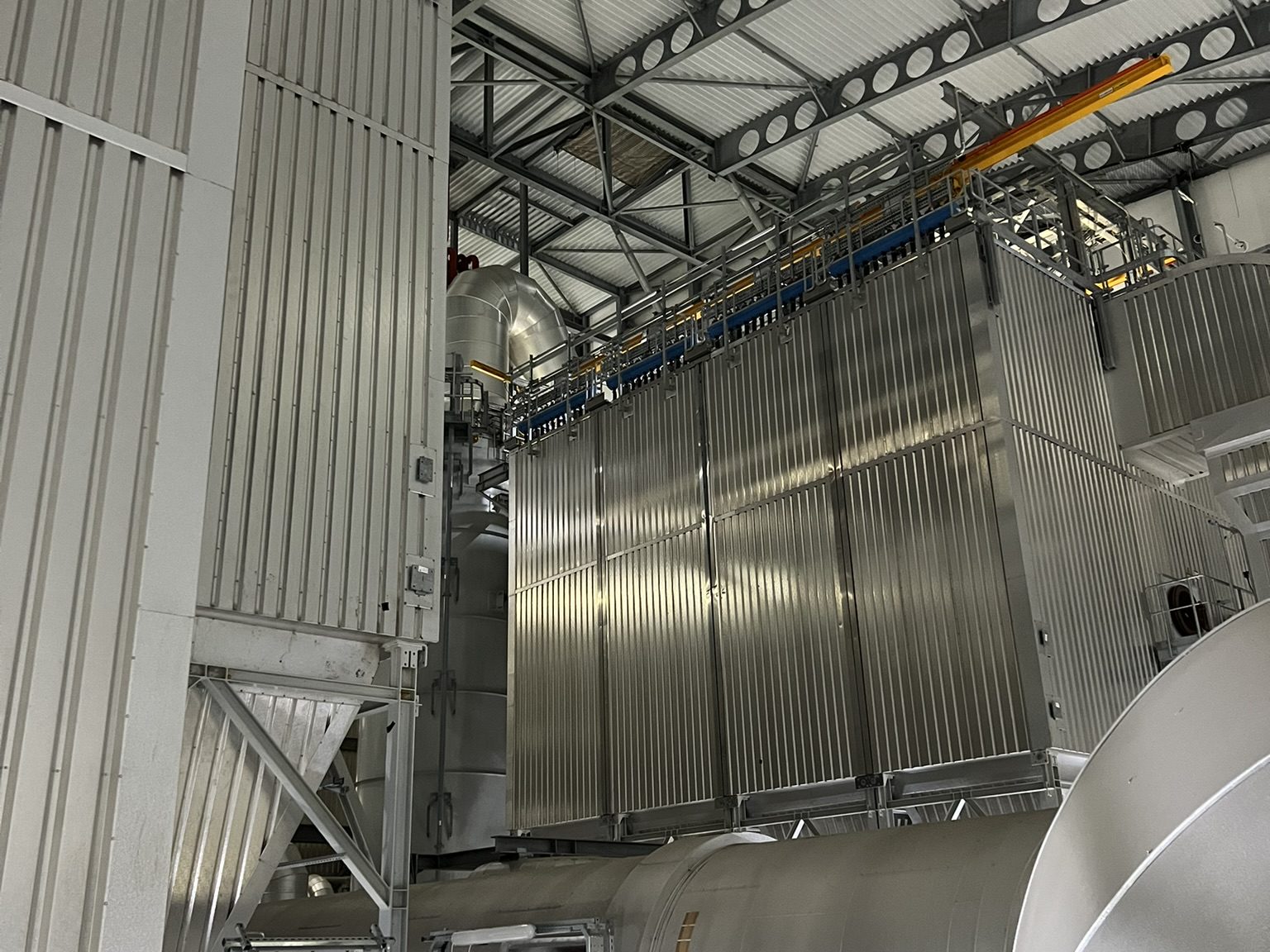
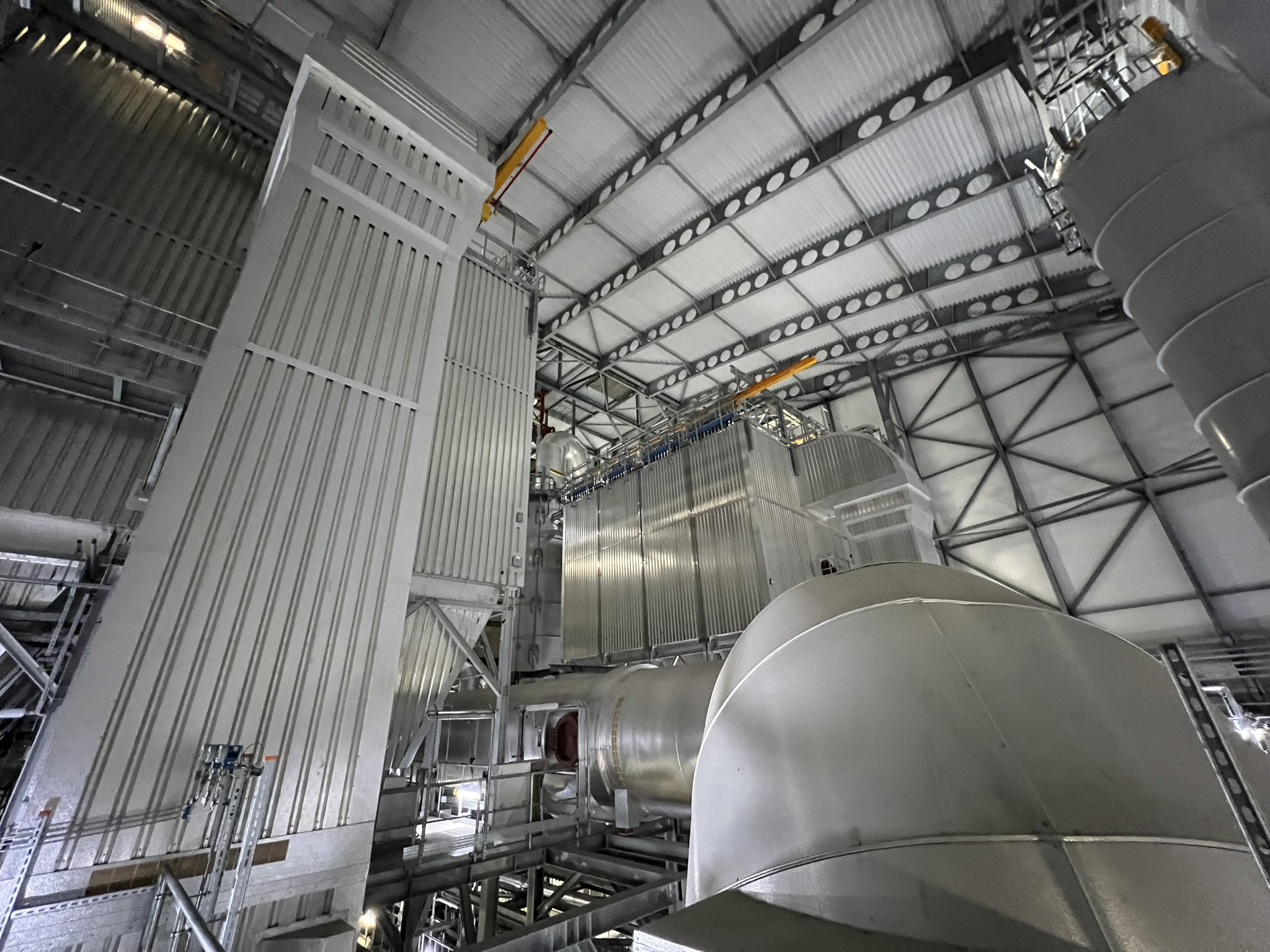
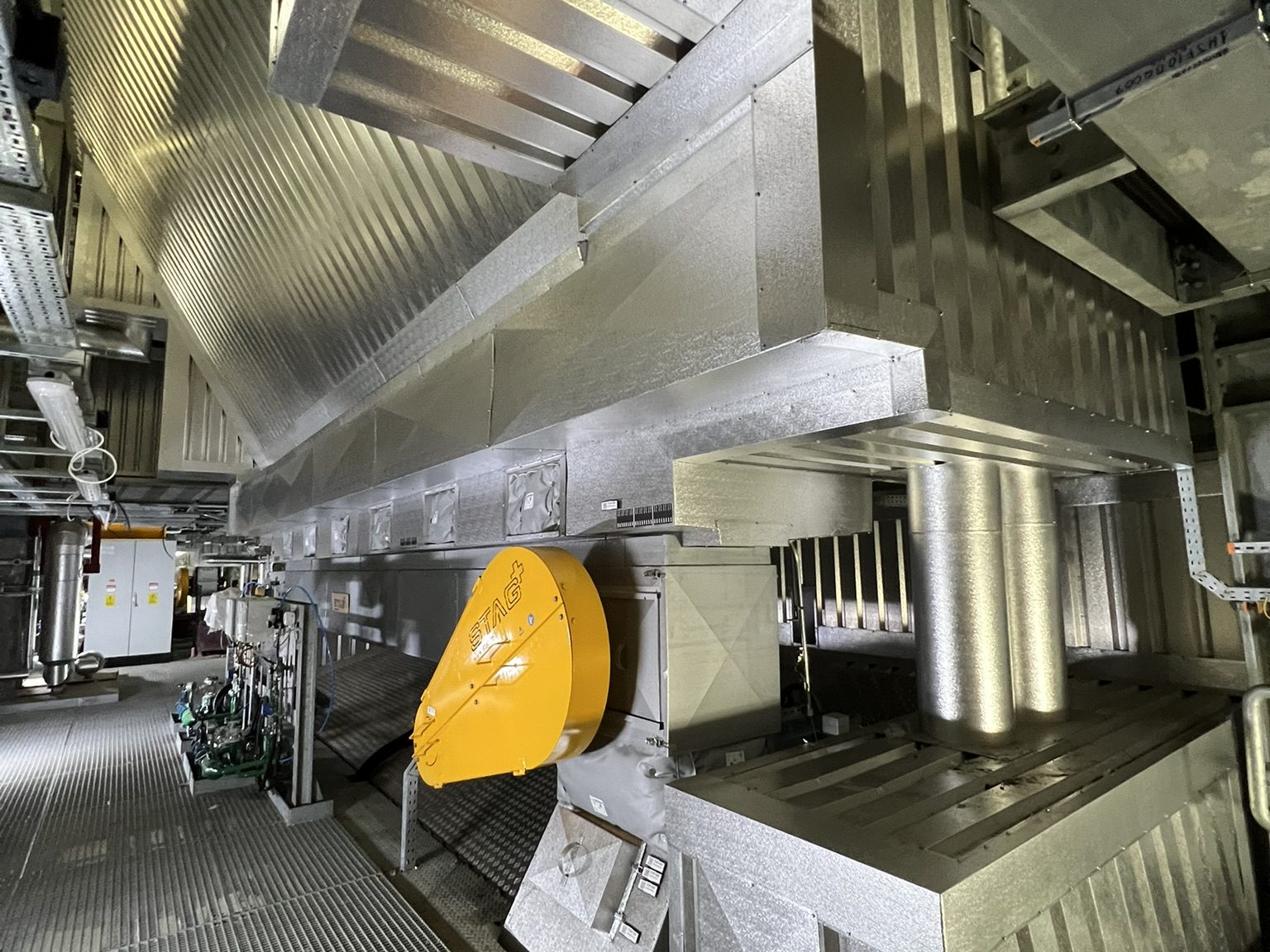
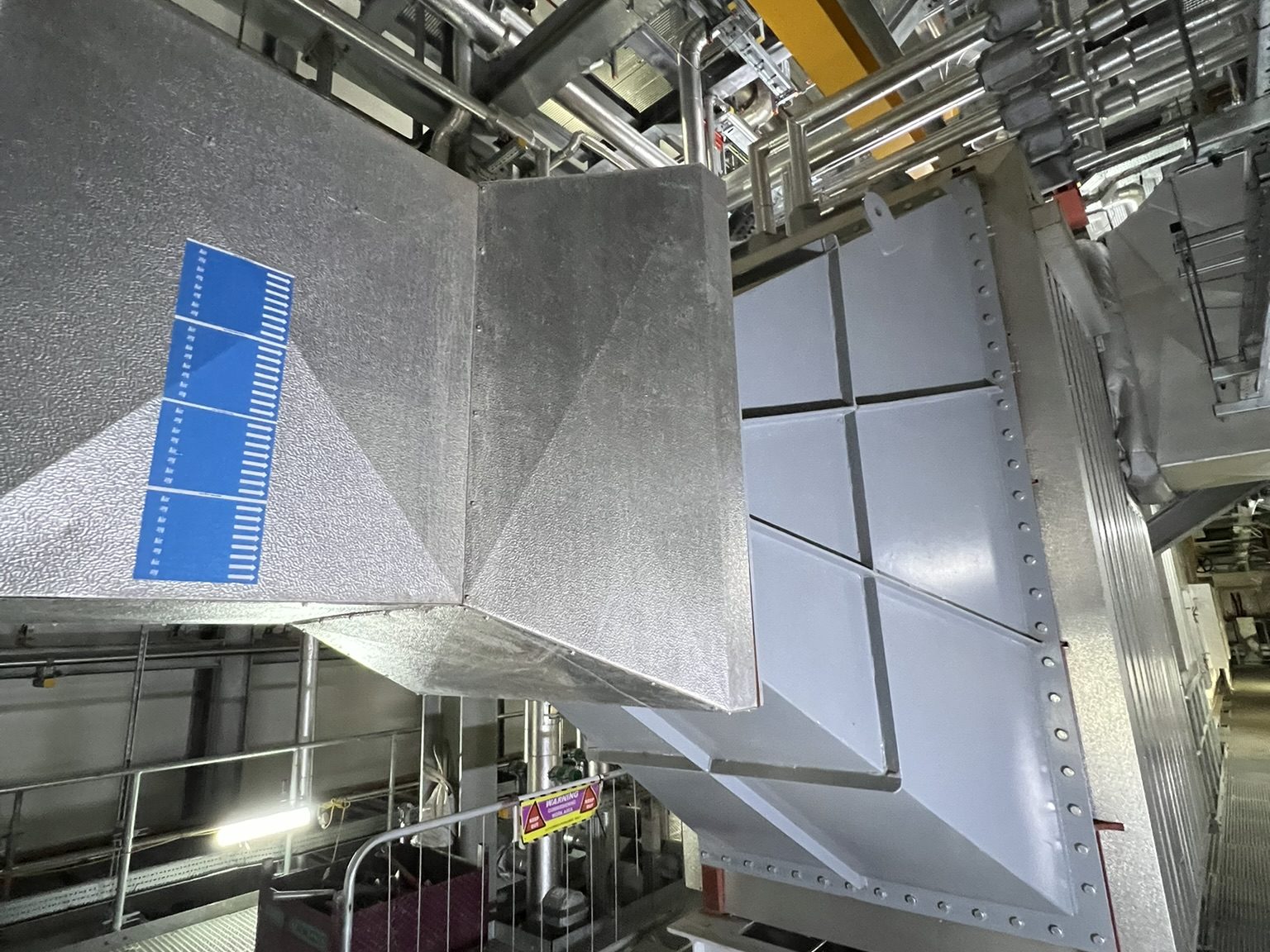
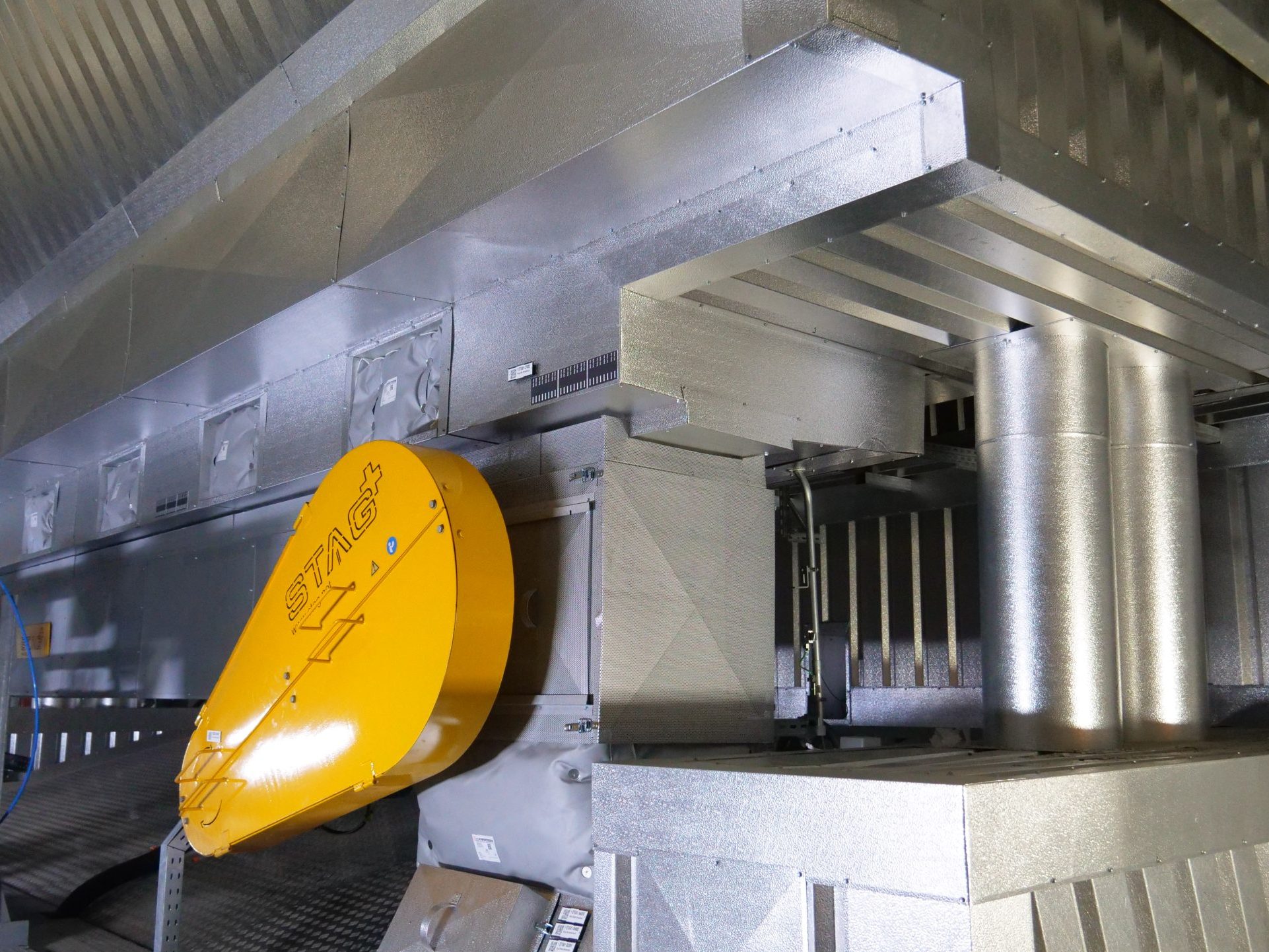
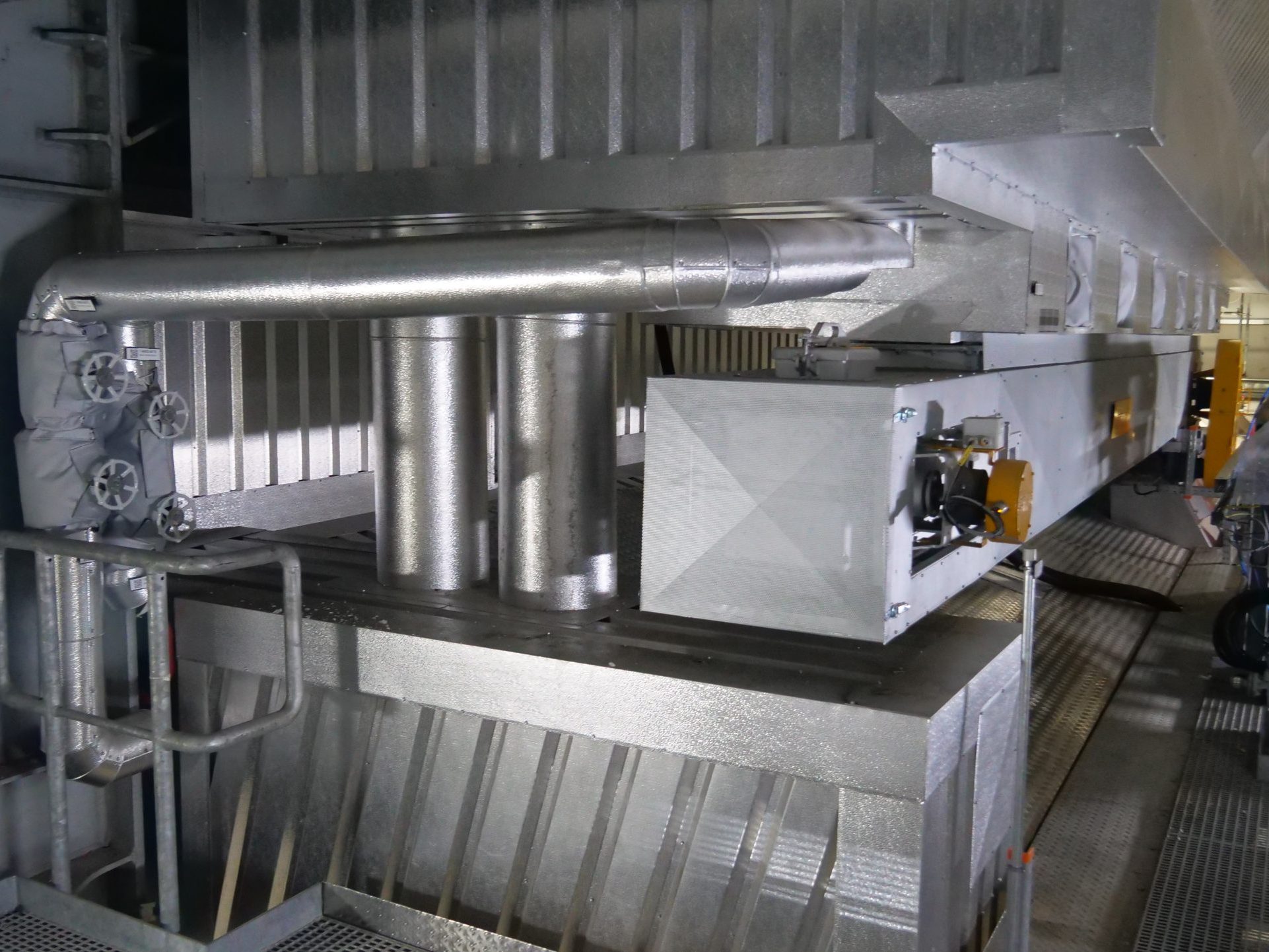
Within the FGT area, the total M² of equipment insulated was more than 6550. All equipment besides the ID fan was insulated with 100mm mineral wool wired mattress insulation and finished with protective aluminium cladding. The insulation systems were supported with the DUK Rail system, or support rings, combined with steel insulation pins, providing a rigid framework that prevents sagging or deformation of the insulation while delivering strong fixing points for the outer cladding.
As well as insulation for thermal performance, the ID fan required an acoustic insulation system to reduce the amount of operational ‘noise’ which the fan produces; ensuring health and safety compliance.
From flat to profile aluminium stucco embossed, protective cladding specifications varied depending on the equipment profile. Different equipment elements required tailored substructure and cladding approaches:
- Boiler to Evaporation Cooler Ductwork – support rings with flat cladding
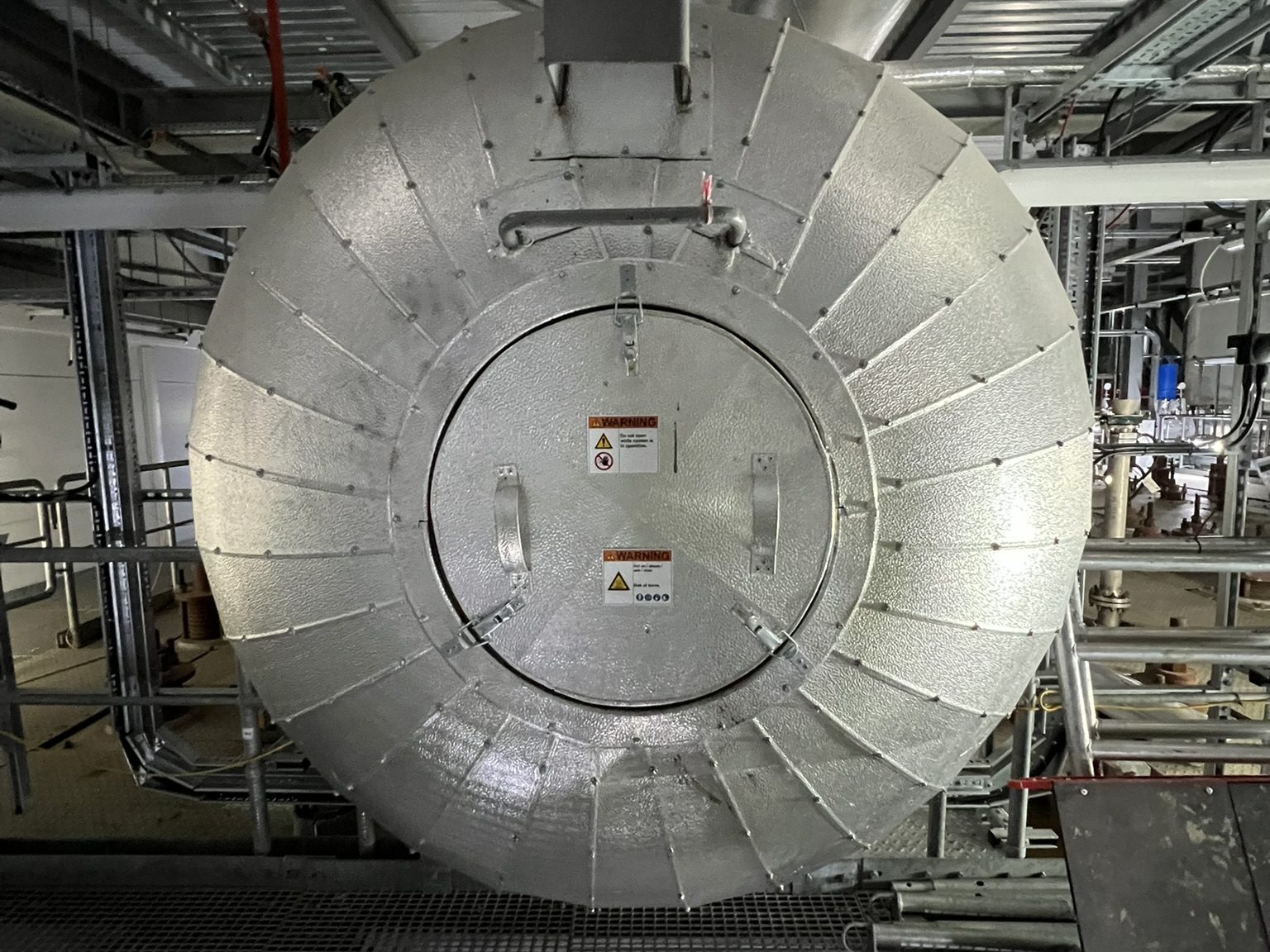
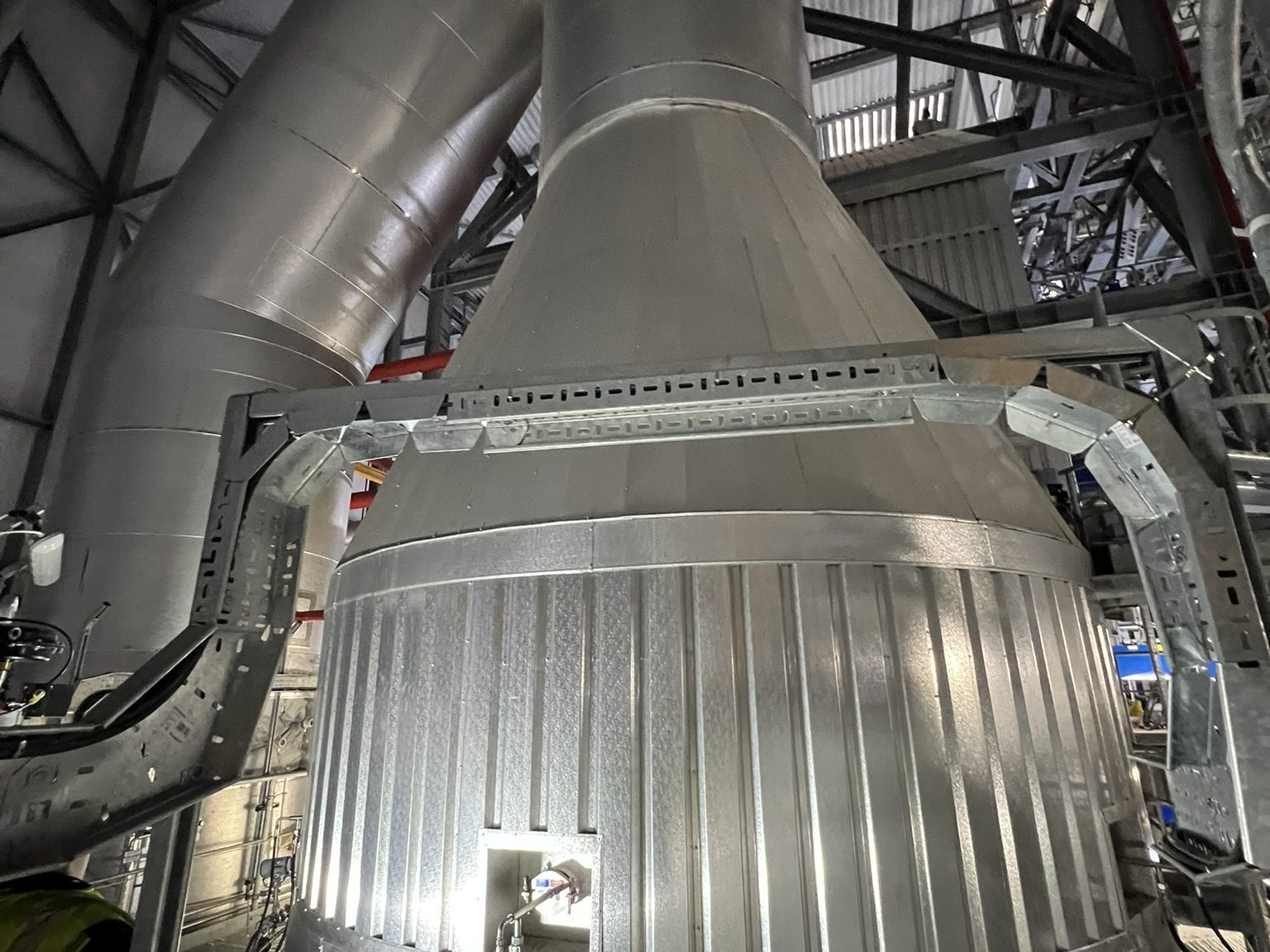
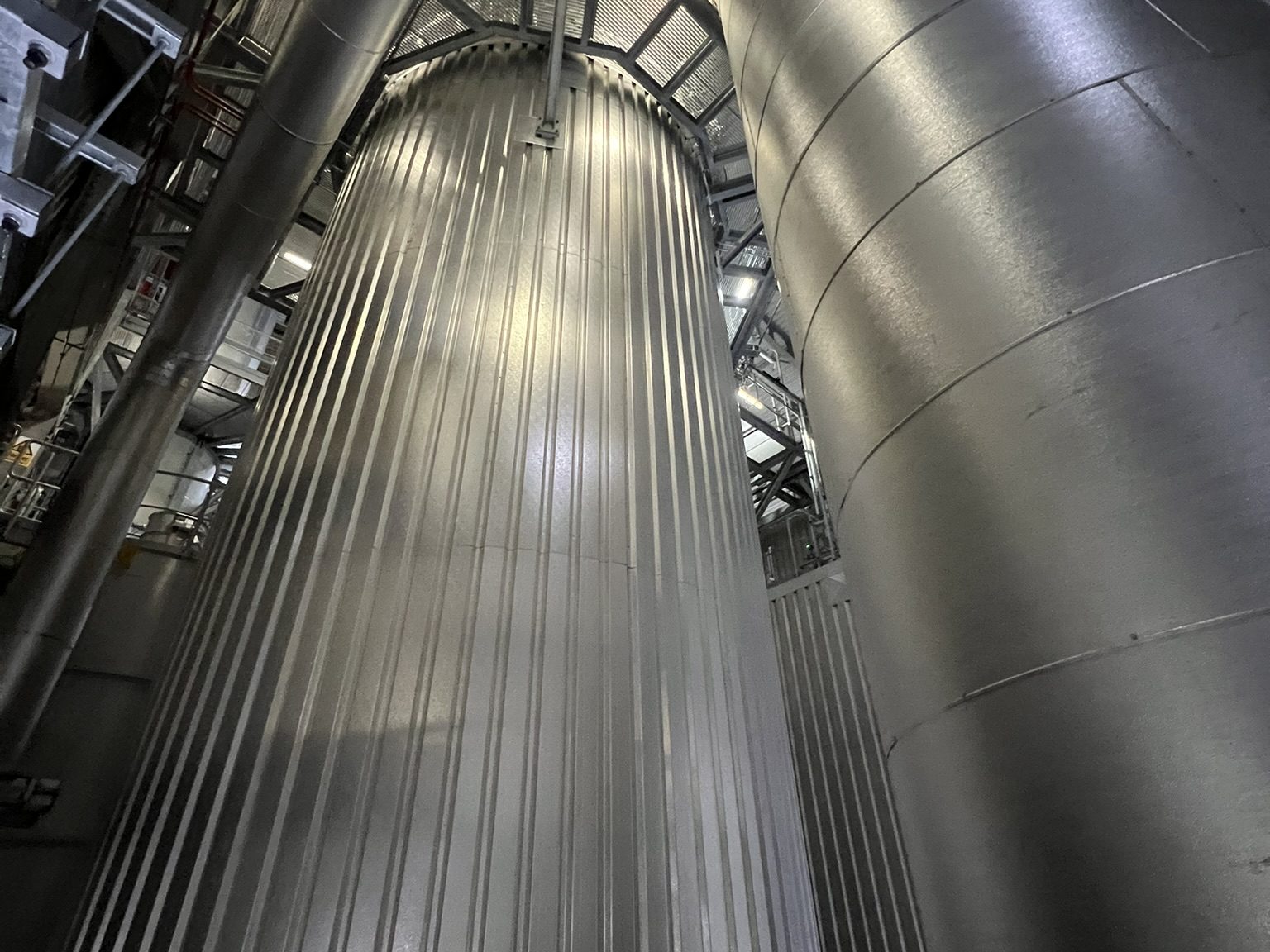
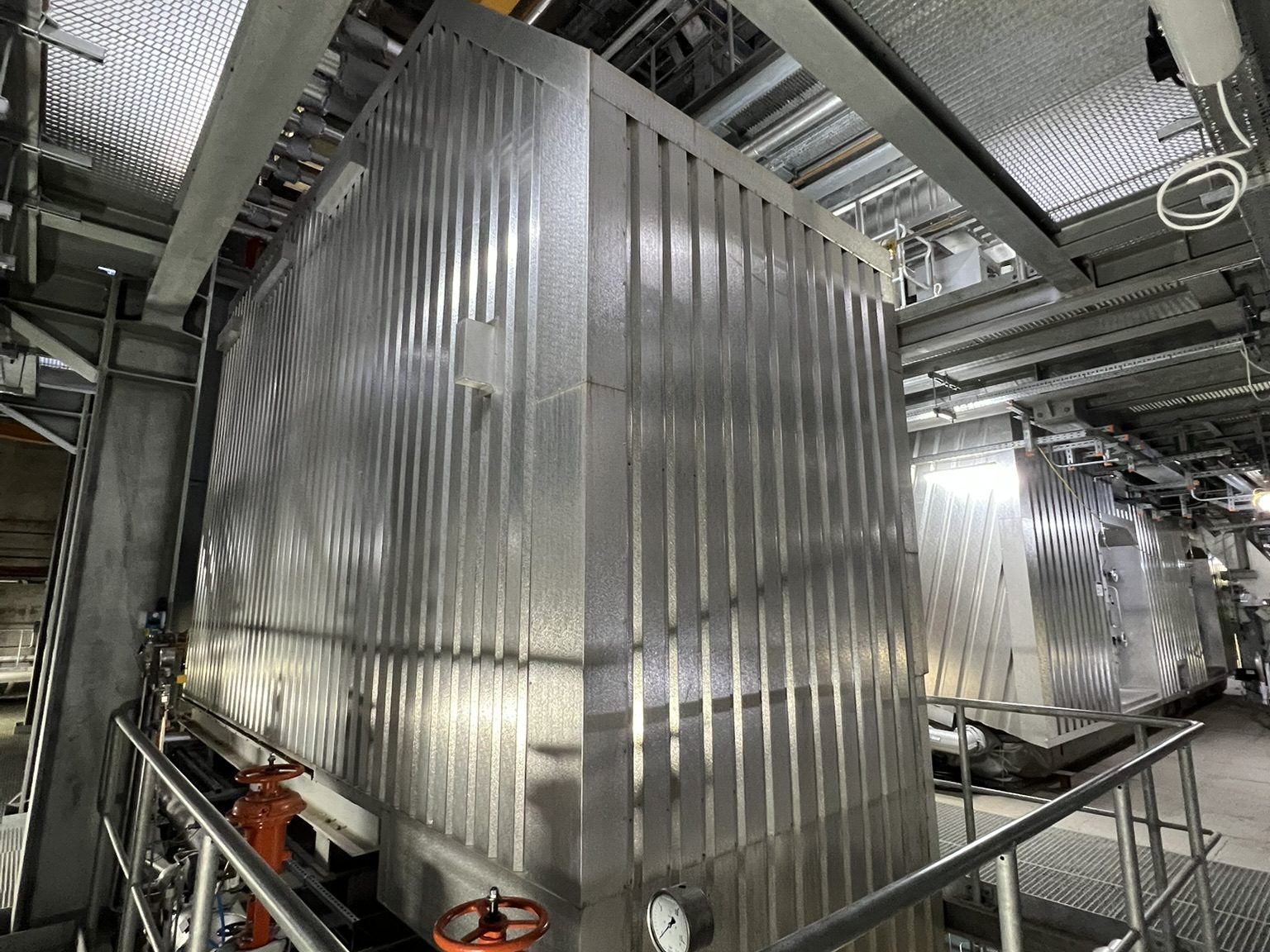
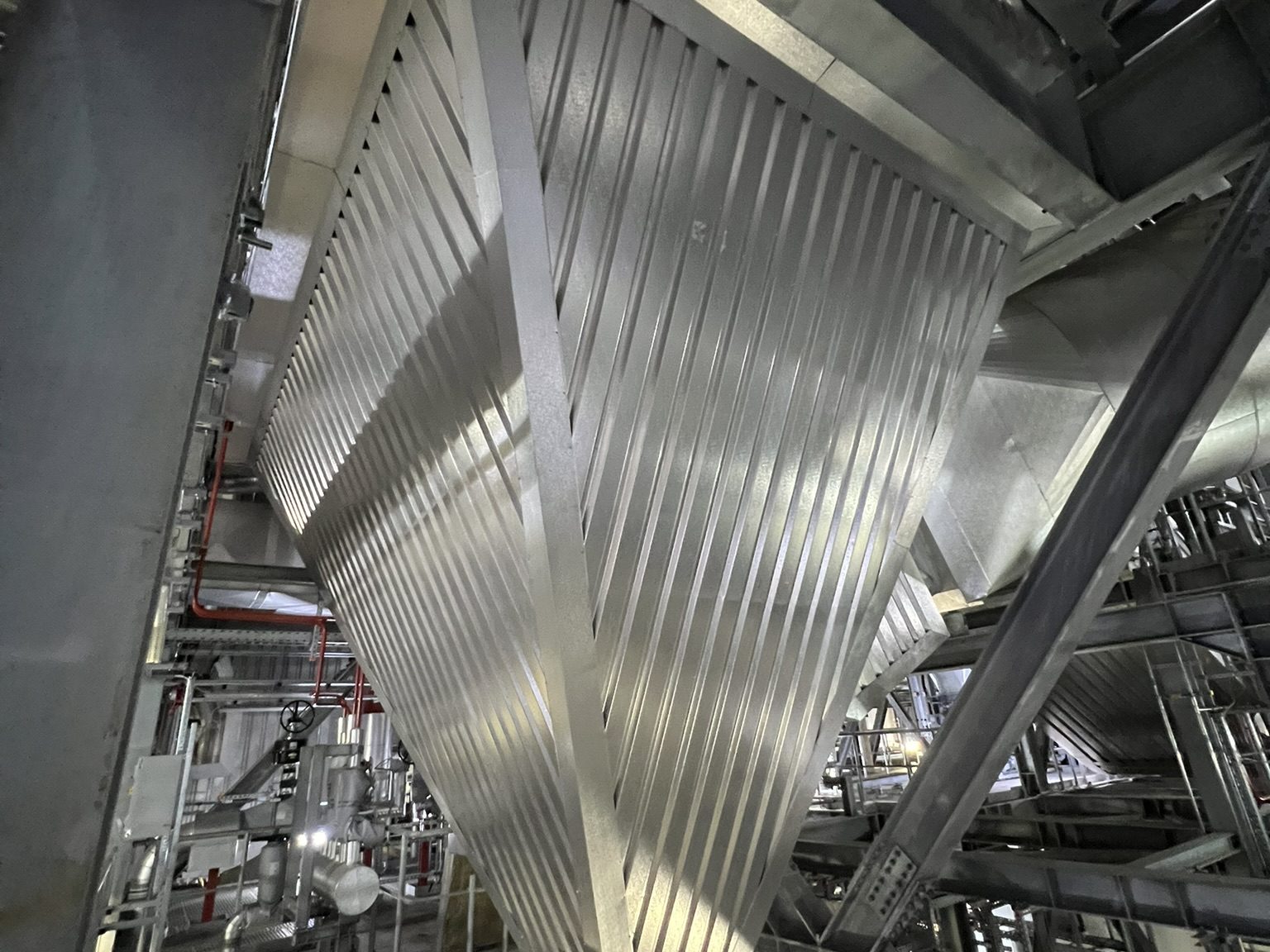
- Evaporation Cooler – Rolled DUK rails and profiled cladding to the cylindrical body and flat DUK rails with flat cladding to the conical sections
- Reactor – DUK Rail System with profiled cladding and a walkable checker-plate roof
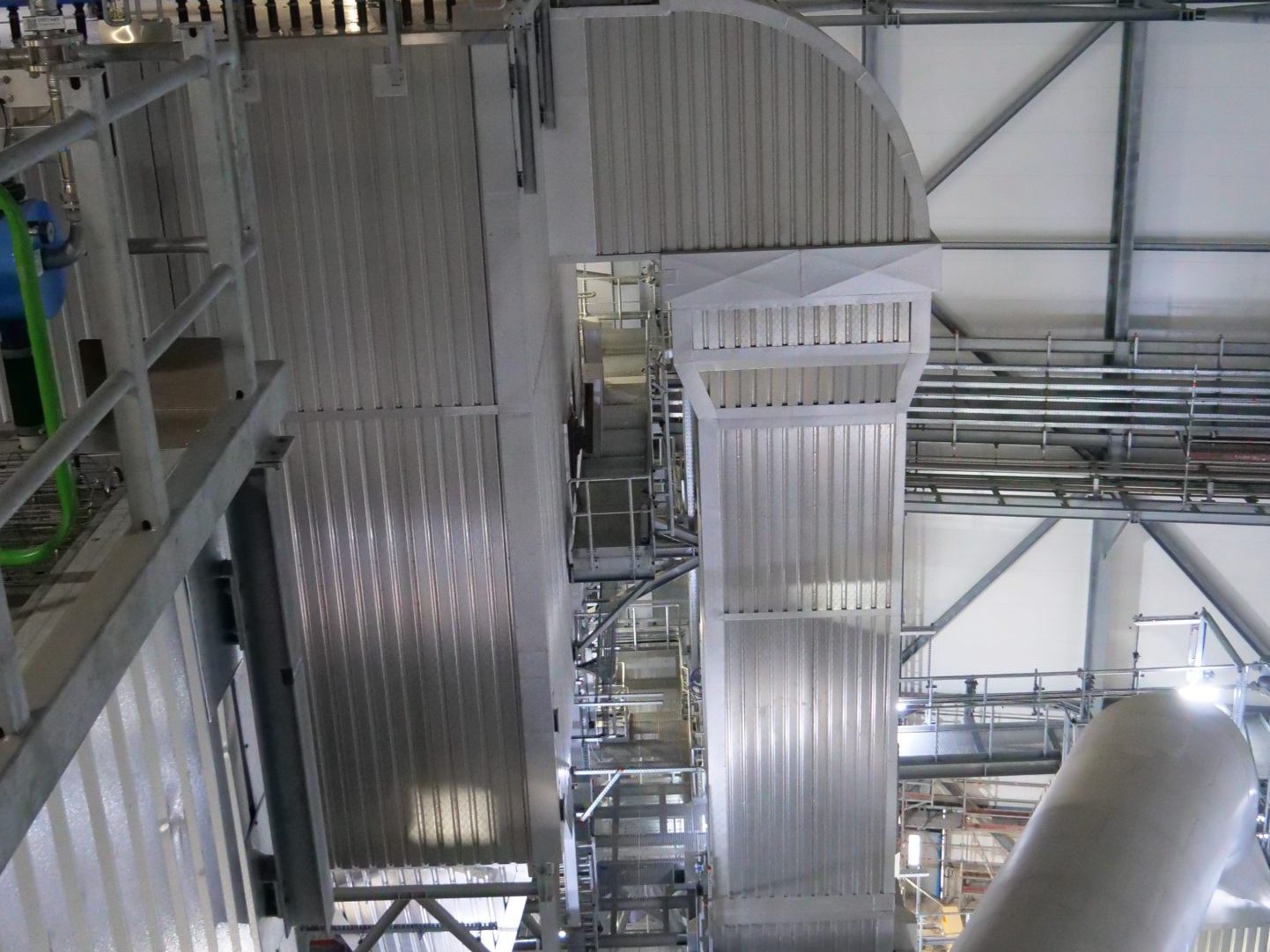
- Filter Chambers – DUK rails with profile cladding and walkable checker-plate roof
- Clean and Raw Gas Ductwork – DUK Rail System with profiled cladding
- ID Fan – DUK support system with flat cladding
- Associated ductwork – Support rings with flat cladding
Due to its cylindrical shape, with a conical top and bottom, the evaporation cooler required a complex insulation system, designed by Powertherm’s technical insulation system design team. This included a rolled DUK Rail substructure to accommodate the curvature of the cooler’s body, with profile cladding, as well as flat DUK rails with flat cladding to the top and bottom sections.
Along with welded anchors and strategically placed C-profile rails, the DUK Rail System forms a strong skeleton that allows insulation to be installed neatly and securely, while providing the protective cladding a robust structure to be fixed at the required distance. The rails also help maintain insulation shape over large surface areas and accommodate thermal expansion, and vibrations, ensuring long-term performance of the insulation system.
Also, within the FGT area, the filter chambers were insulated at ground level prior to installation and then lifted into position, with final insulation works completed in situ. This methodology improved accessibility for installation teams and significantly reduced scaffolding requirements, contributing to improved project efficiency and cost savings.
Water Steam Cycle (WSC)
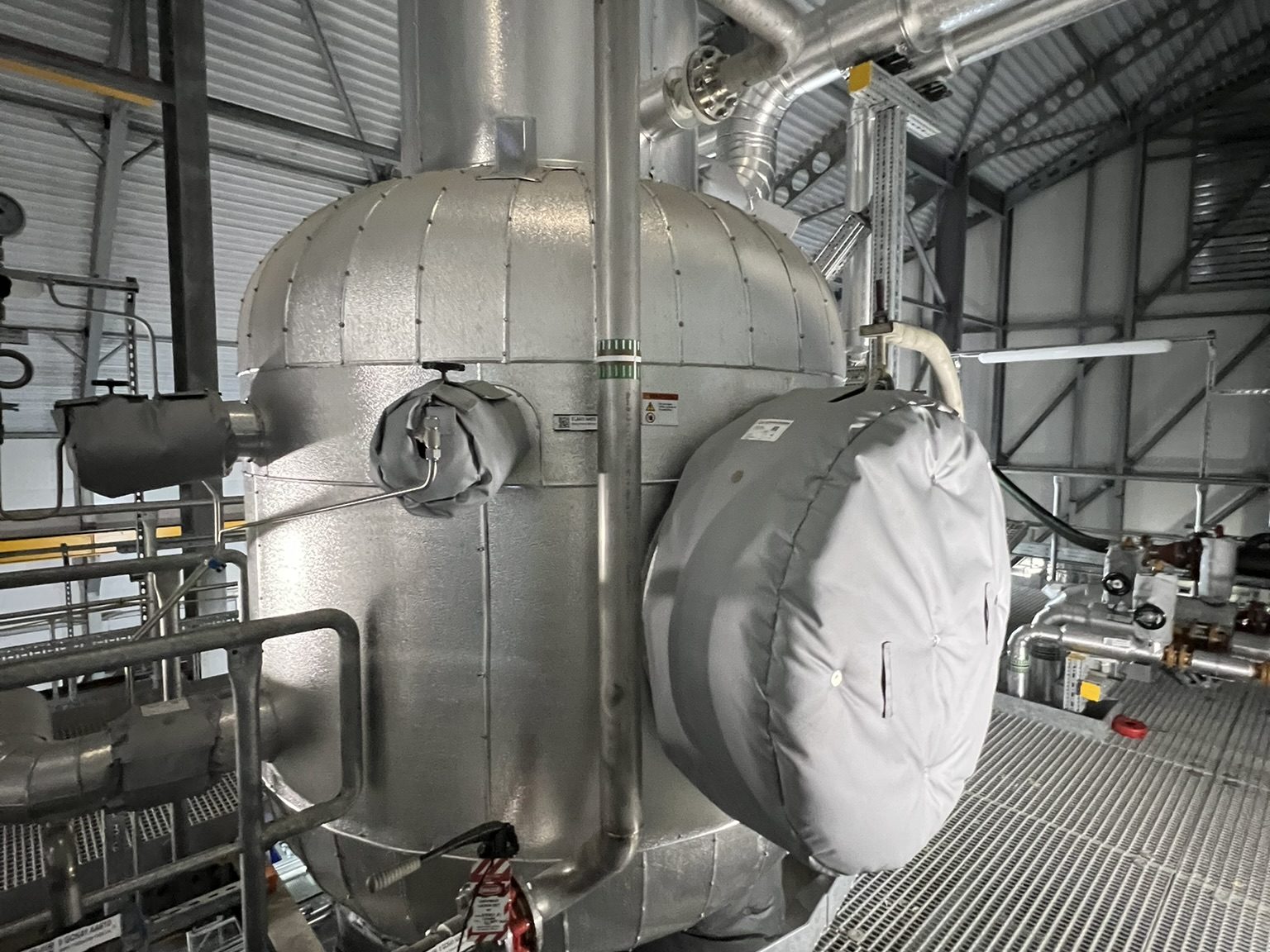
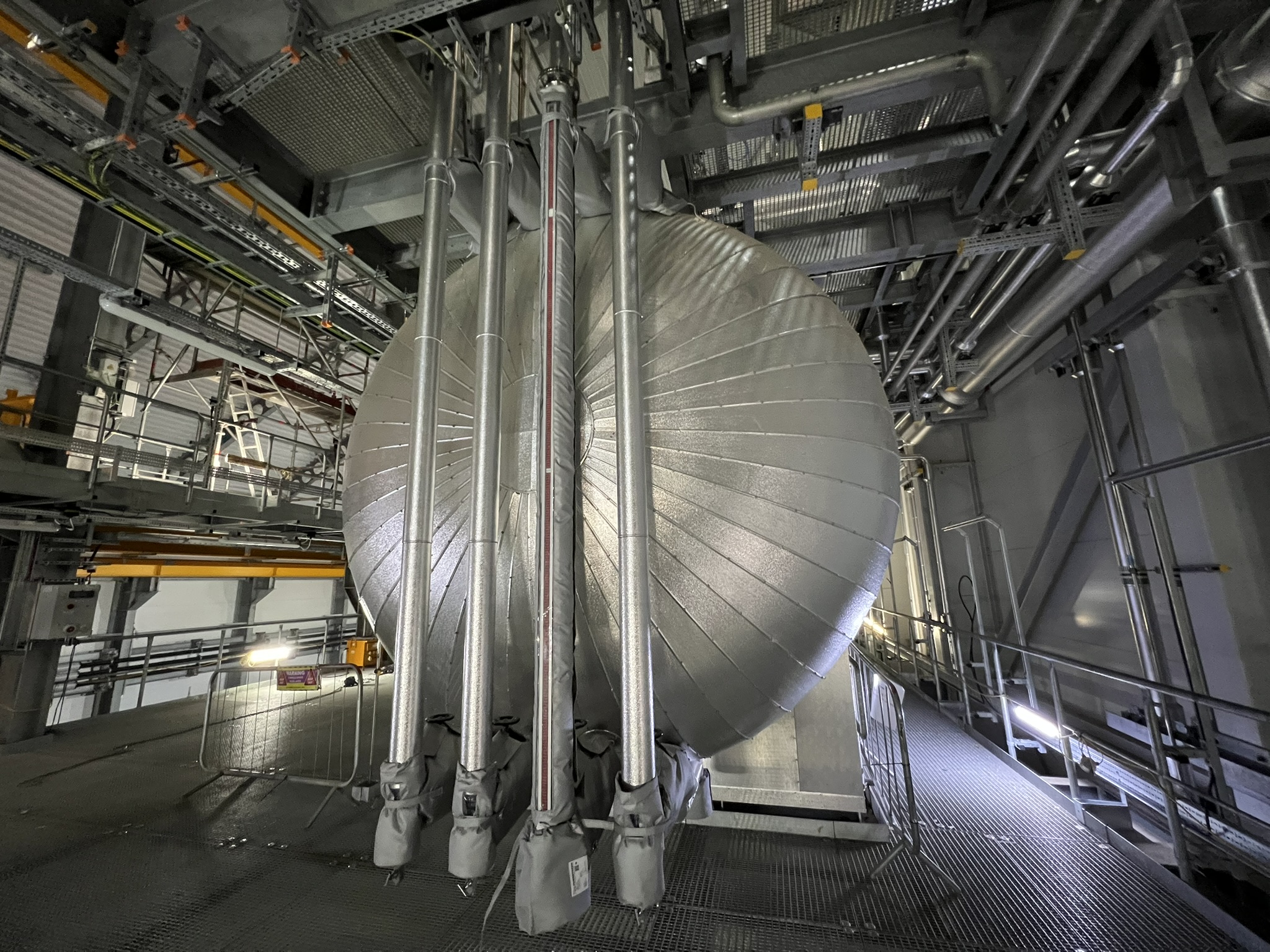
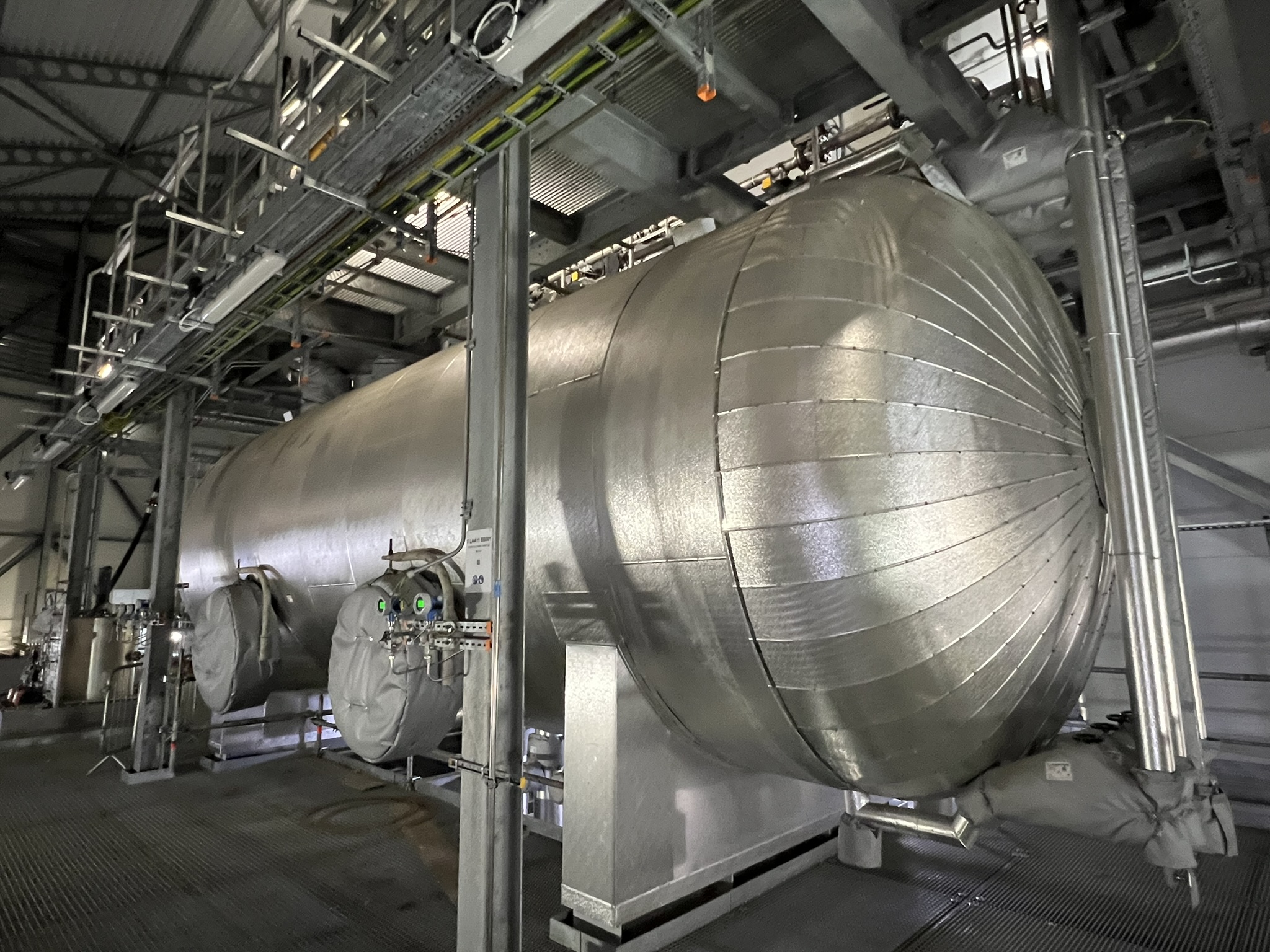
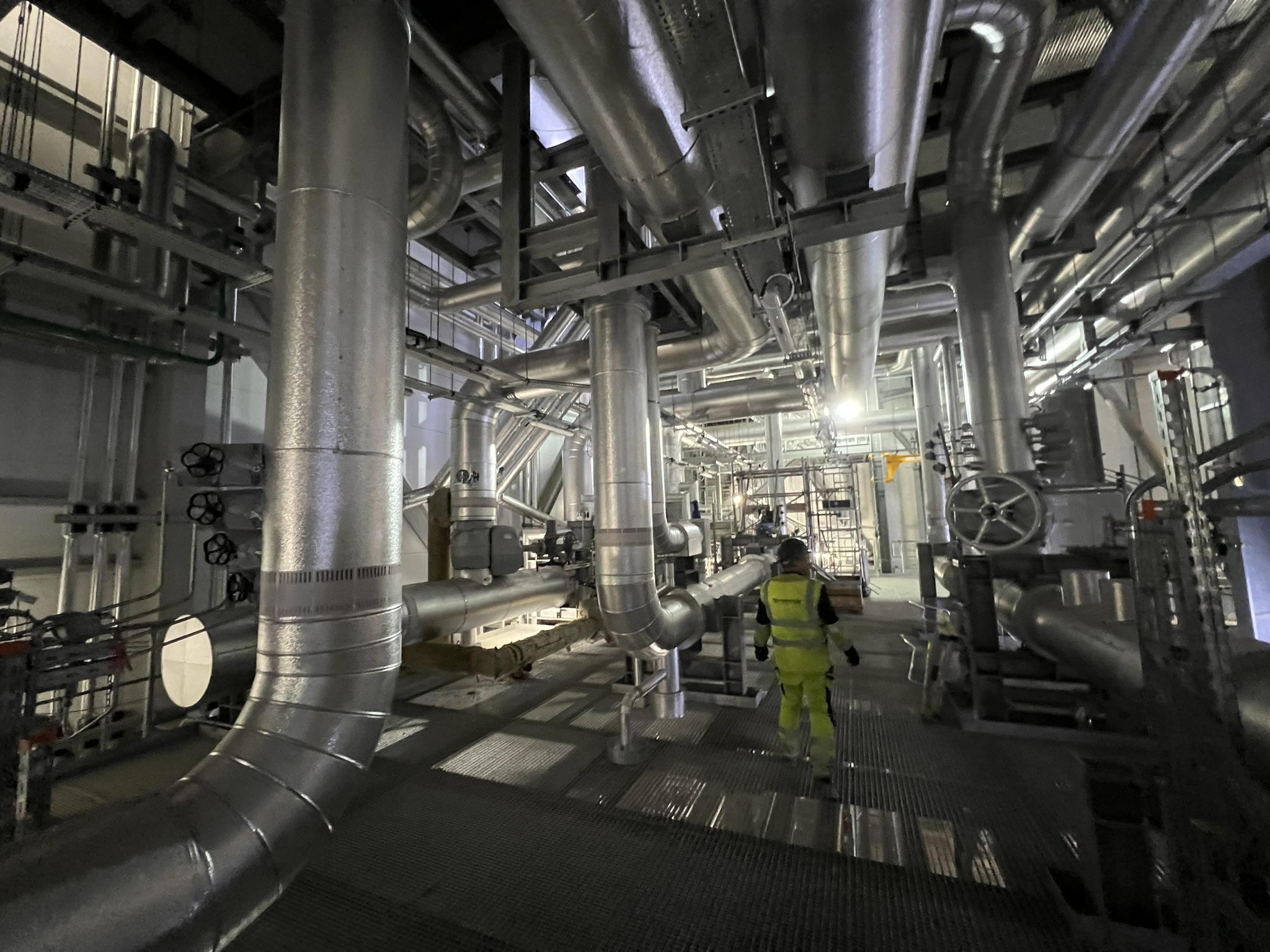
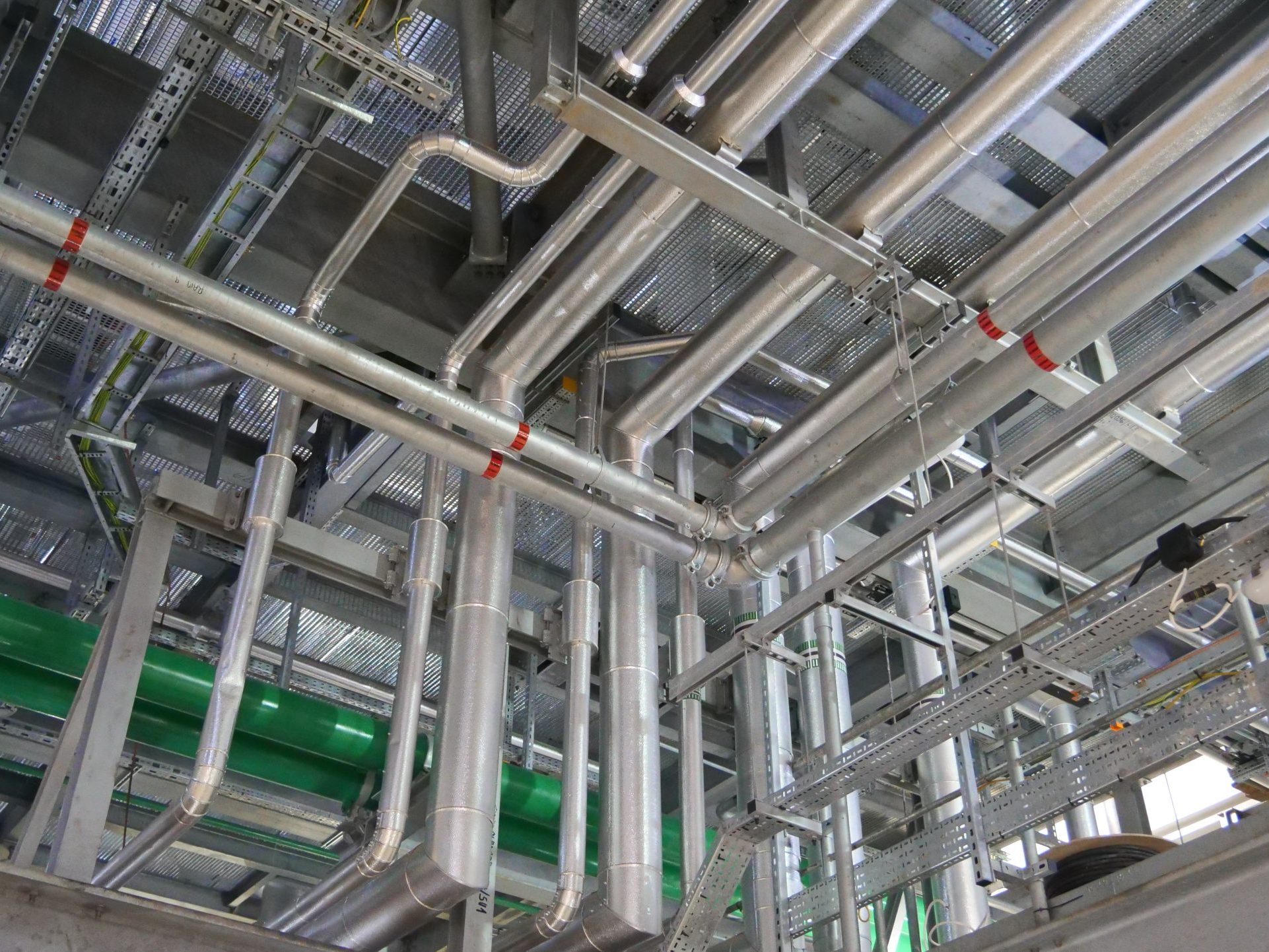
As part of the project’s insulation scope, Powertherm’s Insulators completed extensive works across a range of components within the Water Steam Cycle (WSC) system including tanks, skid units, pumps, silencers, and ductwork/ piping.
The insulation primarily consisted of mineral wool, with thicknesses ranging from 30mm to 240mm depending on the equipment and operating temperature, some reaching up to 430°C. Flat aluminium cladding was applied throughout and support ring substructure installed on select items such as the steam exhaust system and feedwater tank.
Equipment such as the air preheater required 140mm of insulation, significantly more than the main condensate tank, which was insulated with just 30mm. This difference is due to the higher operating temperature of the air preheater system. To ensure thermal efficiency and minimise heat loss at elevated temperatures, thicker insulation is essential.
In total, over 823m² of equipment was thermally insulated and clad with aluminium cladding fabrications to meet performance and safety standards, delivering a high-quality finish across all areas within the WSC:
- LP Condensate Preheater
- Steam Exhaust System Tank
- Feedwater Tank
- Flash Tank
- Air Preheater
- Drain Pot Pump
- Silencers
- Pump Skids (Boiler & Turbine Houses)
- Condensate Skids & Tanks (Boiler & Turbine Houses)
- Feed Water Skids
- Evacuation Unit
- Steam Duct
- Gland Steam Condenser
For the general and turbine piping within the WSC, operating temperatures of the process pipework ranges from 60°C to 440°C meaning that thicknesses in insulation vary to achieve the required thermal performance. This ranged from 30mm to 190mm of mineral wool insulation, which was finished with aluminium cladding. Coverage of pipework reached over 5,500lin/m.
Solid Handling
The Solid Handling system of Skelton Grange power station required a robust insulation system across its key components:
- Residue Discharge/ Transport Systems
- Pneumatic Ash Transport ECO Unit
- Boiler Ash Discharge Equipment
A total surface area of 433m² was insulated to ensure safe and efficient operation under temperatures ranging from 135°C to 300°c.
To ensure the required thermal performance, 100mm of mineral wool insulation was applied throughout, providing both heat retention and personnel protection through safe touch temperatures of the outer aluminium cladding surface. All insulation and cladding were securely installed using various substructures including insulation pins, support rings and/ or the DUK Rail System, ensuring long term stability in a high vibration, high temperature environment.
A small section of the boiler ash discharge required 43m² of perforated cladding for personnel protection requirements; shielding personnel from the high 300°C temperatures whilst allowing the equipment to lose some heat for process requirements.
Balance of Plant (BOP)
Powertherm’s Thermal Insulation Engineers (TICA) insulated the town water break tank with an industrial insulation system, as a measure against frost due to the tank being located outside. Using a support ring substructure, 60mm of mineral wool insulation as well as aluminium cladding was installed over a surface area of 18.1m² to protect the tank and the contents within from the cold external environment.
In addition to the town water break tank, Powertherm’s insulation team also insulated the emergency safety showers located across site. To ensure reliable operation during cold weather, 40mm of mineral wool insulation was applied over a surface area of 1.7m². This installation provides essential frost protection, helping to maintain safety compliance and functionality throughout winter conditions.
989.85 lin/m of associated pipework within the BOP scope was expertly insulated with 30mm of mineral wool pipe section insulation followed by protective aluminium cladding providing invaluable protection to auxiliary process equipment.
Flexible Insulation Jackets
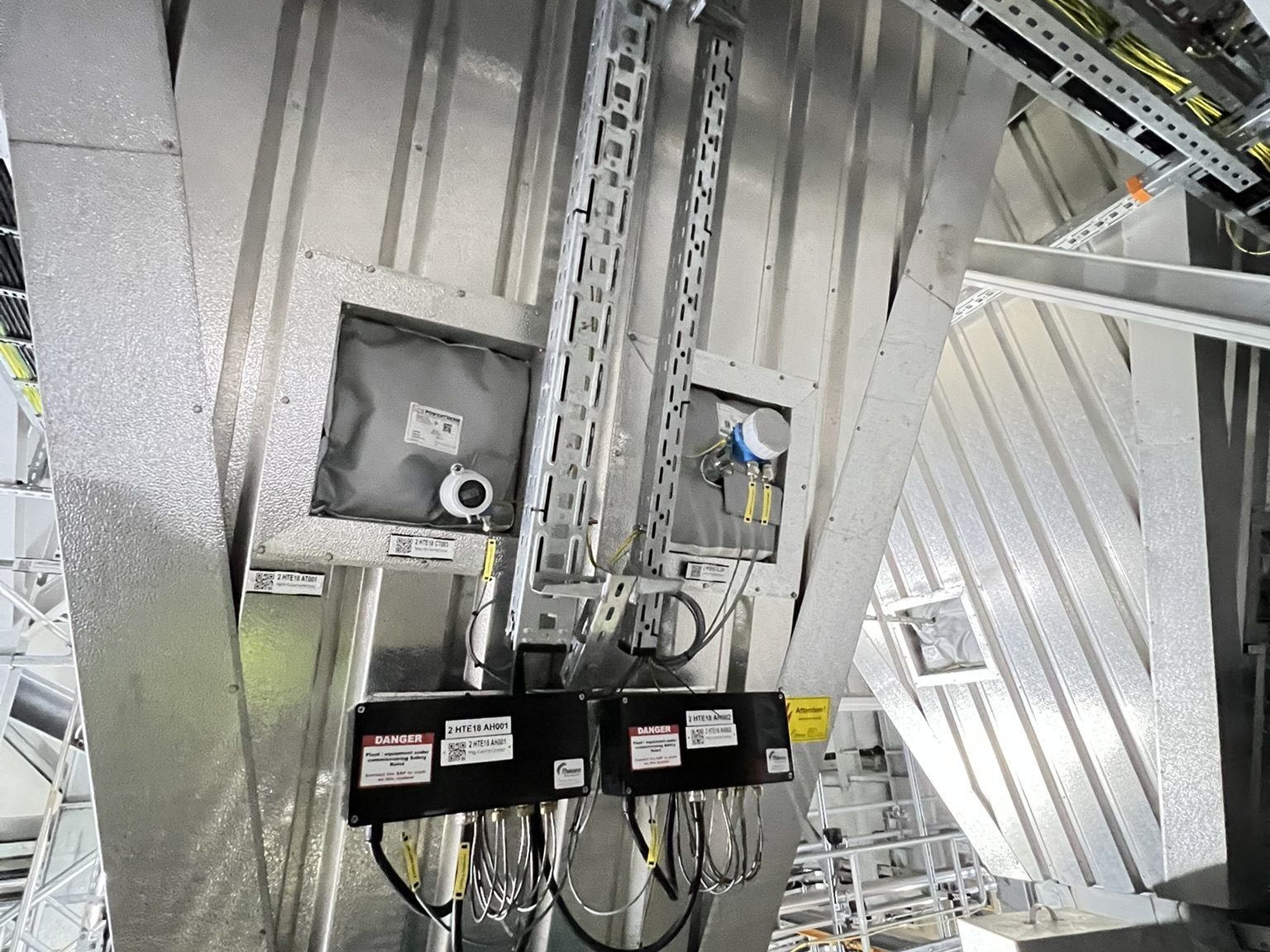
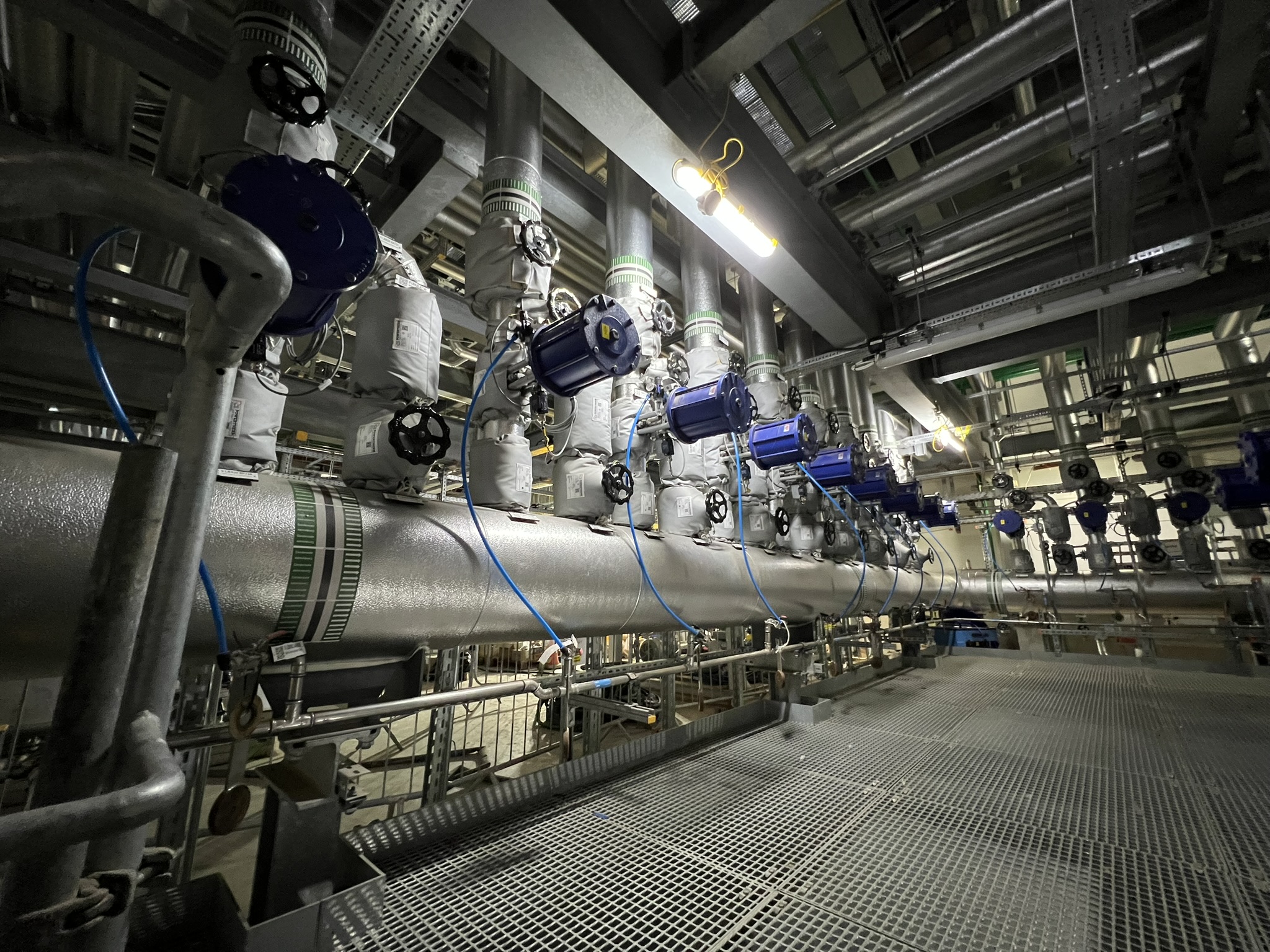
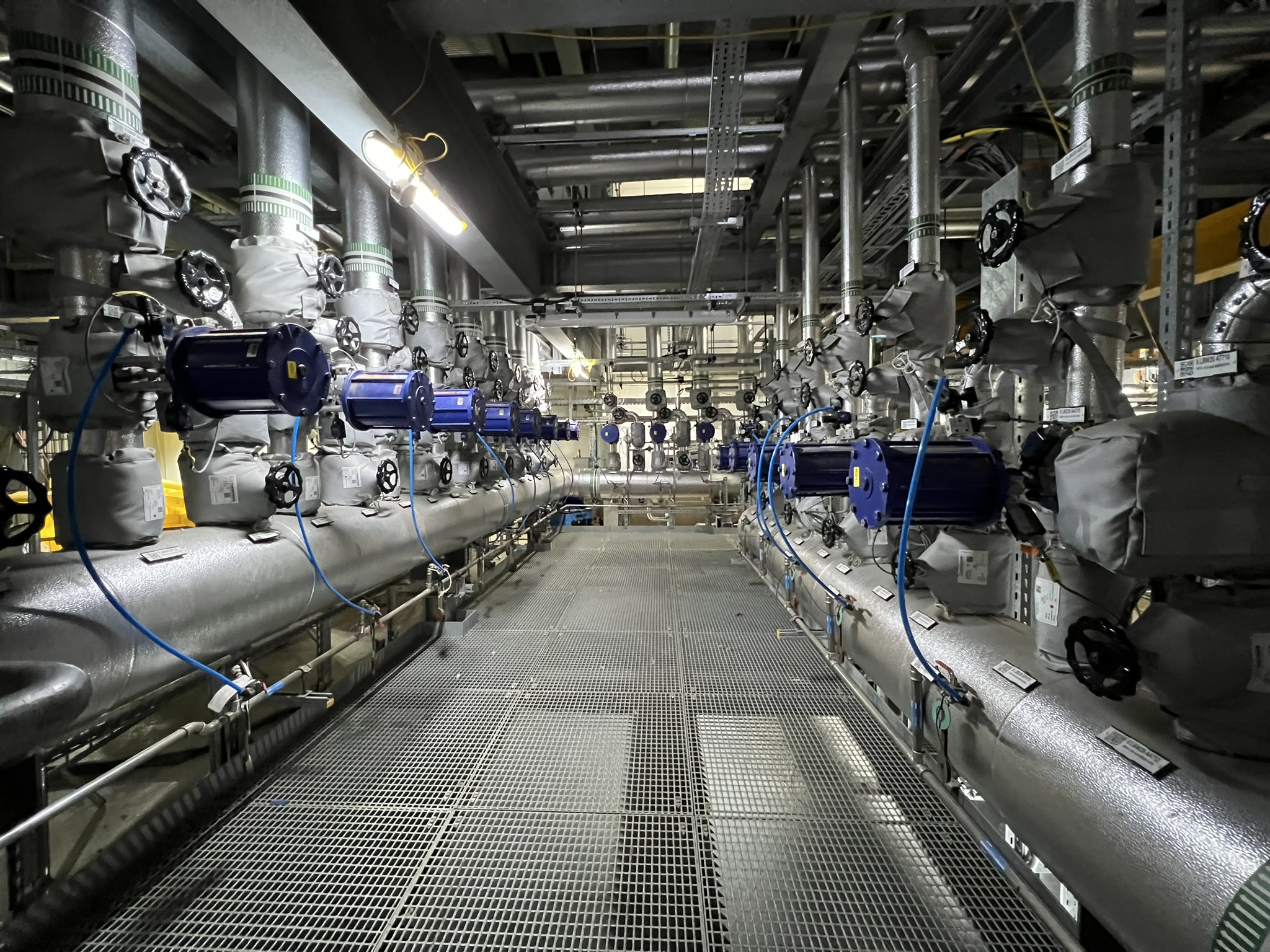
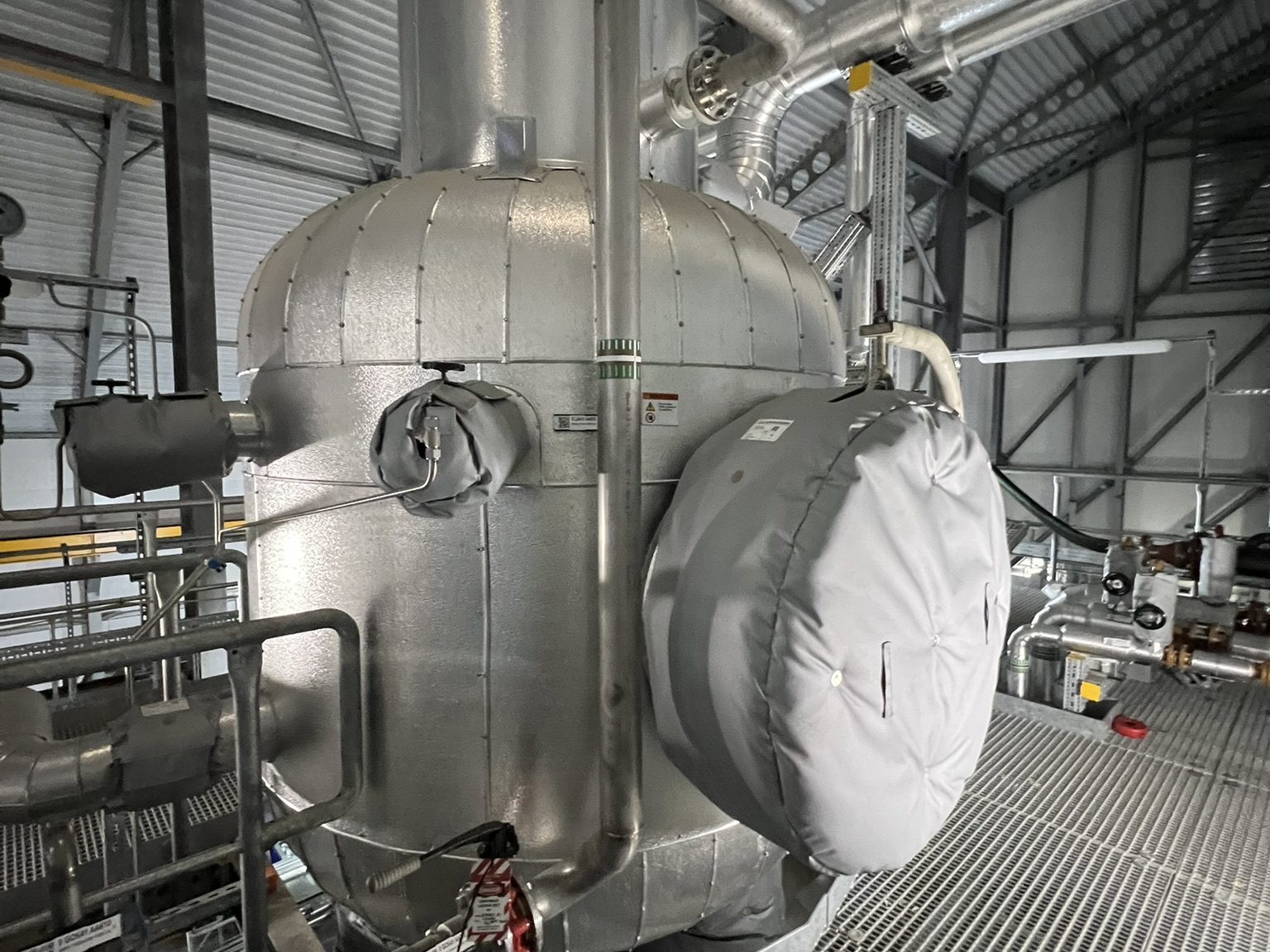
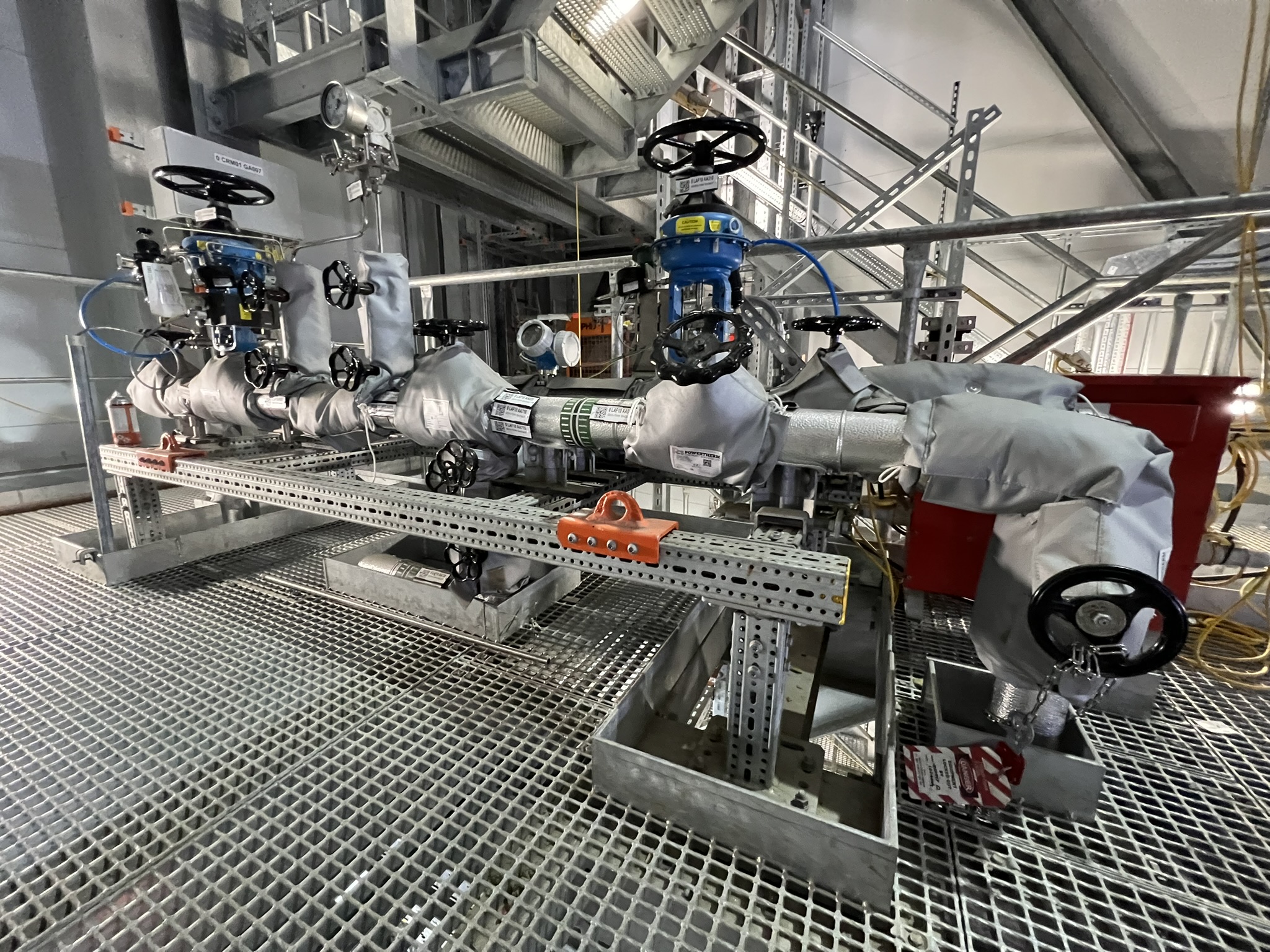
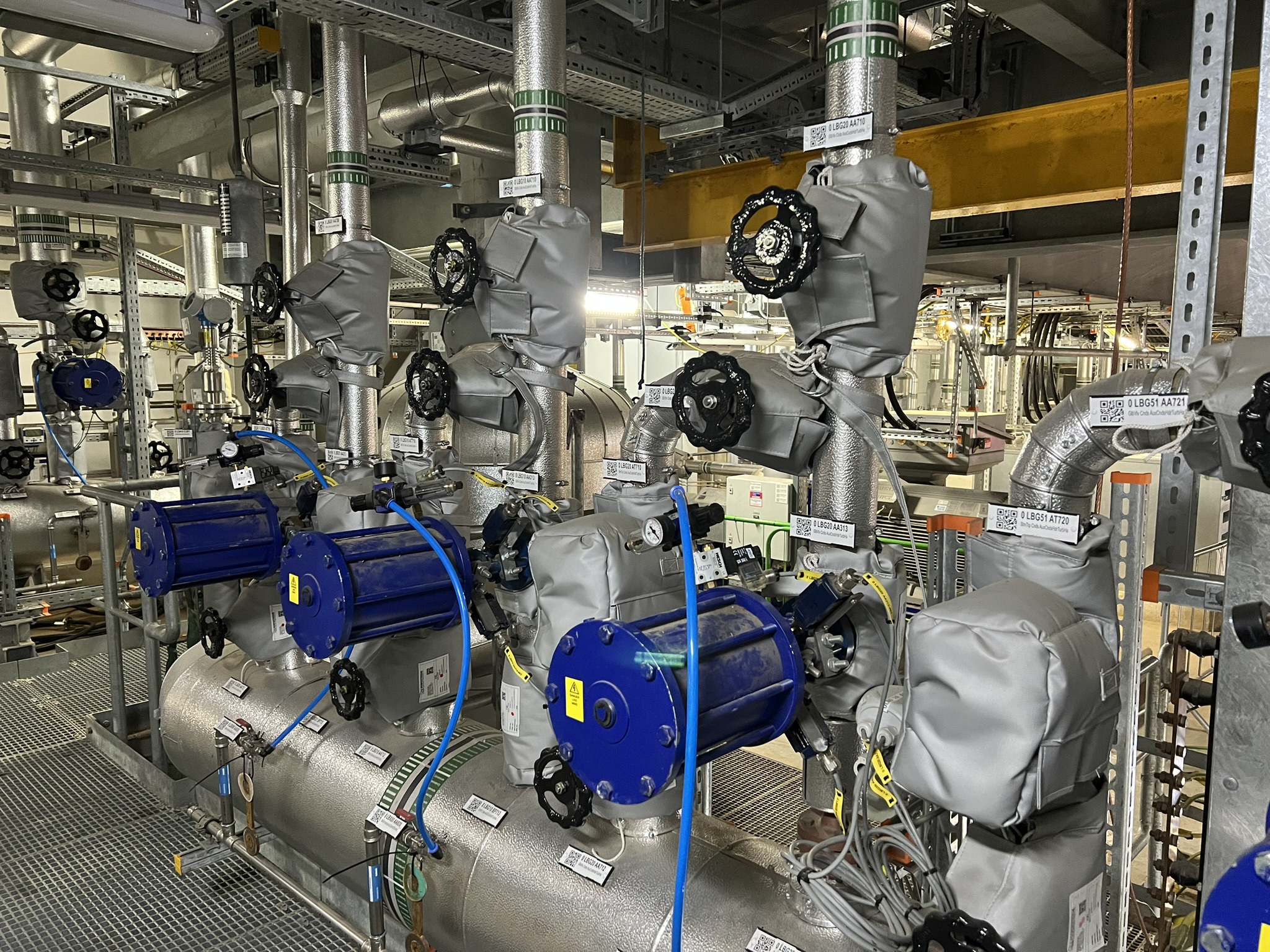
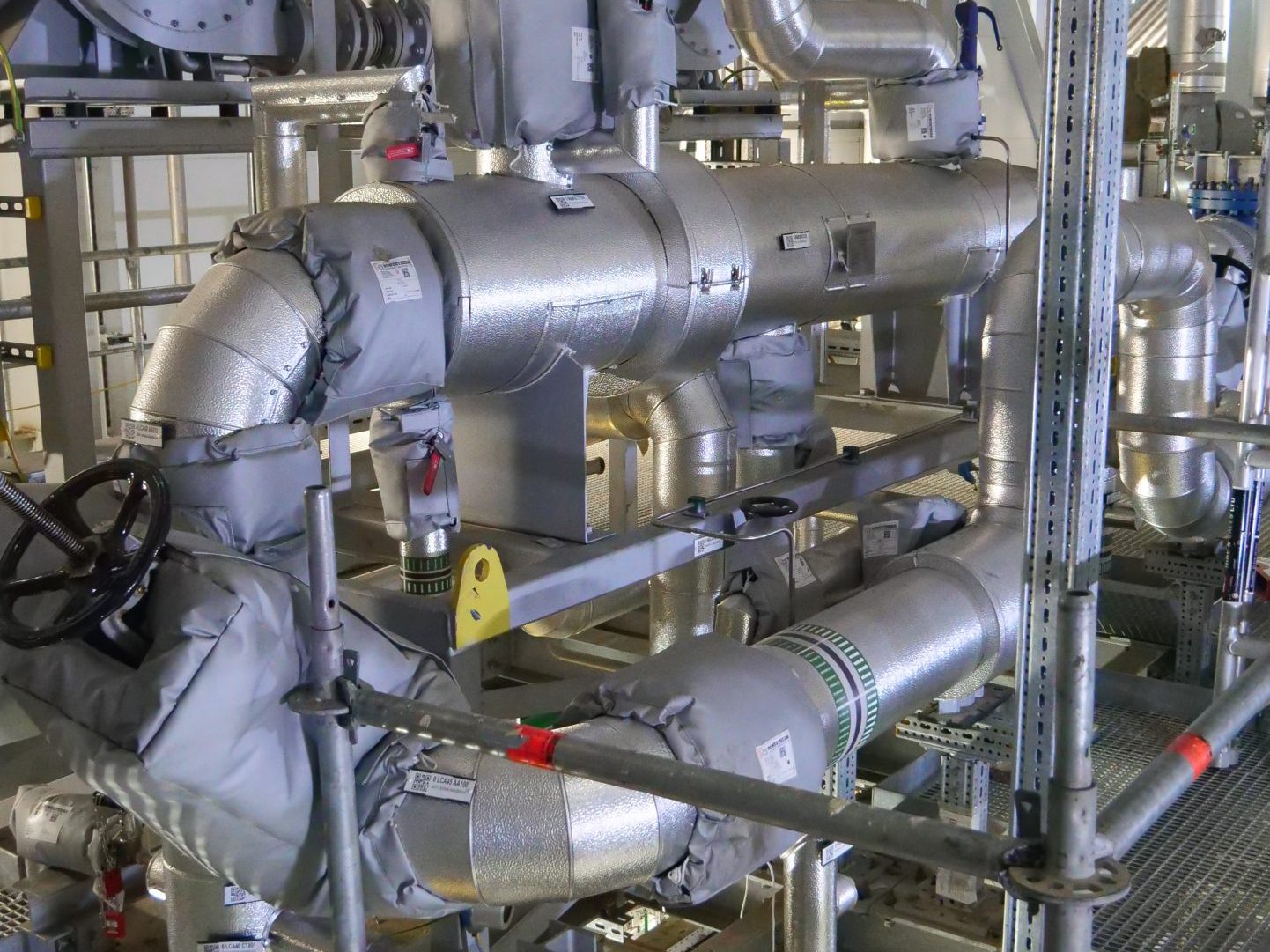
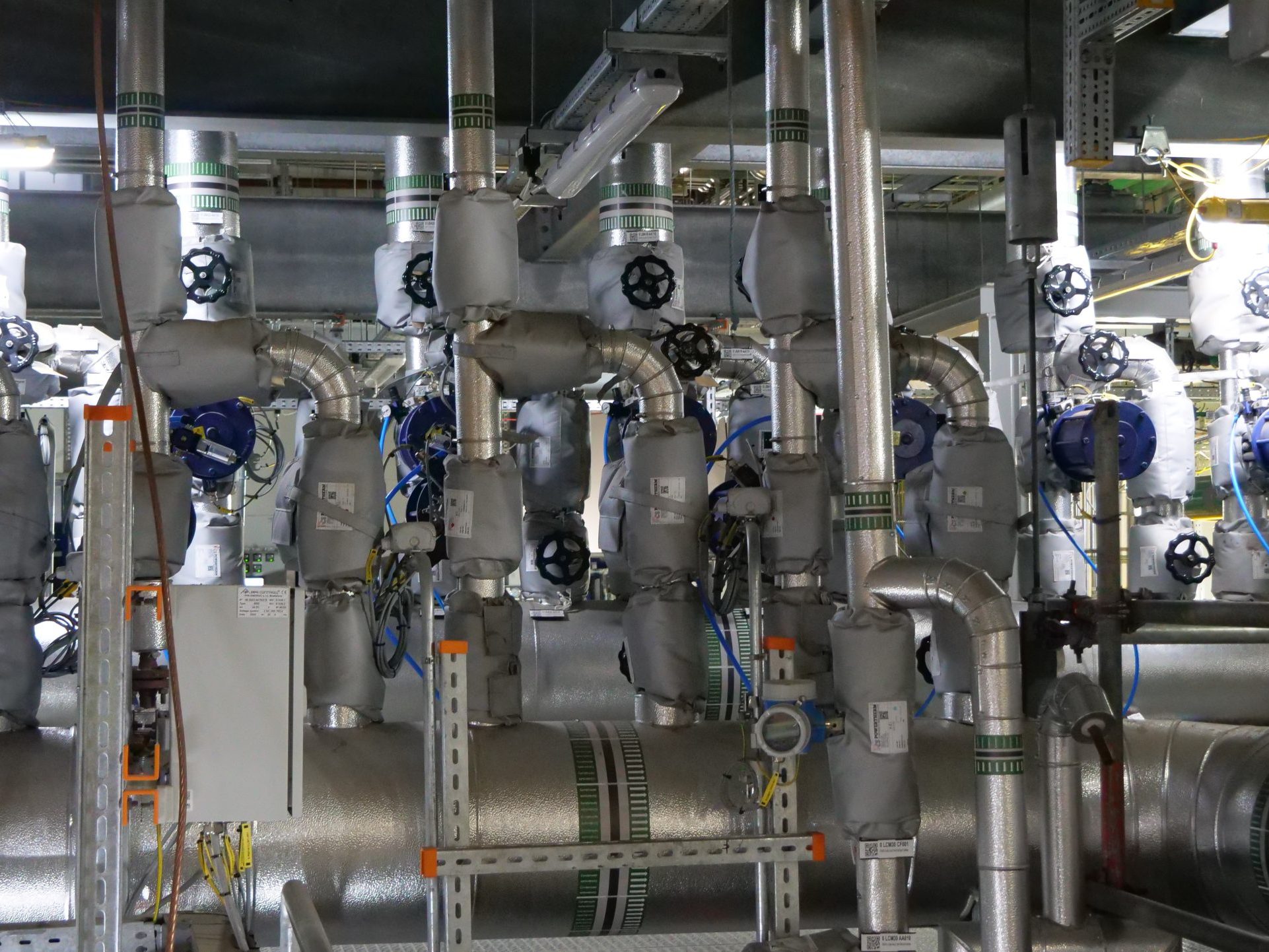
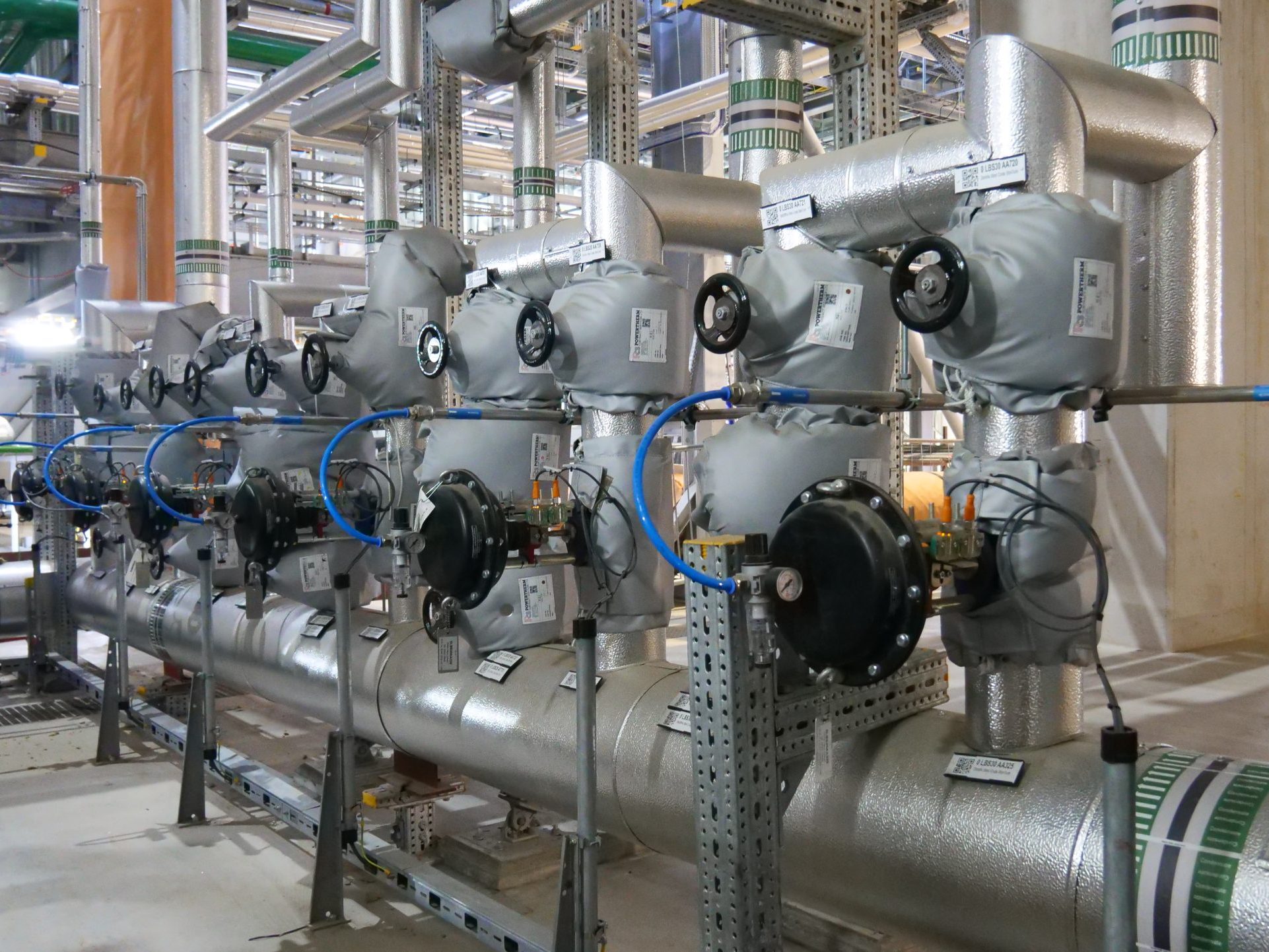
Our specialist Flexible Insulation Division designed, manufactured, and installed more than 2,800 bespoke flexible insulation jackets for items associated with the relevant plant equipment, including:
- Flanges
- Valves
- Fans
- Doorways
- Filters
- Steam Traps
- Skid Units
- Instruments
- Equipment roofs
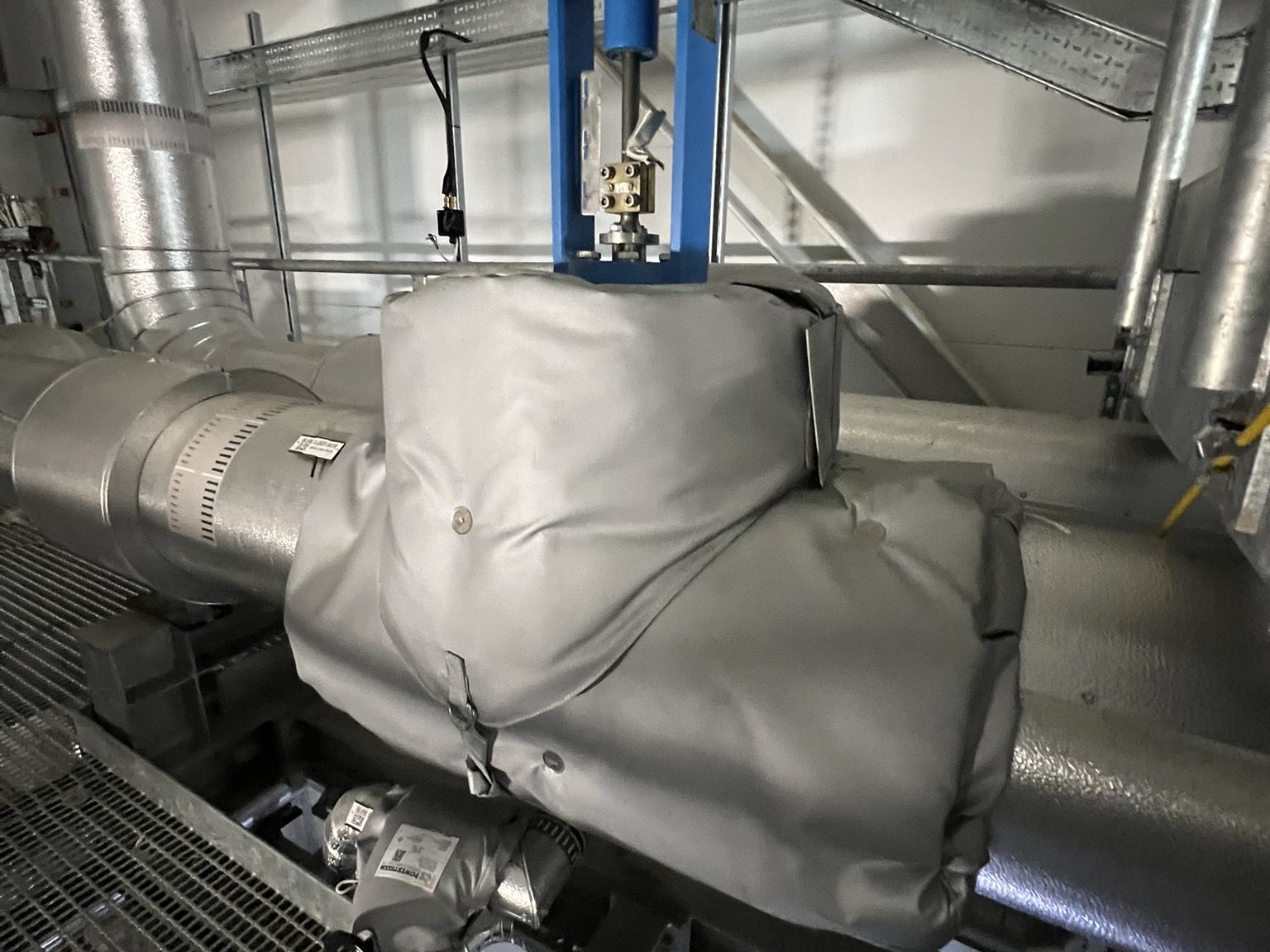
The flexible insulation jackets were engineered to deliver thermal energy conservation while maintaining full access for inspection and maintenance through removable and reusable insulation systems.
For the turbine unit roof, a flexible insulation jacket system was installed, featuring Admiralty inner and outer with 100mm mineral wool matting. Providing sufficient heat retention, personal protection and easy installation around the complex roof structure.
For the steam outlet valve station, a high-performance removable insulation system was specified: high temperature inner layer, 70mm mineral wool matt, Admiralty outer, with boxed edges. The inner fabric provides high-temperature resistance directly against the steam valve surface. The boxed design ensures the insulation maintains its shape and thickness around the valve, preventing slumping and cold spots. Admiralty outer offers robust protection against moisture, abrasion, and industrial contaminants, while remaining fully removable for maintenance access.
See our range of Flexible Insulation Jackets here >>
Summary
Through a combination of in-house insulation system design, manufacturing, and expert installation, Powertherm successfully delivered a fully integrated solution across the Skelton Grange EfW facility. By taking ownership of both the design and execution phases, we were able to optimise insulation performance, reduce installation complexity, and ensure full alignment with programme requirements.
Our engineering-led approach enabled the accurate specification of insulation thicknesses, substructures, and cladding systems to meet strict heat loss and surface temperature criteria in accordance with BS 5970, supporting both operational efficiency and personnel safety across the plant.
Innovative installation methodologies, including ground-level pre-insulation and modular approaches, contributed to reduced scaffolding requirements, improved site productivity, and enhanced safety performance. Working collaboratively with the client and wider project teams, Powertherm maintained programme certainty while delivering consistently high-quality workmanship across all systems.
The result is a robust, high-performance insulation solution that supports the long-term efficiency, reliability, and safe operation of the facility, demonstrating Powertherm’s capability to deliver complex, large-scale industrial insulation projects to the highest technical and commercial standards.