


TIPCHECK Survey – Paper Mill
Project Overview
Powertherm was commissioned to undertake a TIPCHECK (Thermal Insulation Performance Check) survey at a major paper processing facility in Deeside. The objective of the survey was to identify heat losses, energy inefficiencies, and safety risks associated with inadequately insulated components on the site’s boiler system, and to quantify the potential benefits of targeted insulation upgrades.
The site operates within the paper, pulp and printing sector, where continuous high temperature processes result in significant energy consumption and ongoing operational costs.
Industry: Paper, Pulp & Printing Industry
Location: Ellesmere Port
TIPCHECK Expert: Clarke Vaughan
The Challenge
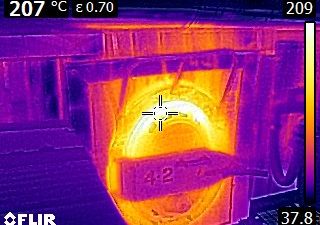
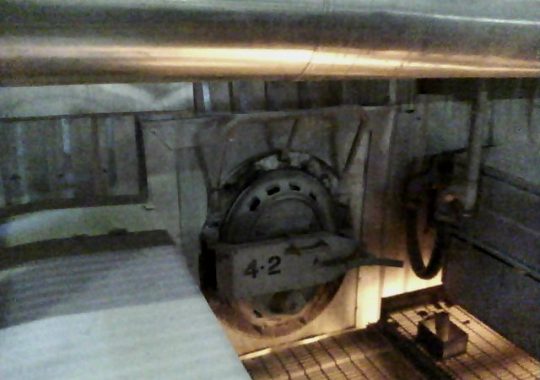
Initially the on-site inspection confirmed that the boiler walls were generally well insulated and adequately clad, with only minor cosmetic defects observed in areas such as book stays. These issues were not considered to justify major remedial works.
However, several high-temperature components were identified to be partially insulated or completely uninsulated, creating three key challenges:
- Excessive heat losses from exposed hot surfaces
- Increased operational costs due to wasted thermal energy
- Health and safety risks, particularly burn hazards for personnel working near steam lines and boiler components
What We Did
The TIPCHECK survey was carried out in accordance with BS EN 16247. Findings were then analysed using the Eiif’s TIPCHECK Tool, which calculates current heat losses and potential savings based on ISO EN 12241:2022 heat transfer calculations.
The survey included:
- On-site inspection of boiler doors, valves, flanges, steam lines, heat exchangers and chutes
- Temperature measurement using an infrared camera
- Comparison of measured heat loss against Insulation Energy Efficiency Class E benchmarks (BS EN 17956)
- Quantification of potential energy, cost and safety improvements achievable through insulation upgrades
Key Findings
The TIPCHECK survey identified a number of individual components with significant energy-saving potential.
Critical findings included:
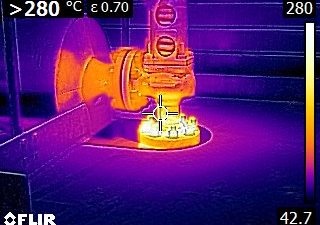
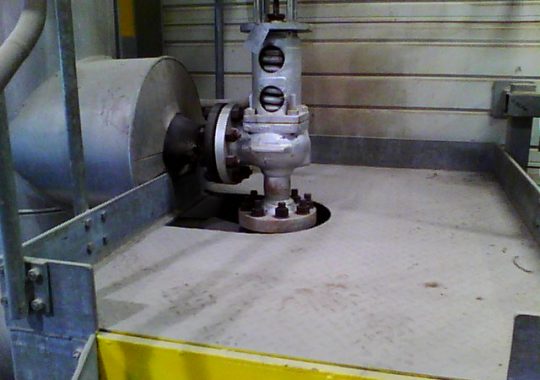
- Steam line valves and flanges operating at temperatures in excess of 280 °C, many of which were only partially insulated
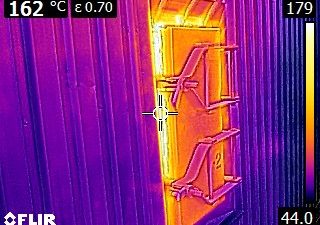
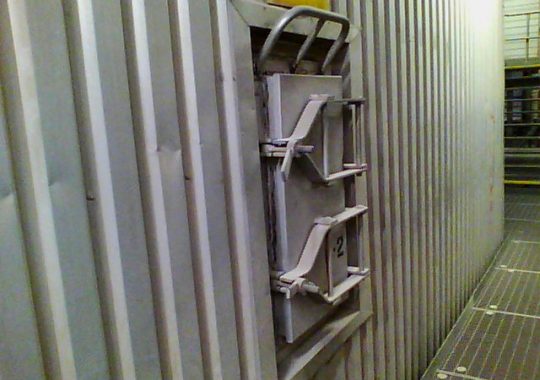
- Multiple boiler access doors across Levels 2–6 with uninsulated external surfaces
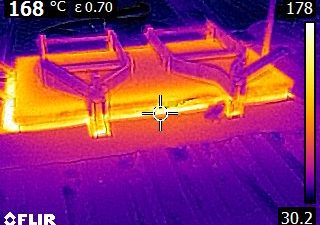
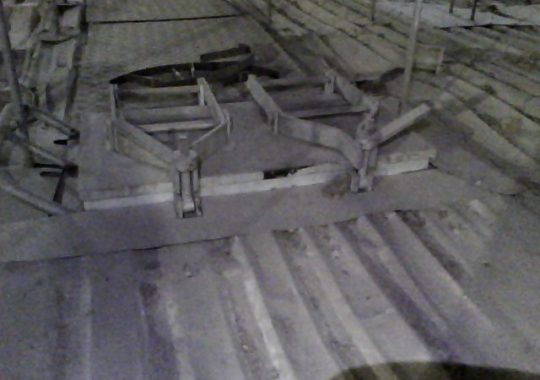
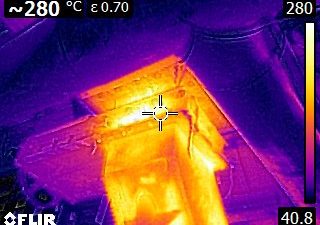
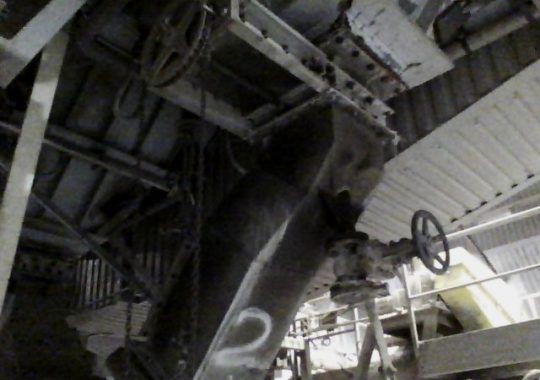
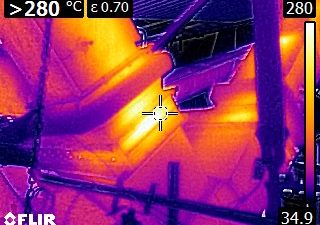
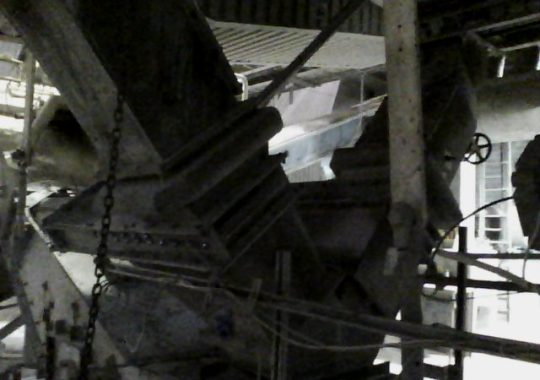
- Four ground-floor boiler chutes, with no insulation present
The four uninsulated chutes alone were responsible for approximately £11,000 per annum in energy losses per chute, making them the single largest contributors to wasted energy on-site.
Energy & Cost Saving Potential
The survey quantified substantial opportunities for improvement:
- Identified energy losses: 1,138,095 kWh per annum
- Potential energy savings: 1,108,732 kWh per annum
- Estimated cost savings: £72,544 per annum
Although CO₂ savings were outside the scope of the survey, the identified reduction in energy demand presents a clear opportunity to lower carbon emissions, improve operational efficiency, and support long-term energy management objectives.
Recommendations by our TIPCHECK Expert
Powertherm recommended a programme of targeted insulation upgrades, prioritised as follows:
- Installation of removable insulation jackets on all exposed steam valves and flanges to reduce heat loss, improve safety, whilst allowing access for maintenance
- Insulation of boiler doors from roof level down to Level 2 to reduce heat loss, cover exposed hot surfaces and ensure surface temperatures are at a safe level
- Full insulation systems for all four ground floor chutes, delivering the highest energy and costs savings – significantly improving efficiency
- Repair and reinstatement of missing insulation and cladding identified during the survey – common uninsulated areas included boiler doors, flanges and valves.
These measures would significantly reduce energy waste, lower operational costs, and improve personnel safety across the boiler area.
Conclusion
The TIPCHECK survey identified substantial opportunities to reduce thermal energy losses across critical boiler and steam systems. By targeting key high-temperature assets with tailored insulation improvements, Powertherm demonstrated the potential to achieve significant annual energy and cost savings while also improving personnel safety and supporting long-term operational efficiency. The findings provided the client with a clear, prioritised roadmap for reducing wasted energy across the site.